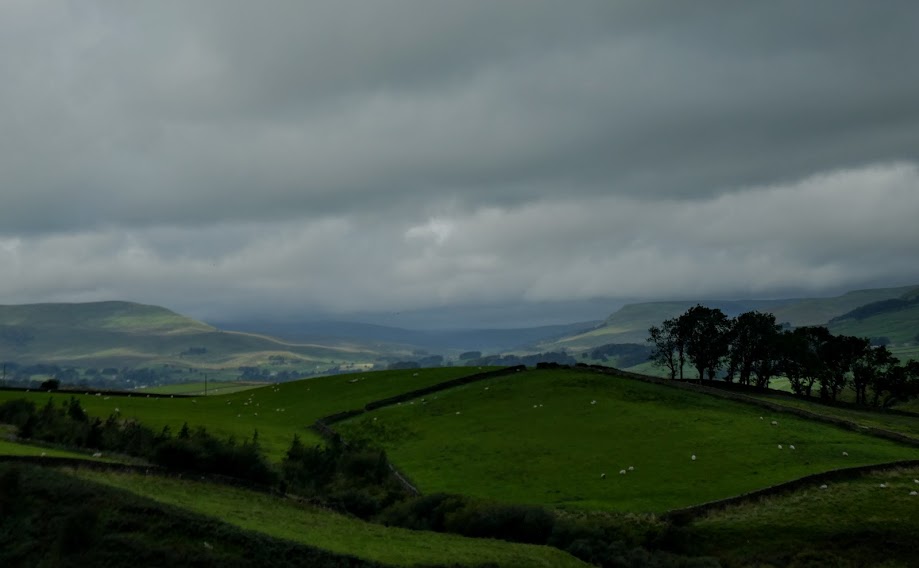
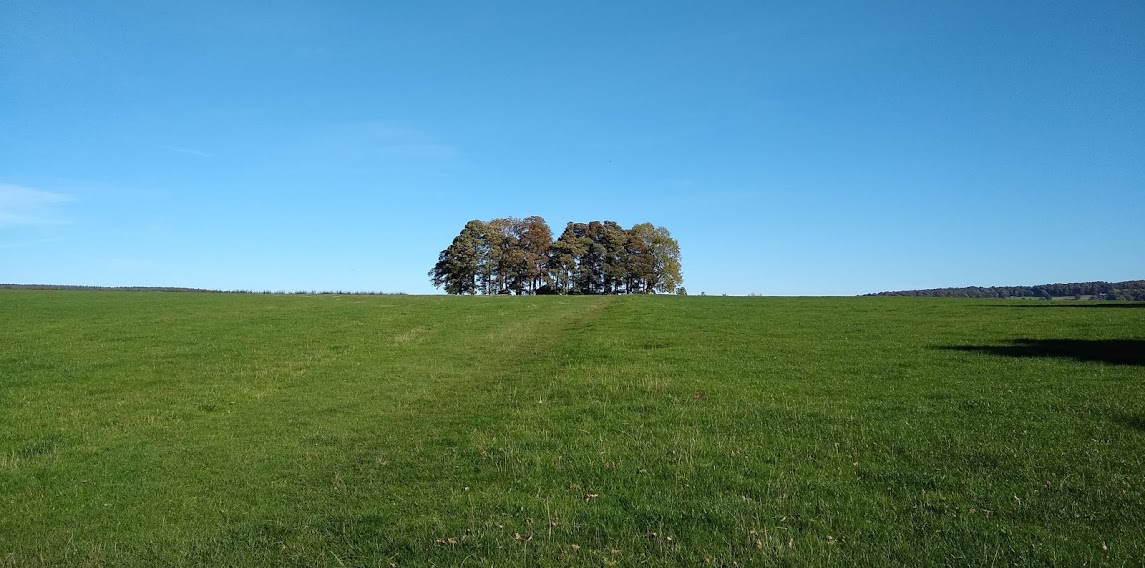
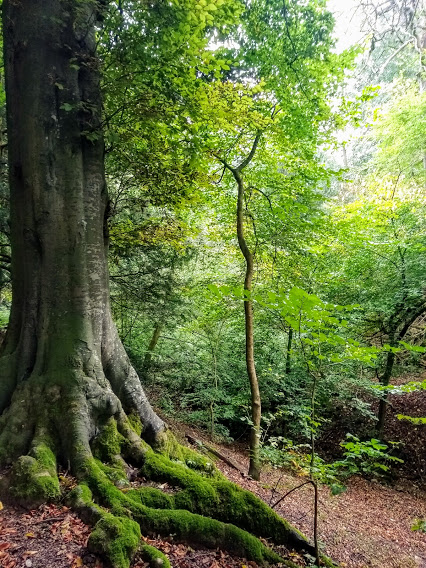
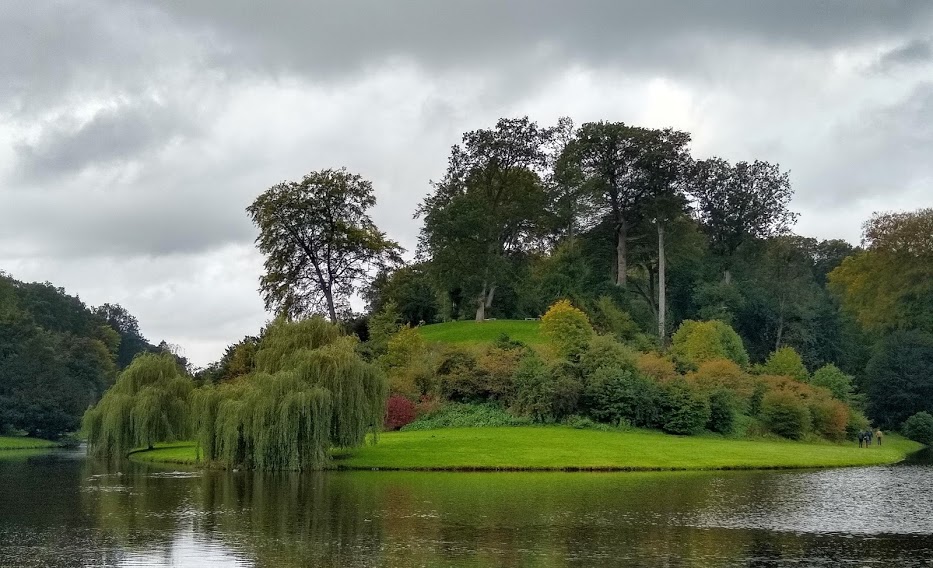
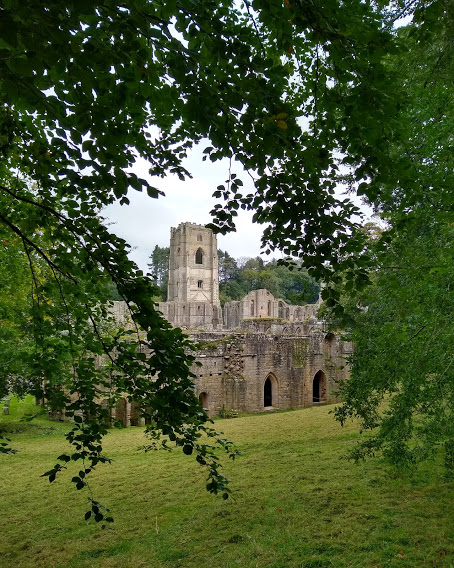
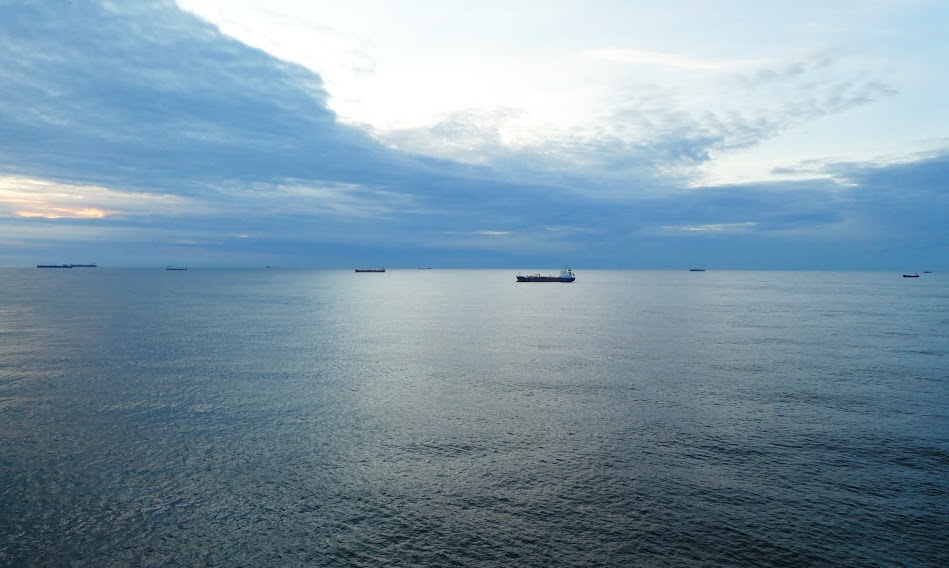
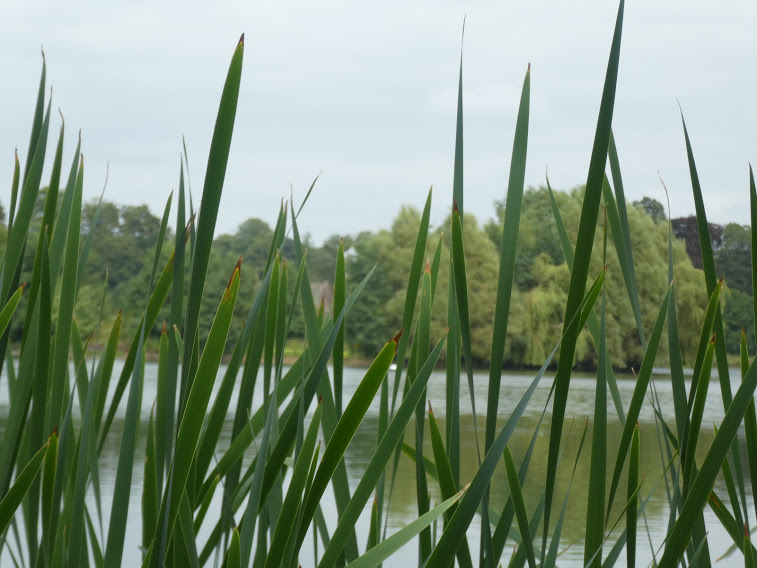
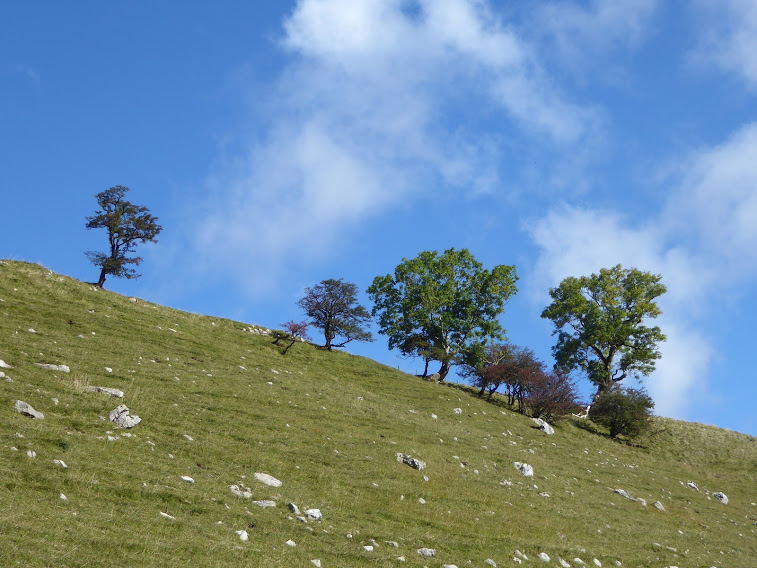
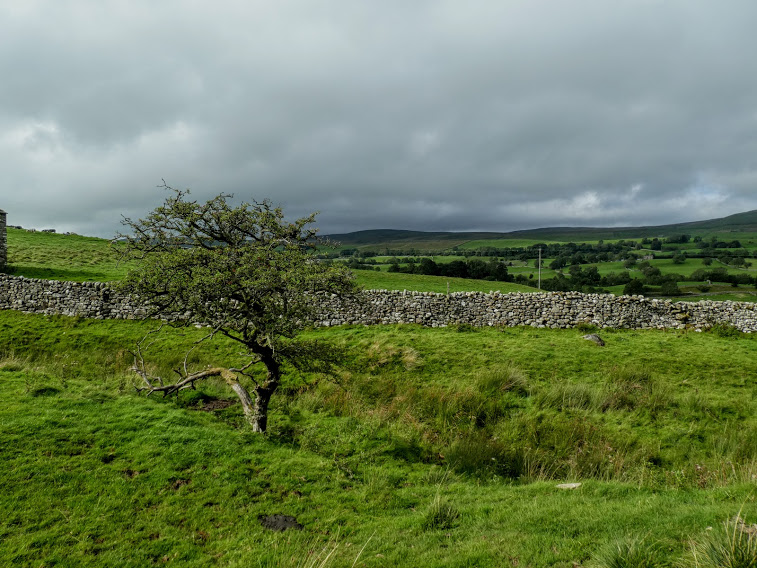
If like me you live in the country, the world does look blue and green. To fulfil Tina’s Lens-Artist Challenge, looking at the cool palette of blue and green, today I’ve rarely looked further than a few miles round our house. All I’m doing today is presenting a gallery of quiet images from the natural world. Most are from the gardens of Fountains Abbey and Studley Royal, and from the Yorkshire Dales. I’ve ventured to the North Sea, and to the Aquarium of the Horniman Museum. That’s about it. I think I qualify for Debbie’s Six Word Saturday too.
Last week the visit to my London primary school way back sixty years ago seemed to go down quite well, so today for Fandango’s Flashback Friday, we’ll go back to that era again, to the post I wrote in 2016. But this time, we’ll go shopping.
Off to the shops
In 1953, my family moved from Yorkshire to London. At first we lived in Earl’s Court. In the years following WWII, it was where Polish immigrants congregated and lived, so that’s probably how we ended up in this busy, grubby, cosmopolitan area.
The area round Earl’s Court Station, near where we lived for a time.
It had shops – exotic shops to country hicks like us. There was an Express Dairy, a supermarket, one of the earliest of its kind. Rummaging round on the shelves, my mother found unknown surprises such as yoghurt. It was thin, acidic, an improbable shade of pink and none of us liked it. Not even my father. Yet my father taught my mother to set out soup bowls of milk to sour and eat as a cold, refreshing soup. It was a part of his Polish heritage.
She found chinese gooseberries. We didn’t like those either. These days we call them kiwi fruit and realise the ones we had bought must have been rancid and fermenting.
Tachbrook Street in the 1950s.
Now let’s go on to Tachbrook Street Market. That’s where we mainly shopped, once we’d moved to Victoria. I loved it. It was a whole community of shopping streets and market stalls. Even though I didn’t then drink coffee, I loved to pass the coffee blenders’ shop, and smell the rich aromas drifting through the door as the coffee beans gently roasted and toasted on giant metal grates.
Jonathan Farber: coffee roasting, Unsplash.
I remember the neighbourhood Italian restaurant. We didn’t have the money to eat there, but I could see through the window and watch as waiters wielded those giant pepper grinders they seemed to like so much.
Tachbrook Street Market. (www.23ashleygardens.com)
We’d pass the neighbourhood grocery store – ‘Home and Colonial’ . I seem to remember we actually got our groceries in Sainsbury’s. There was a Tesco store, a very early example of a supermarket. We didn’t shop there (‘Supermarkets won’t catch on’ opined my mother).
A ‘Home and Colonial’ sign
There was a MacFisheries. I was fascinated by the glistening fish laid out on the marble counters of the open shopfront and watched as my mother’s choice for the day was expertly de-boned and filleted in seconds.
There were dozens of adverts, designed to encourage you to eat fish every day of the week (MacFisheries archive)
There were fruit and vegetable stalls. I loved to hoard the richly decorated tissue papers that protected each orange, each tangerine. Occasionally, in late summer, my mother would buy us a peach each, as an exotic treat.
A Sicilian orange, carefully protected (Daily Mail)
Once I got to be about eight or so, I’d be sent off to Apple’s the Hardware Store to buy a gallon of paraffin (Aladdin pink, as opposed to Esso blue) to feed our paraffin heaters. There was Mr. Apple himself, with his bristly grey moustache and his grubby brown overalls. The paraffin glugged out of its storage tank into our can. I’d count out the money, then I’d struggle home, the heavy can banging against my shins, the contents splashing my socks, along the street, and across the busy Vauxhall Bridge Road.
This was the offending paraffin stove. Dangerous but efficient.
Because my father was Polish, we did quite a bit of shopping at the delicatessen near Buckingham Palace Road.
Here were thin sticks of kabanos, the drier the better. Nobody but me ate this at school, and my friends assured me it was donkey meat. There was Polish boiling ring – a horseshoe shaped sausage that was my favourite meal, boiled and served simply with mashed potato and cabbage. Sauerkraut of course, and bigos. The plain cookery of 1950s Britain was largely unknown to me apart from school dinners, but that’s a whole other story.
Kabanos
Besides Polish foods, we’d often have pasta or risotto or wienerschnitzel. Oh – apart from two things. On Saturdays, my mother always bought a pint of brown shrimps from the above-mentioned MacFisheries. Saturday tea times would see us all sitting round the table with a pile of brown bread and butter, peeling those fiddly shrimps. And she was very partial to a kipper too.
I can’t leave out ordinary grocery shopping though. We went to Sainsbury’s in Victoria because it had fresher, better goods according to my mother. It wasn’t a supermarket. We’d go into the shop, with its brightly-tiled floor, and there, to left and right were the counters. Dry goods, dairy products, bacon and ham… and so on.
Here’s a 1950s branch of Sainsbury’s. Not ours, but a branch in Streatham, London (sainsburyarchive.co.uk)
Young women, their hair concealed under net caps, skilfully wielded wooden butter pats to reduce great slabs of butter into manageable half-pound portions.. Others bagged up sugar into dark blue ‘sugar paper’ bags. There was always a man at the bacon slicer, turning a lethal looking metal disc to slice bacon and ham according to the customer’s particular requirements (Thin? Thick? Gammon rasher?) .
There were glass-topped tins of biscuits – digestives, custard creams, Lincolns, nice, arrowroot…..: these were sold loose. People on a restricted budget would choose a mixed bag of broken ones. My mother regarded all of these with disdain. We made our own.
And when it was time to pay, we’d find that all our receipts, from each counter we’d visited, would have arrived at a small wooden kiosk near the centre of the store. An efficient type would add it all up, we’d pay her ( it was always a ‘her’) and we’d go off with our groceries.
The scenes played out here are so clear in my mind, but I can’t find a single image to support them. Not one. Can anybody help?
One thing we never had to buy at the shops was milk. That was delivered, every single day including Christmas Day, in glass bottles which we rinsed out and returned, on an electric-powered milk float something like this….
A milkfloat
I remember our shopping trips fondly. They were time-consuming, certainly. But the rich variety of a morning walking from shop to stall to shop again was quite a highlight in my week.
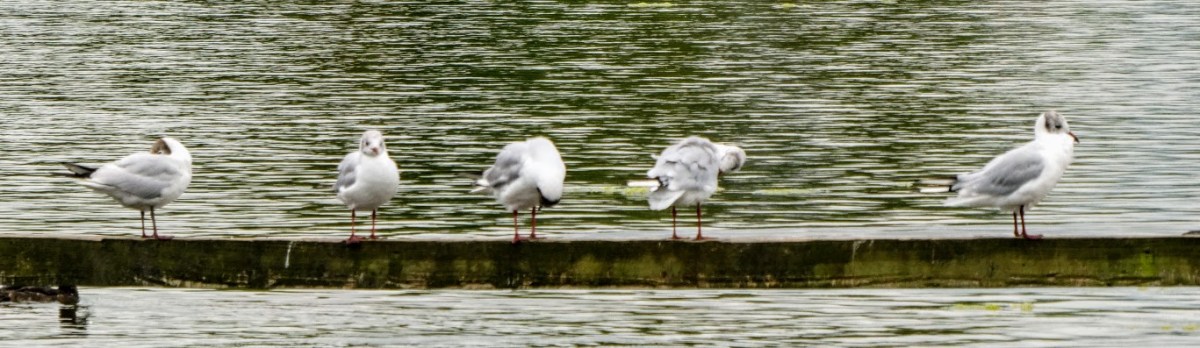
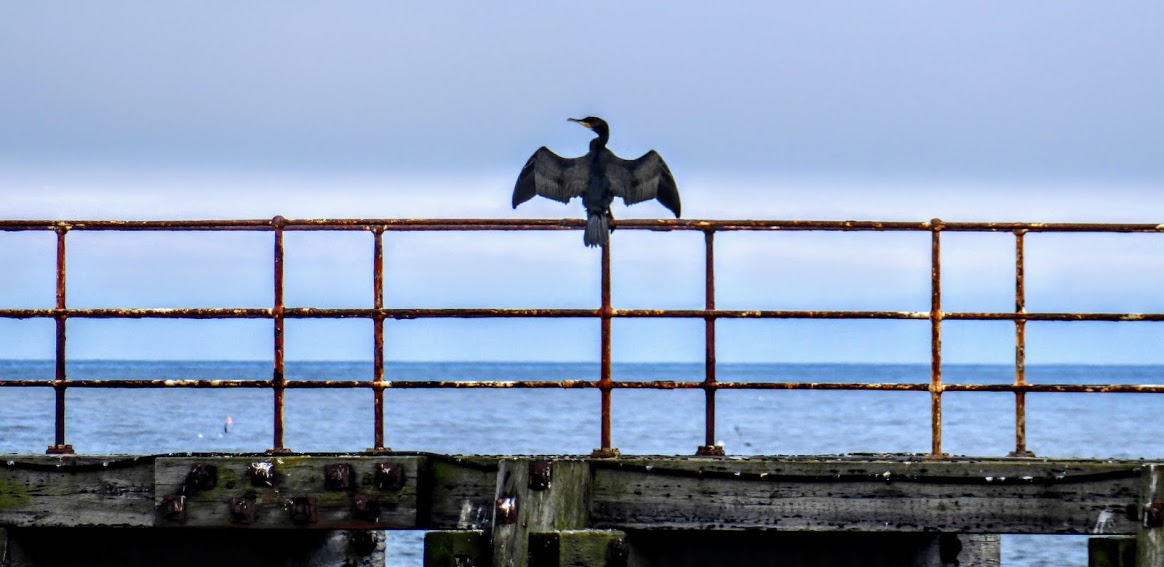
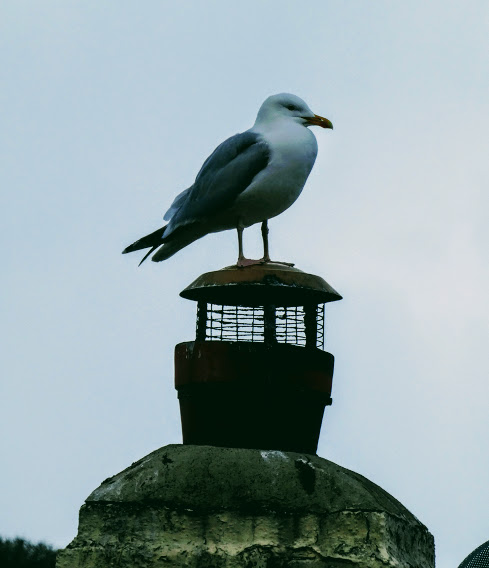
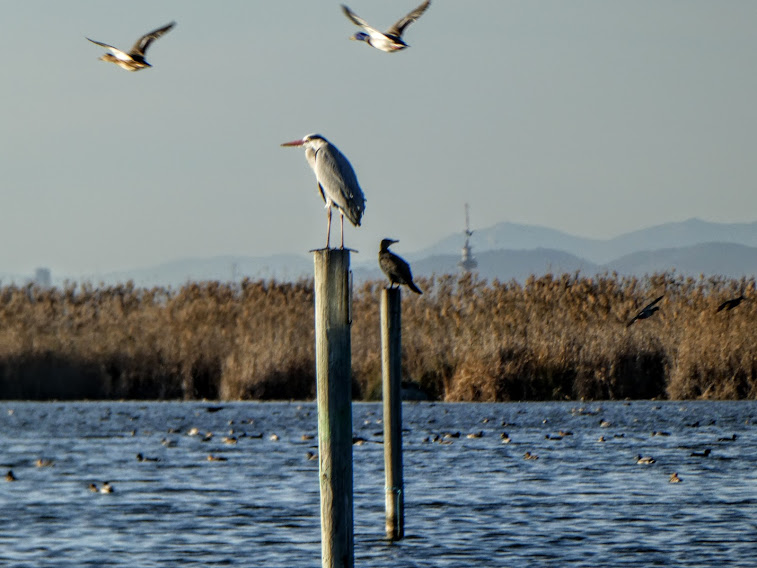
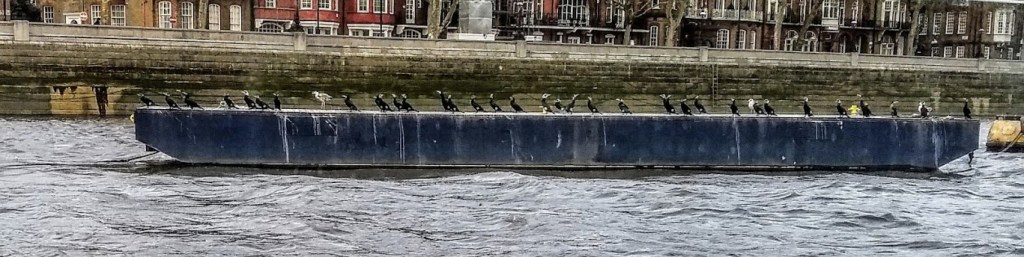
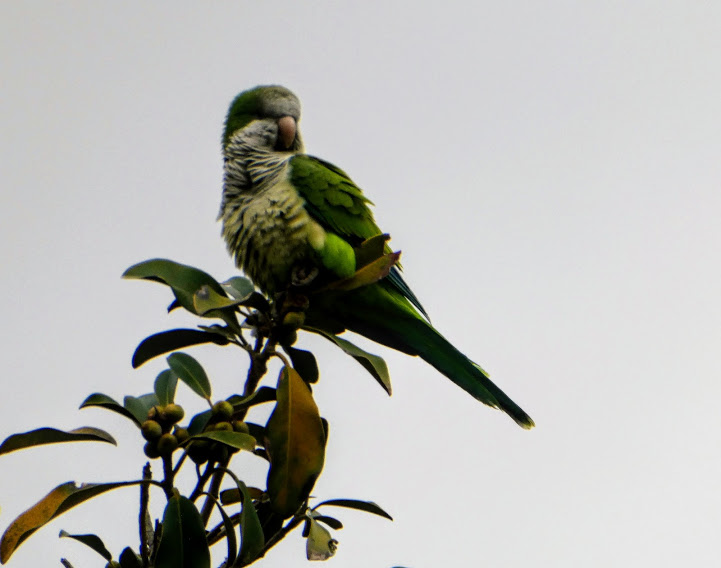
Bird weekly this week is looking for birds beginning with ‘G’. I don’t have all that many examples. But gulls, obviously gulls. There’s a whole row of them in the header photo.
I have a shot of herring gulls looking imperiously down over the town of Whitby, and a black-headed gull fossiking on the beach there.
Herring gulls in Whitby
Black-headed gull on the beach
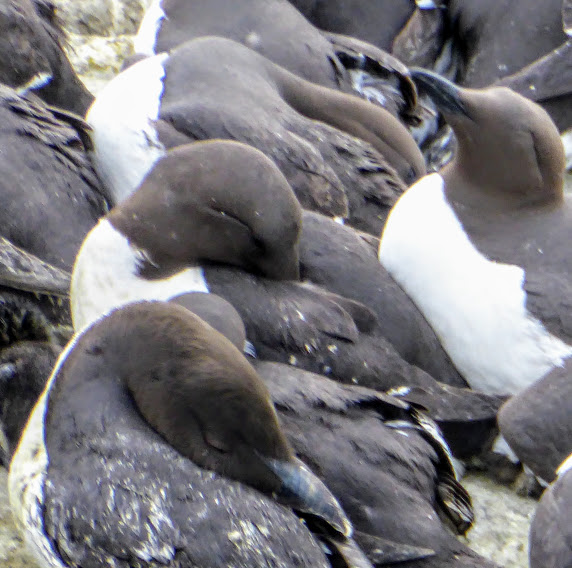
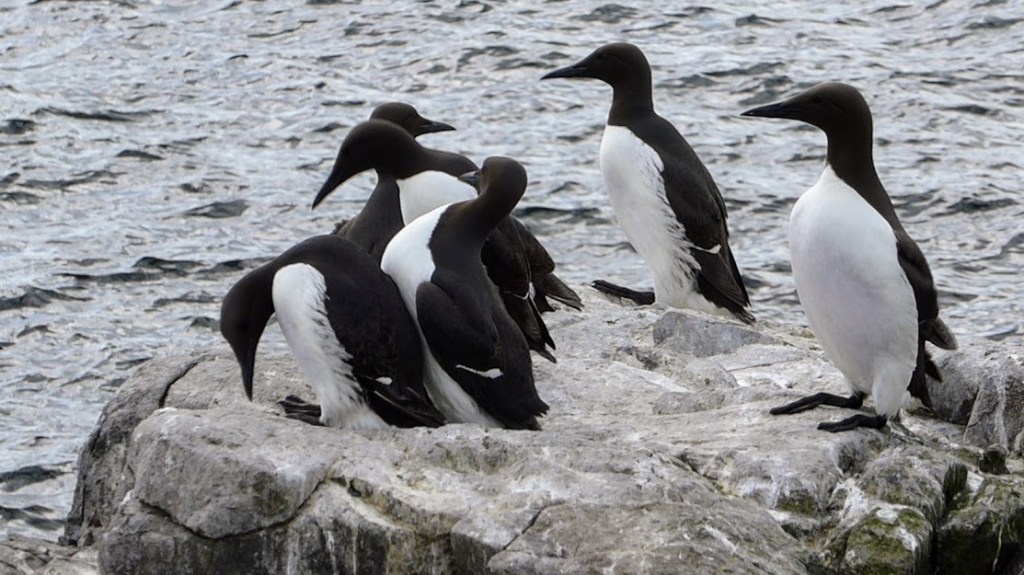
Then there are guillemots on the Farne Islands…
And geese – always geese. Be sure to click on the second image to see the whole happy family
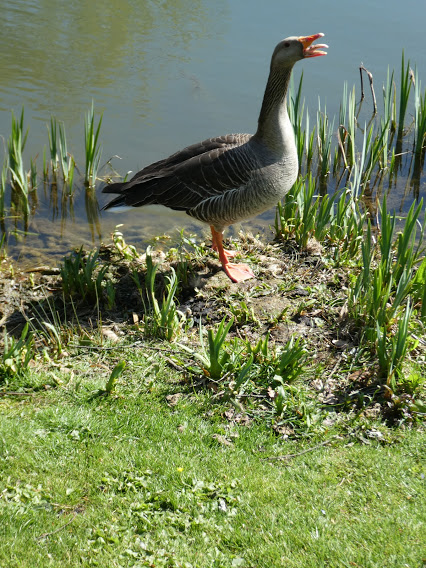
A hissy Greylag on the village pond
Two proud parents of newly arrived goslings at Fountains Abbey and Studley Royal
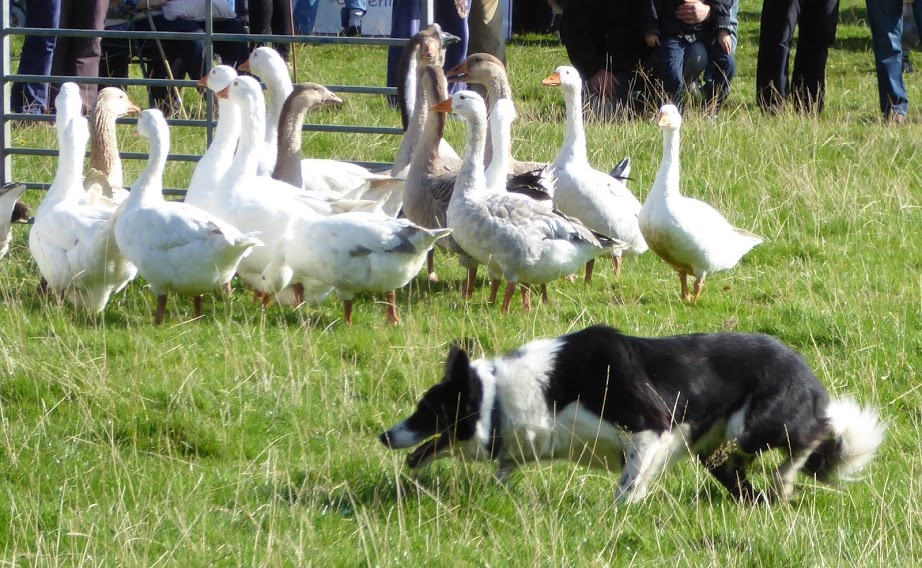
We’ve all heard of sheep dogs. But did you know they can turn their minds to herding geese too, if required?
Everyone knows that when a castle or a church tumbles into ruin, it’s an opportunity for the locals. All over Europe and beyond, once majestic buildings have found new uses as humble farm labourers’ cottages, or a house for the local blacksmith, or … whatever’s needed really. Round here there are at least two houses whose builders hadn’t merely appropriated the stone, but also reinstated the windows found in a tumbledown place of worship.
This house is two farm-workers’ cottages knocked into one. The original tiny dwellings have been here for centuries: but being humble didn’t stop them from having fine windows once part of a church that no longer exists.
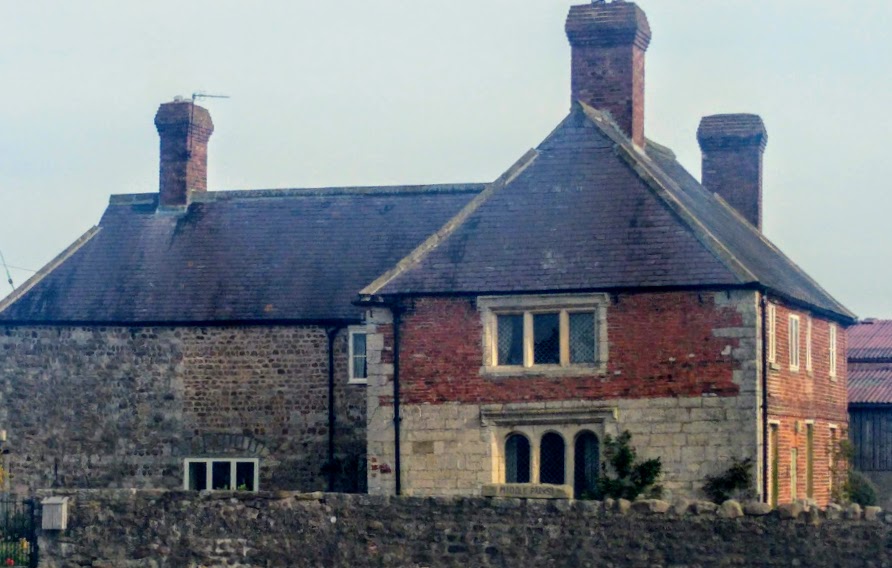
Not far away is a handsome farm house. That too benefits from a spot of recycling.
I have another blog, now more or less discontinued, called Notes on a Family. I wasn’t so much concerned about a wide audience, as about recalling my family and personal history for my children. It’s one of my regrets that I never talked enough to my parents about their own past. To my Polish father, who came over, like so many of his countrymen, during the war. To my mother: a clergyman’s daughter. He himself was Cambridge educated, despite being raised in poverty in a large family. Why did I never ask her how that came about? I was born in Yorkshire, but spent most of my childhood in London. All of these stories are told in my blog, and others too.. Here’s one from 22nd May 2016, for Fandango’s Flashback Friday.
ANOTHER YEAR, ANOTHER SCHOOL
A few posts ago, I told you about my first London school. It became pretty obvious to my parents that it simply would not do. But still … I was a Bulge Baby, born, like so many thousands of others, shortly after World War II ended. There was still enormous pressure on school places. My mother had found a good job teaching classics at Mayfield School, a Girls’ Grammar School in Putney, so really needed a place for me in a Putney school, so we could travel to and from school together.
There were no places.
Finally, they found somewhere. It wasn’t a state primary, though, but a tiny, old-fashioned private school, Ebley House School. Even for the time, its fees were modest.
Ebley House School: Terms and conditions
It was a funny old place, run from a church hall, because its original premises had been bombed during the war.. The head, Miss Egleton seemed a rather frail old lady, with wispy hair gathered into a skimpy bun. The only other teacher I remember was Mrs. Coate-Bond, whom my mother thought rather racy, as she read the left-leaning Manchester Guardian.
The ‘babies’ or kindergarten class, were in the vestry, and the rest of us were divided into two groups, Lower Transition and Upper Transition, and worked at opposite ends of the hall. Once I passed the 11+ and got to grammar school, I realised what an old-fashioned seat of learning it was compared with the lively places my new friends had been to. I remember some of the lessons:
Copy book (Fountain Pen Network)
We copied line after line of this stuff, with scratchy steel dip-pens which at the least provocation spattered unwashable ink onto our books and over our cardigans.
PE: We didn’t change out of our ordinary clothes, but stood just as in this picture here, doing star jumps, running on the spot and similar. No games pitches, therefore no outdoor games.
These are young women. They are in America. In the 1930s. But this is a perfect image of our PE classes.
Monday mornings after break were worst. The boys went off to …. hang on, I have no idea what the boys did. The girls did embroidery. Tray cloths. Every single week. We gossiped instead, of course. It took weeks and weeks to complete a cloth. At the end of every class, we’d line up and show what we’d done that week. It was always a total exaggeration. The only times we were compelled to put a bit of effort in was on those rare occasions when we had to start a new cloth off, and we really couldn’t pull a fast one about our achievements. Like every girl in the school, I loathed Monday mornings. It put me off sewing for life.
1950s traycloth. Our achievements weren’t as polished as this (Etsy)
Most of the other lessons were reasonably conventional for the time. I enjoyed English, spelling, maths, singing, and scripture (though I wondered for years why a good man like Jesus would promise to make his disciples ‘vicious of men’). At play time, my earnest little friends and I wrote, illustrated and put together magazines with an extremely limited readership ( just us, I think). In my final term, I wrote a dashing tale in which boarding school chums (modelled closely on the girls in Angela Brazil‘s school stories) got the better of a dastardly burglar. It was performed at the school prize-giving.
In the morning, I travelled to Putney with my mother, and at the end of the school day, walked over to Mayfield to return home with her. When I was eight, though, she got another job teaching Classics at Fulham County School. By then we were living in Victoria. So every day I walked to the station, crossing two busy main roads. I caught the Tube, the District Line to East Putney, sometimes changing at Earl’s Court.
My train journey on the London tube. Read from bottom to top.
Then there were two more busy main roads to navigate. I was a nervous little thing, but it never occurred to me to be frightened of this journey, which is not one the average eight year old would do alone these days, I think.
It wasn’t a stunningly exciting education. But I was happy enough. Apart from the time when I missed almost a whole term because I was in Isolation Hospital. But that’s another story.
Spots and dots. That’s the Lens Artists Photo-Challenge this week, as requested by Ann-Christine. What to choose?
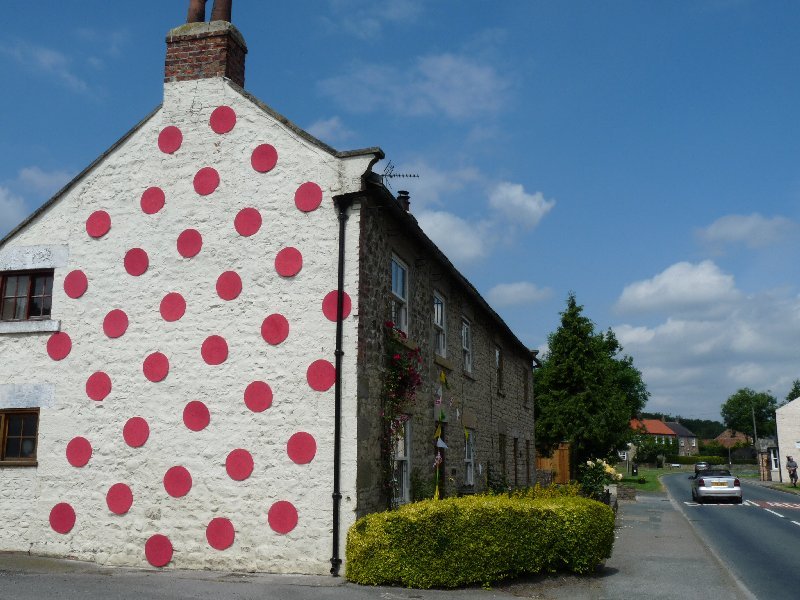
I thought immediately of the year we came back from France, 2014. That was the year too when the Tour de France came to Yorkshire. We went Tour de France mad, and some people even decorated their houses in red spots in honour of the King of the Mountains.
A house in North Stainley …
… and another in Knaresborough
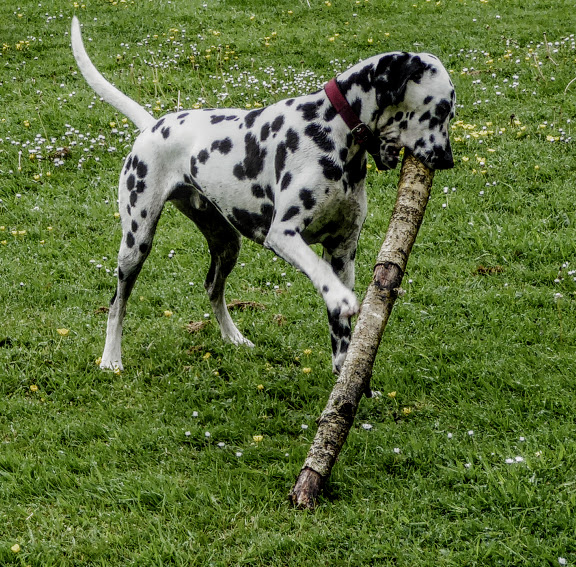
I remembered Brian, the dog my elder daughter had. No dog is spottier than a Dalmatian.
Brian.
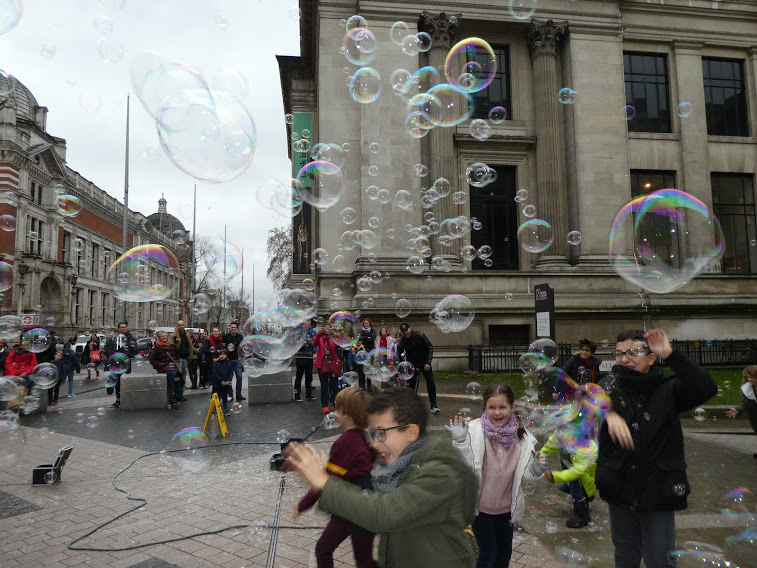
I thought of a bubble-producer extraordinaire we met in London once, delighting children of all ages.
Outside the Geological Museum, South Kensington
There was that extraordinary murmuration of starlings that took place over our house. It’s an annual treat round here. Thousands and thousands of starlings polka-dot the sky. And afterwards, leave the car spotted and dotted.
The murmuration and …
… the aftermath
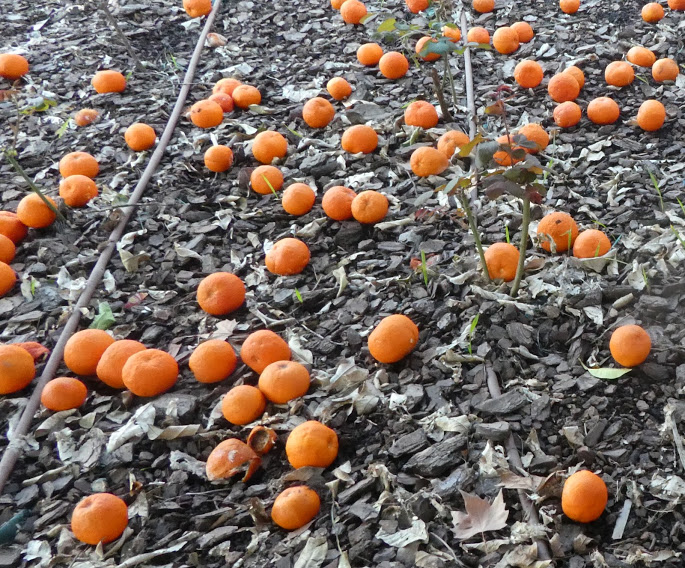
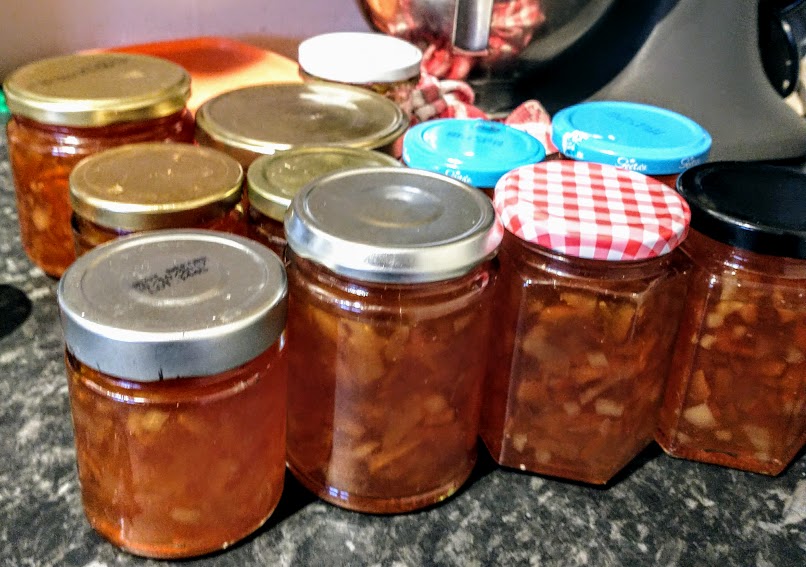
Or what about Seville orange trees with glowing orange fruits brightening the winter Spanish streets – and then lying discarded as the season ends: until we come along and bag up a kilo or two to transform into marmalade back at home?
Discarded oranges
Rescued oranges
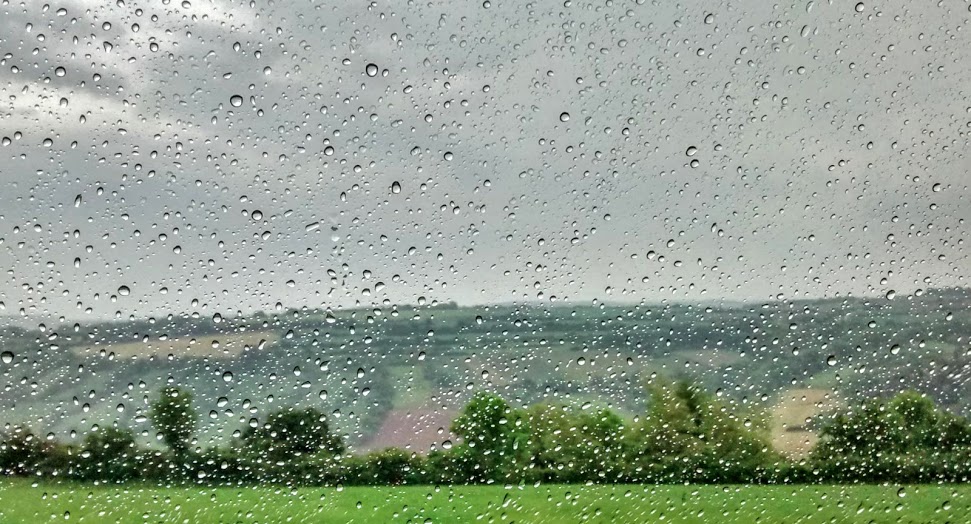
But then I thought about spots and dots in the here and now. Spots and dots in England mean rain on the window, rain on the windscreen. So I begin and end my post with weather, English style.
A frequent view from the bedroom window
But … one more thing. No rain = no welly-boots. No welly-boots = no cheery whimsical feature in a garden just down the road.
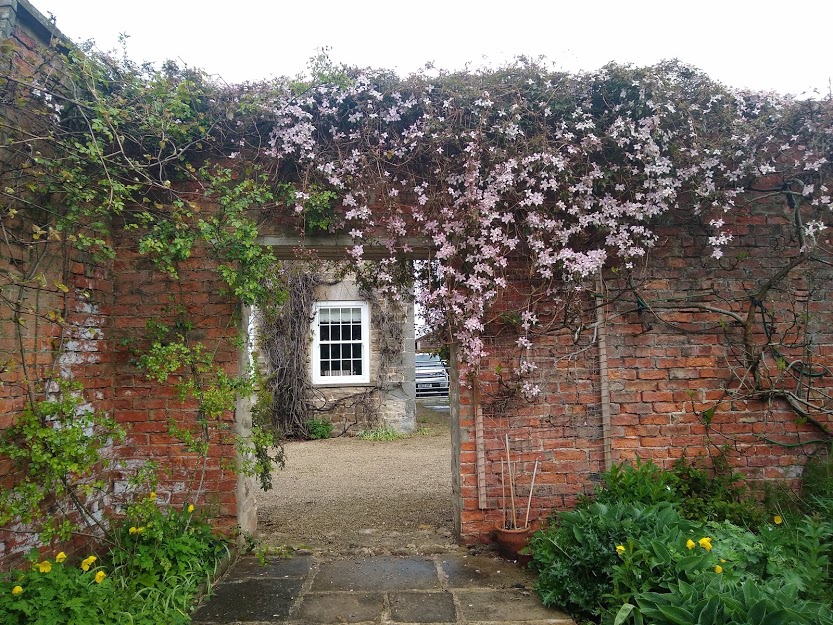
Last week, I showed you wisteria on the front of the house. Today, we’ll sneak into the walled garden and look at the clematis framing one of the windows in our neighbour’s house – there it is in the featured photo. And here’s the lilac, just coming out:
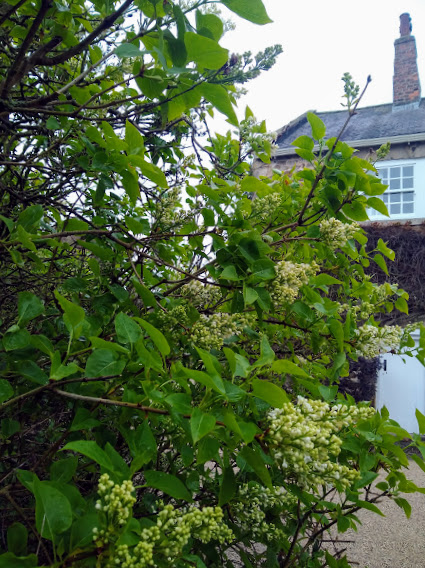
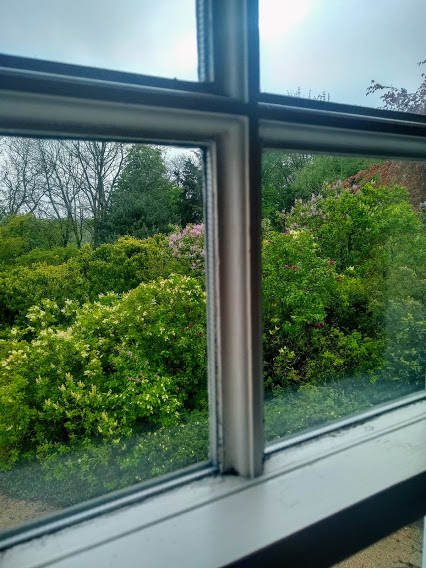
And here’s the view from the kitchen window – the lilac’s still budded, but soon it will be fully out – for one week only – before becoming once more a rather unremarkable shrub.
I may produce more lilac for Jude’s Life in Colour: two shades of purple to go at in just a few days. But I promised another window view for Ludwig’s Monday Window. So here we are.
Since the Yorkshire Dales – or other popular destinations – are understandably still not keen on receiving hordes of visitors, we’ll have another Virtual Walk, and revisit a post written in May 2014, shortly after we returned to England.It’s for Fandango’s Flashback Friday, and for Jo’s Monday walk.
ANOTHER DAY IN THE DALES
Burnsall – Howgill – Middle Skyrehome – Gill’s Laithe – Troller’s Gill – Appletreewick (often pronounced Aptrick locally) – Kail Lane – and Burnsall again
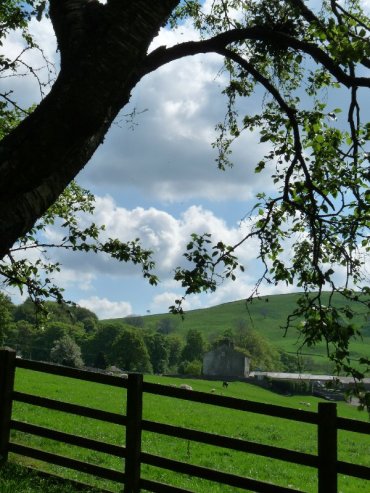
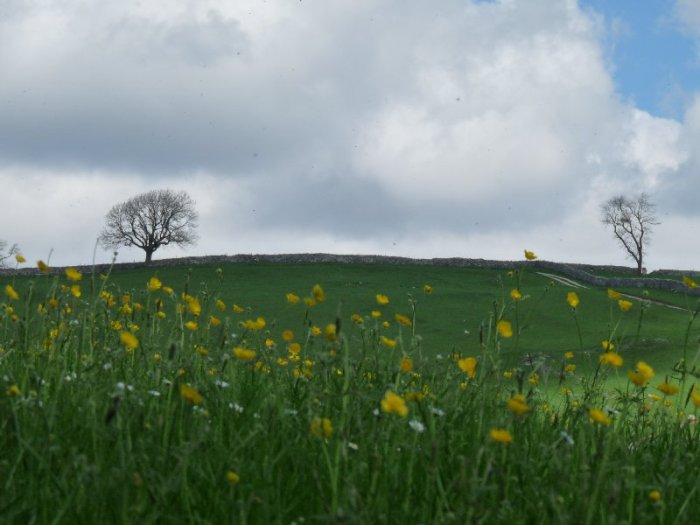
What’s not to like in a walk that passes through places with such enticing names? It was Rosemary who led the Ripon Ramblers yesterday and she’d organised not only a splendid walk with varied Dales scenery, but a warm sunny day too. Here are my picture postcards from the day. Click on the images you’d like to see enlarged, or to have a slideshow.
We crossed over the ancient packhorse bridge at Burnsall to begin our walk.
Then we walked along the River Wharfe past farmland, using the Dalesway path.
Sometimes we had open views.
Here’s the River Wharfe
And here’s a view across to the hilltops.
A disused ancient limkiln
Approaching Trollers Gill
Trollers Gill
Drystone walls still divide the ancient field boundaries.
Northumberland sheep accompanied us along this bluebell-strewn path.
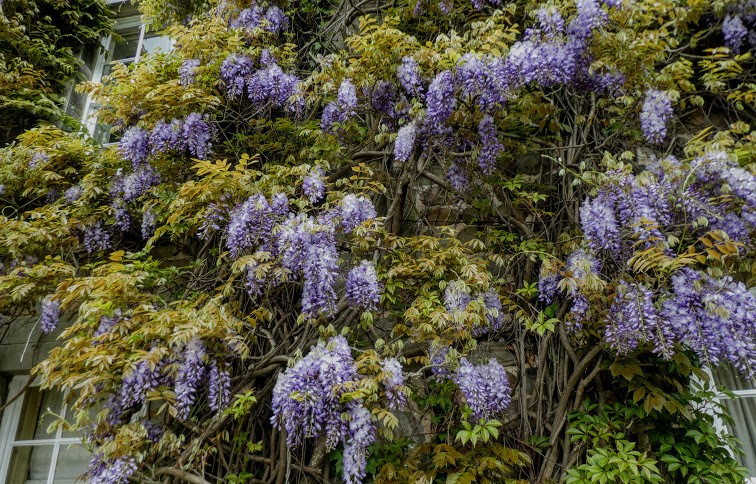
This is the time of year when the outside of our house, and the one to which we’re attached deck themselves in scented clouds of wisteria.
There’s lilac below the kitchen window: that’ll bloom very soon: already the tightly furled buds are loosening and hinting at the soft mauves and purples that will emerge. That’ll be for next week then.



























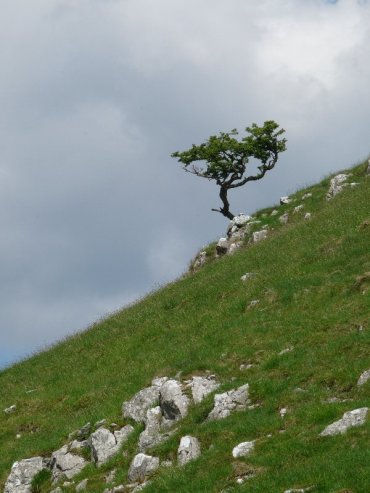


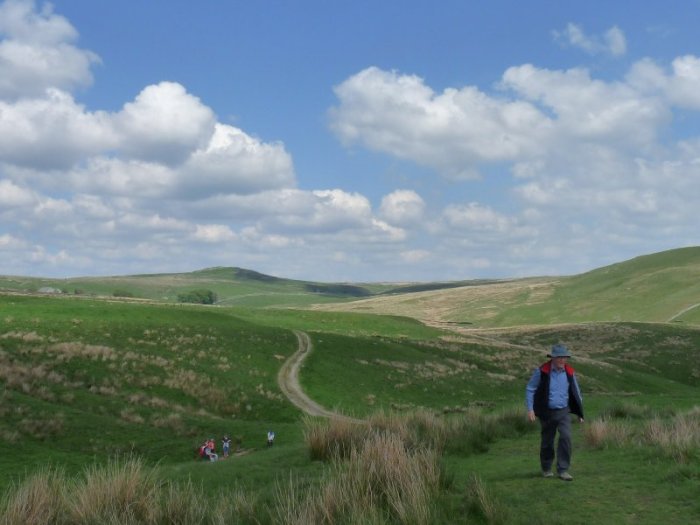

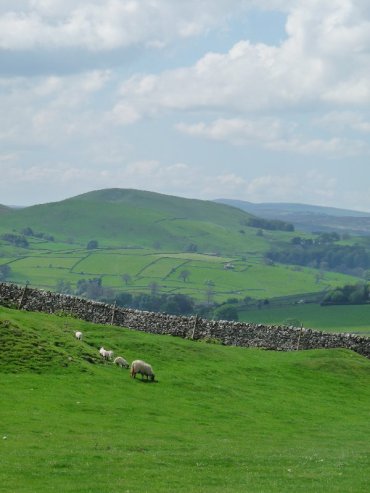

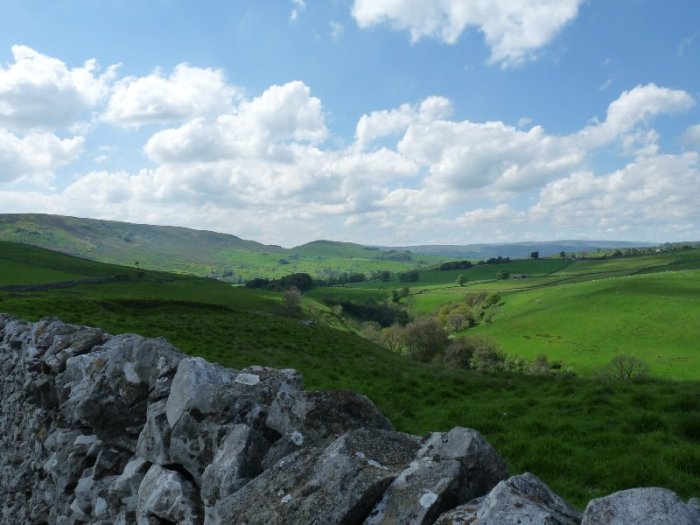







 From Pyrenees to Pennines
You must be logged in to post a comment.