
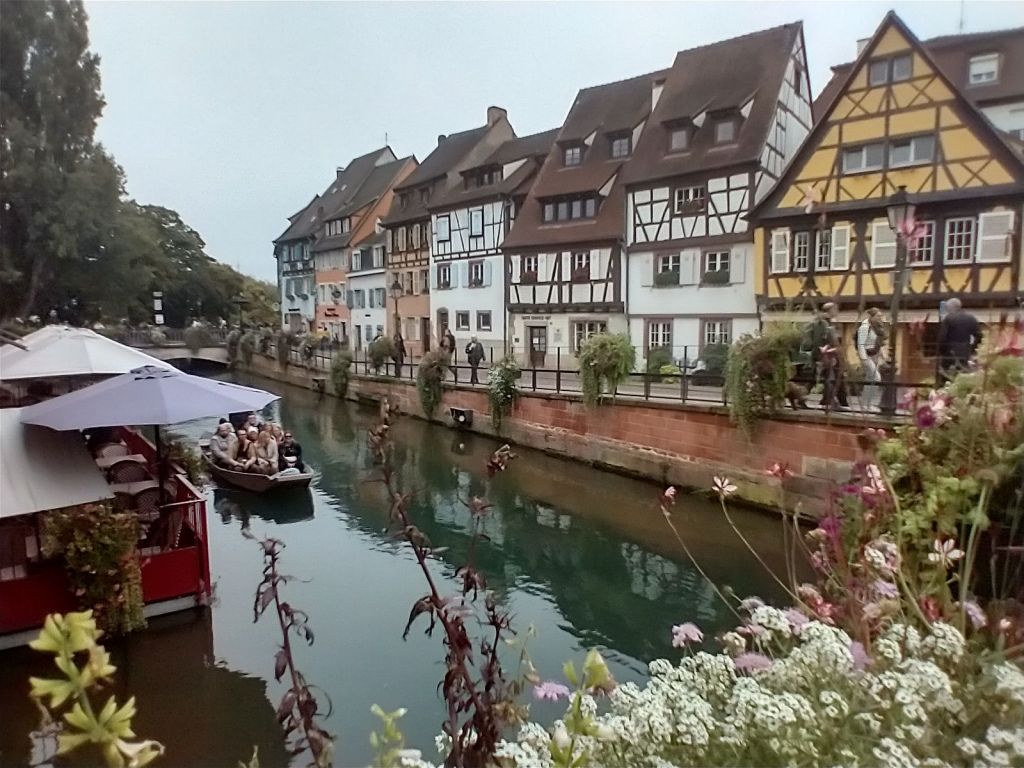
A charming little town just up the road from us. It’s one of the most significant wine villages in Alsace, though not so much on a Monday when almost everything was closed. Fun to explore though.
A charming little town just up the road from us. It’s one of the most significant wine villages in Alsace, though not so much on a Monday when almost everything was closed. Fun to explore though.
This little town has many delights. But have a care! It also has La Tour des Fripons. It was one of the two towers protecting the entrance to the town. But it did double duty as a prison. Hence the name. A ‘fripon‘ is a ‘knave‘.
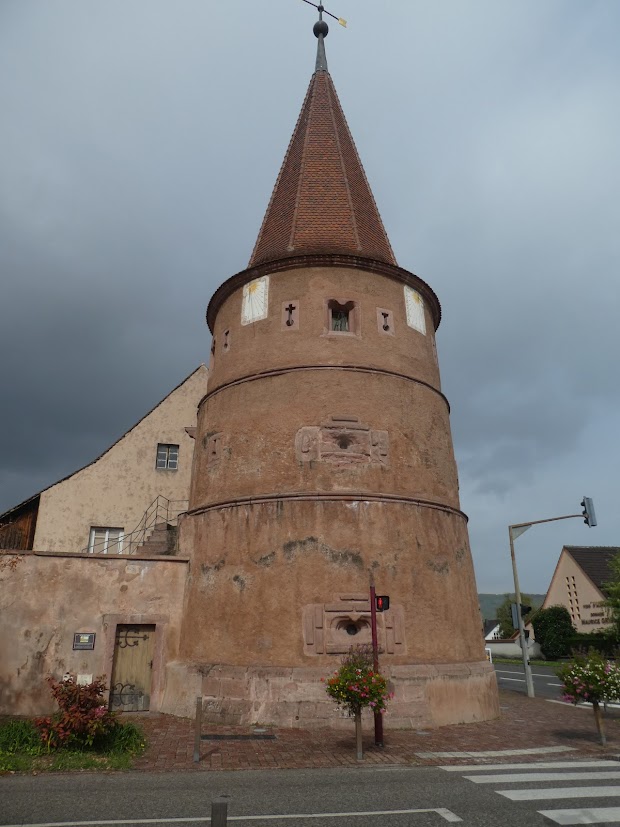
Our real objective for today was the Memorial Museum at Linge. Here was somewhere that brought to life one of the many horrifying periods of WWI, in this case high in the Vosges mountains. It’s a tale that needs telling, but not tonight. Expect a post sometime after our return home.
We know that over in the UK you are battling with Storm Amy, so I’ll keep quiet about the fact that though it is raining here, it’s the only expected poor-weather-episode in our holiday. So we’ve decided to have an afternoon off, allowing me to send lots of postcards from the Fête de la Transhumance in nearby Muhlbach which we visited this morning, ahead of the deluge we’re currently experiencing.
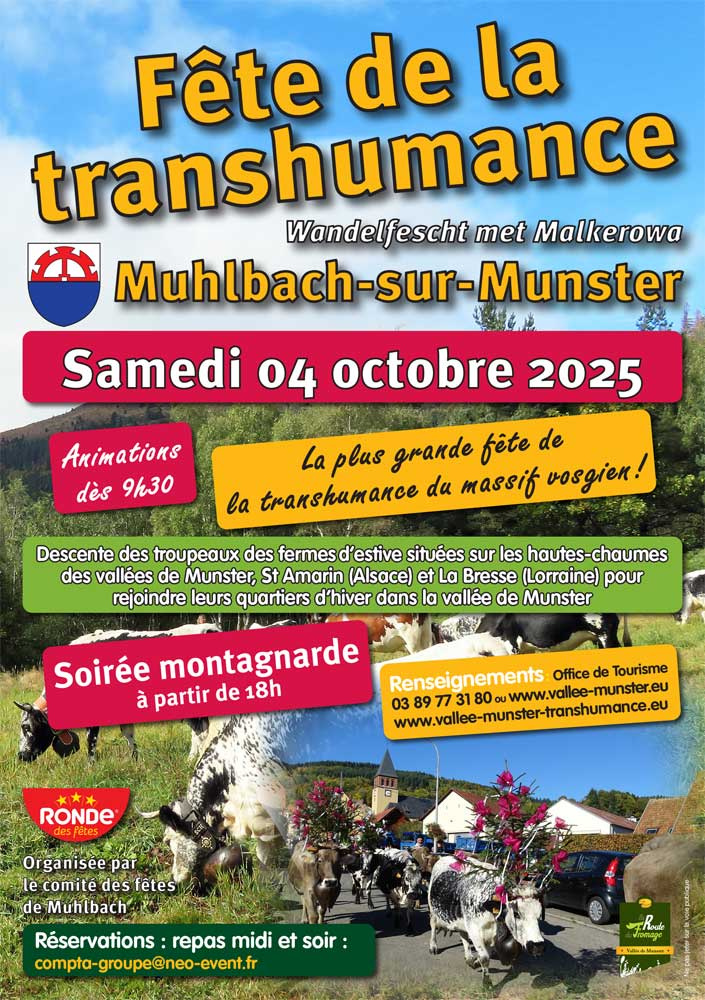
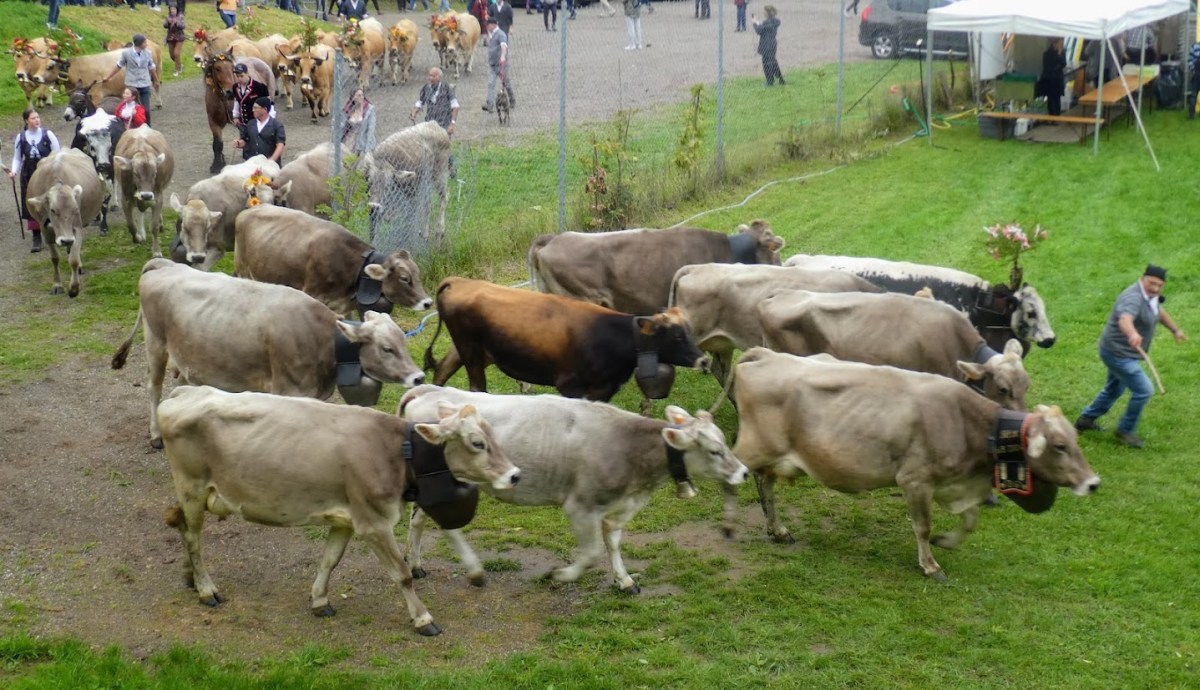
Transhumance is the practice of taking cattle to spend the summer grazing in the lush upland pasture, before bringing them back down to spend the winter in their home community, Both ends of the season are times of celebration, and here’s transhumance in Seix, from our days in the Pyrenees.
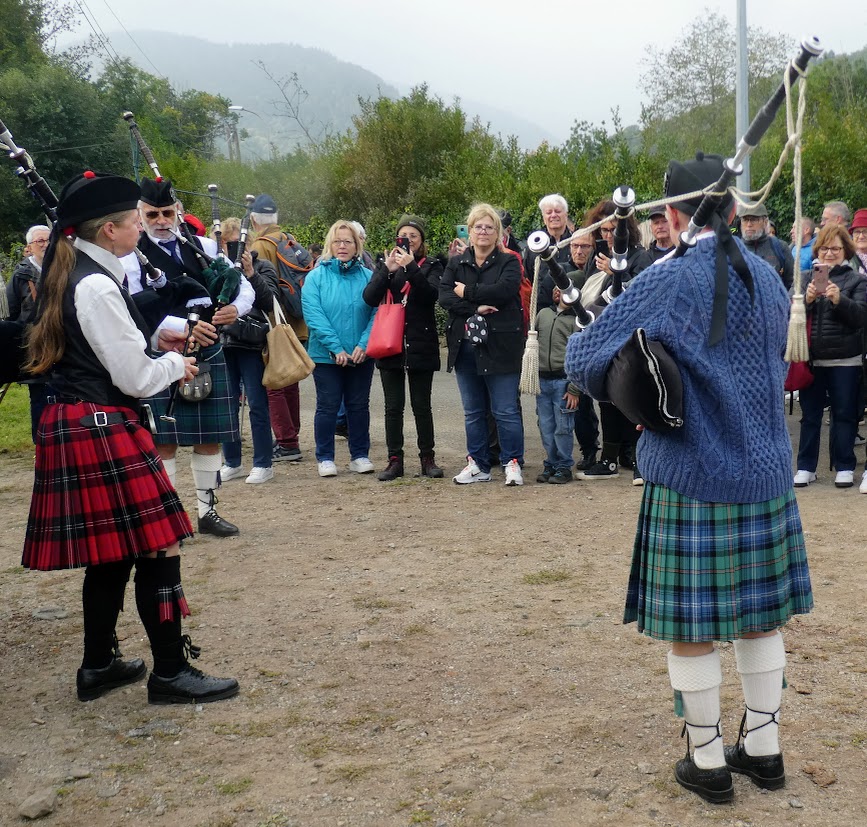
The first people we met after we’d arrived were a group of three people in kilts tuning up their bagpipes. We greeted them in French, then reverted to English, assuming they were Scottish. But no! They come from Strasbourg, speak not a word of English, but are Passionate about Bagpipes, and here they were, ready to play their cornemuses for everyone’s bemusement and delight.
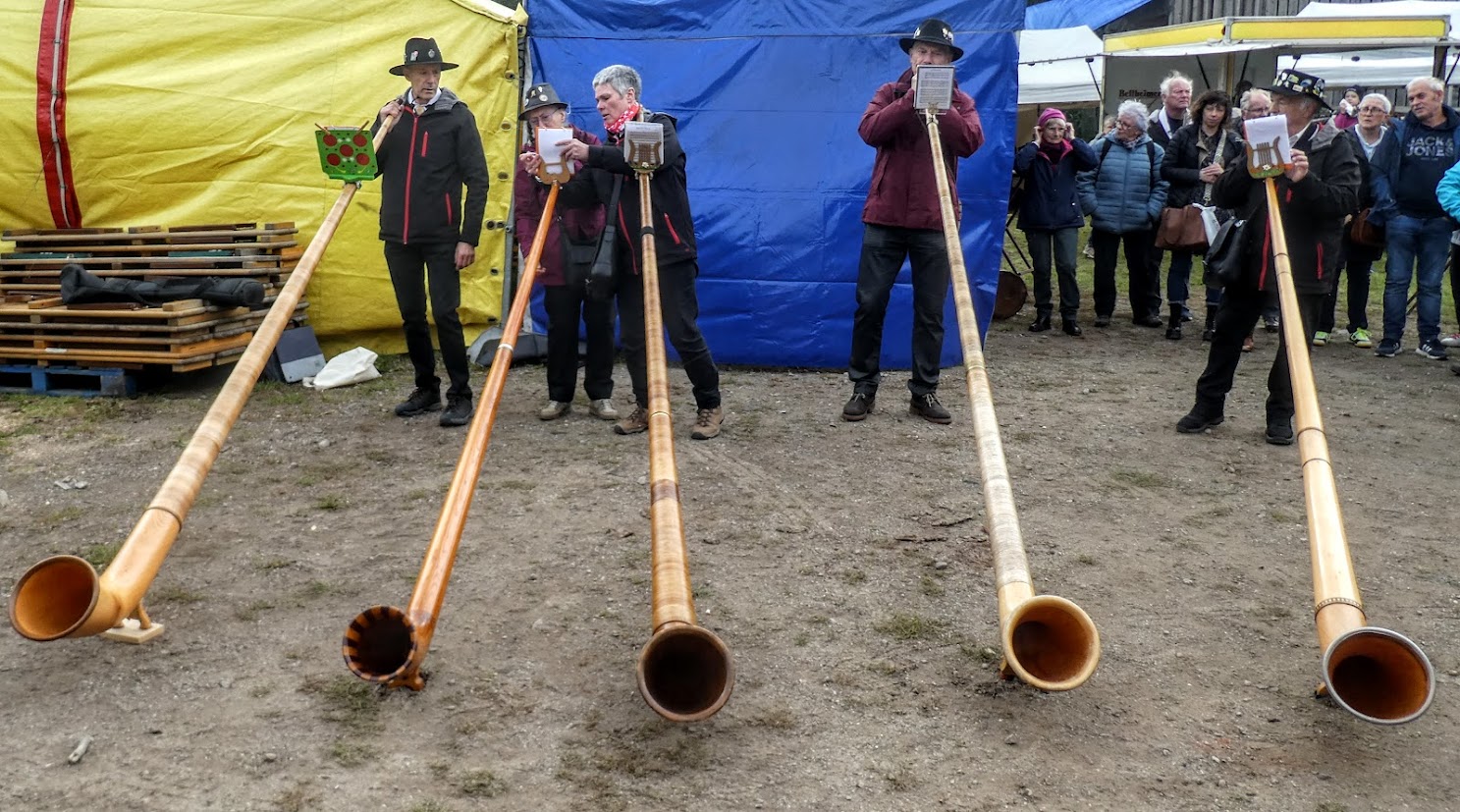
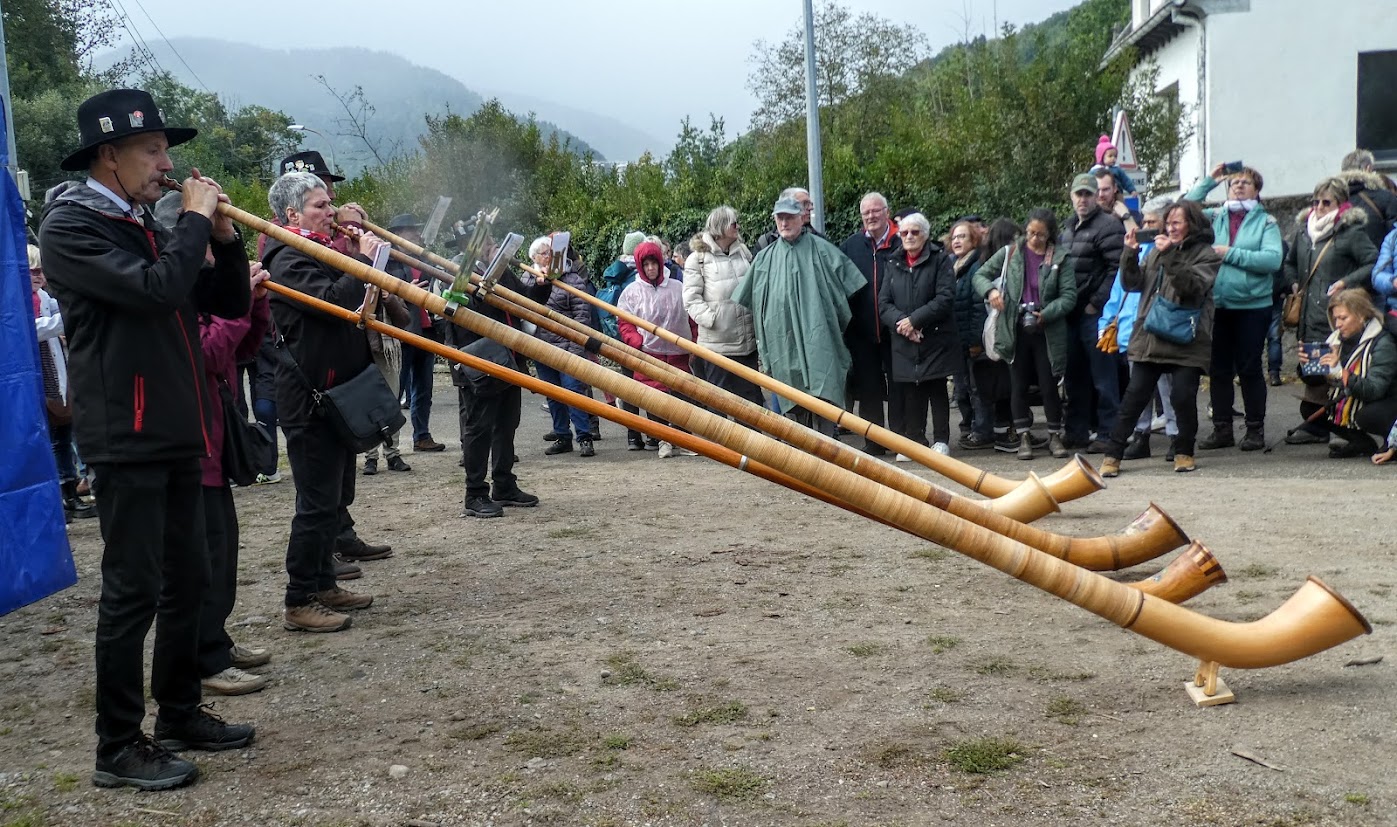
The Alphorn was originally used to call cattle. These days it’s the province of musical folklore enthusiasts and there were several bands of them playing today.
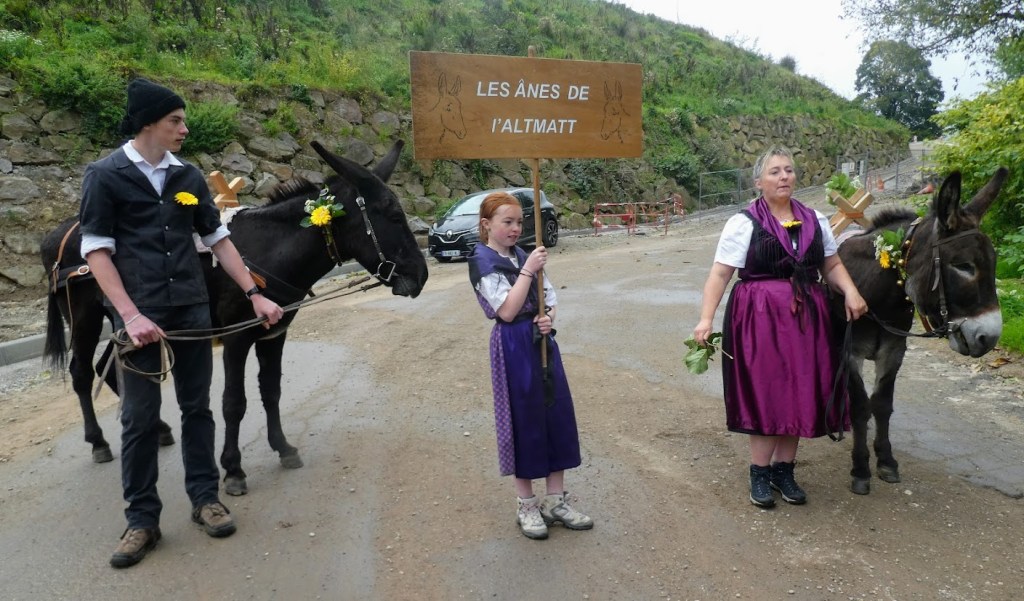
Then it was off to visit the donkeys who would be part of the procession of cattle (Don’t ask. No idea why).
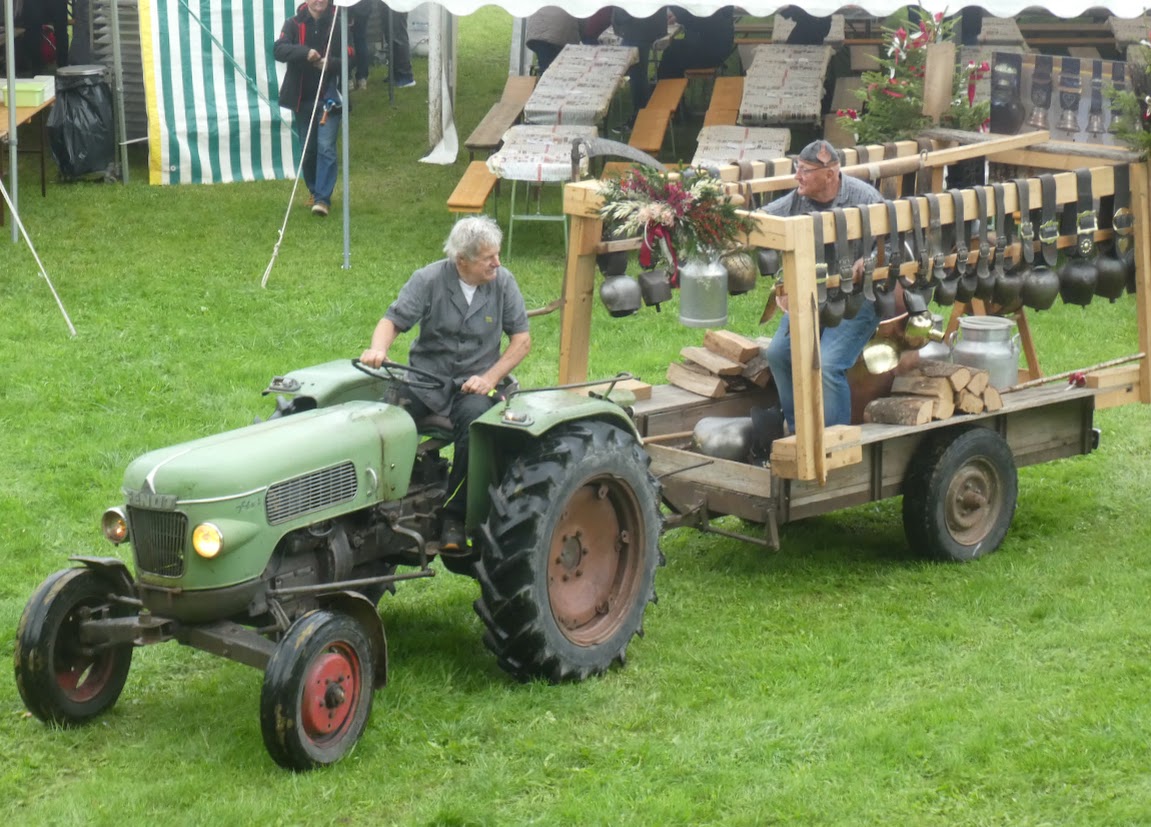
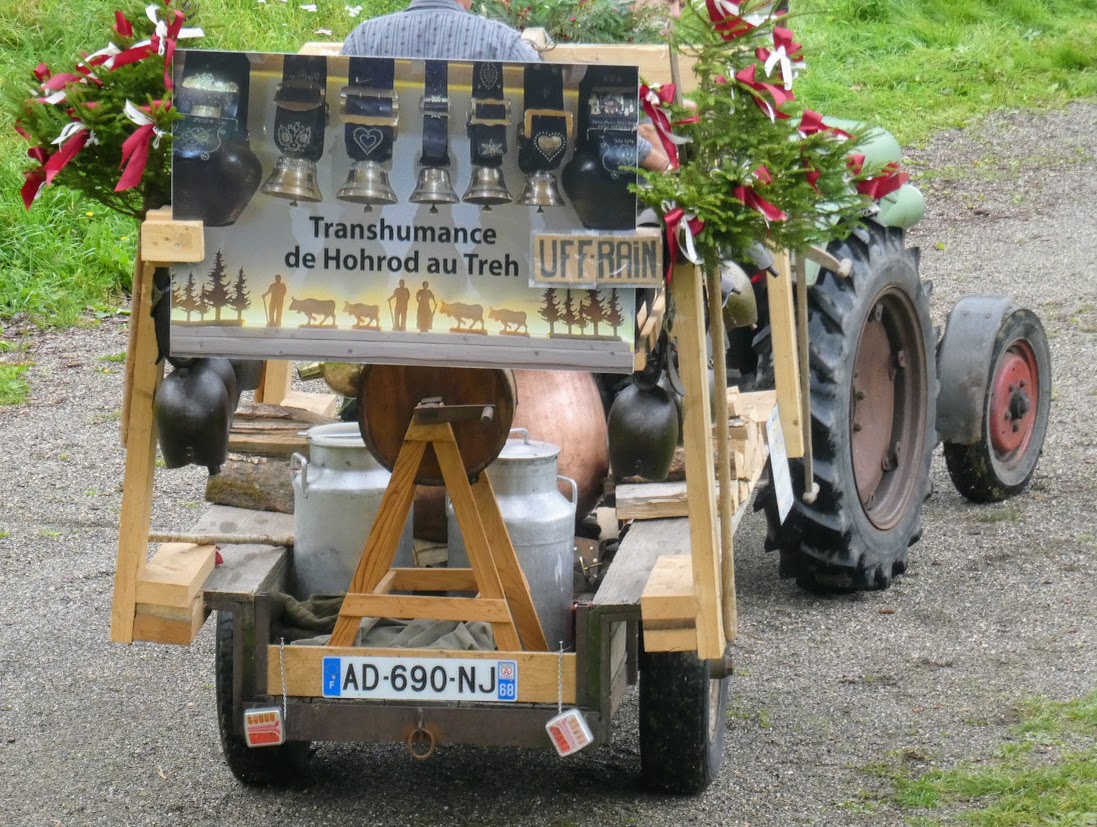
On our way up to view the procession we found the tractor that carried so many of the cowbells the animals wear when in their summer pasture, to keep tabs on them.
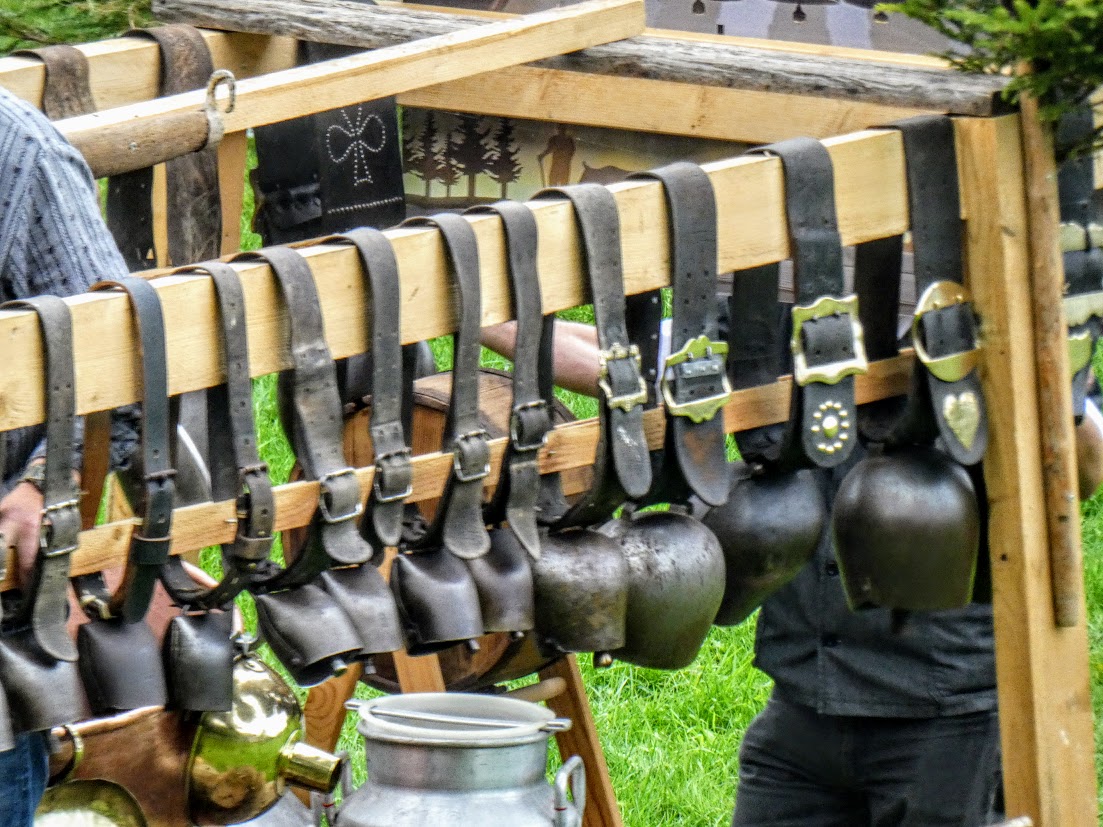
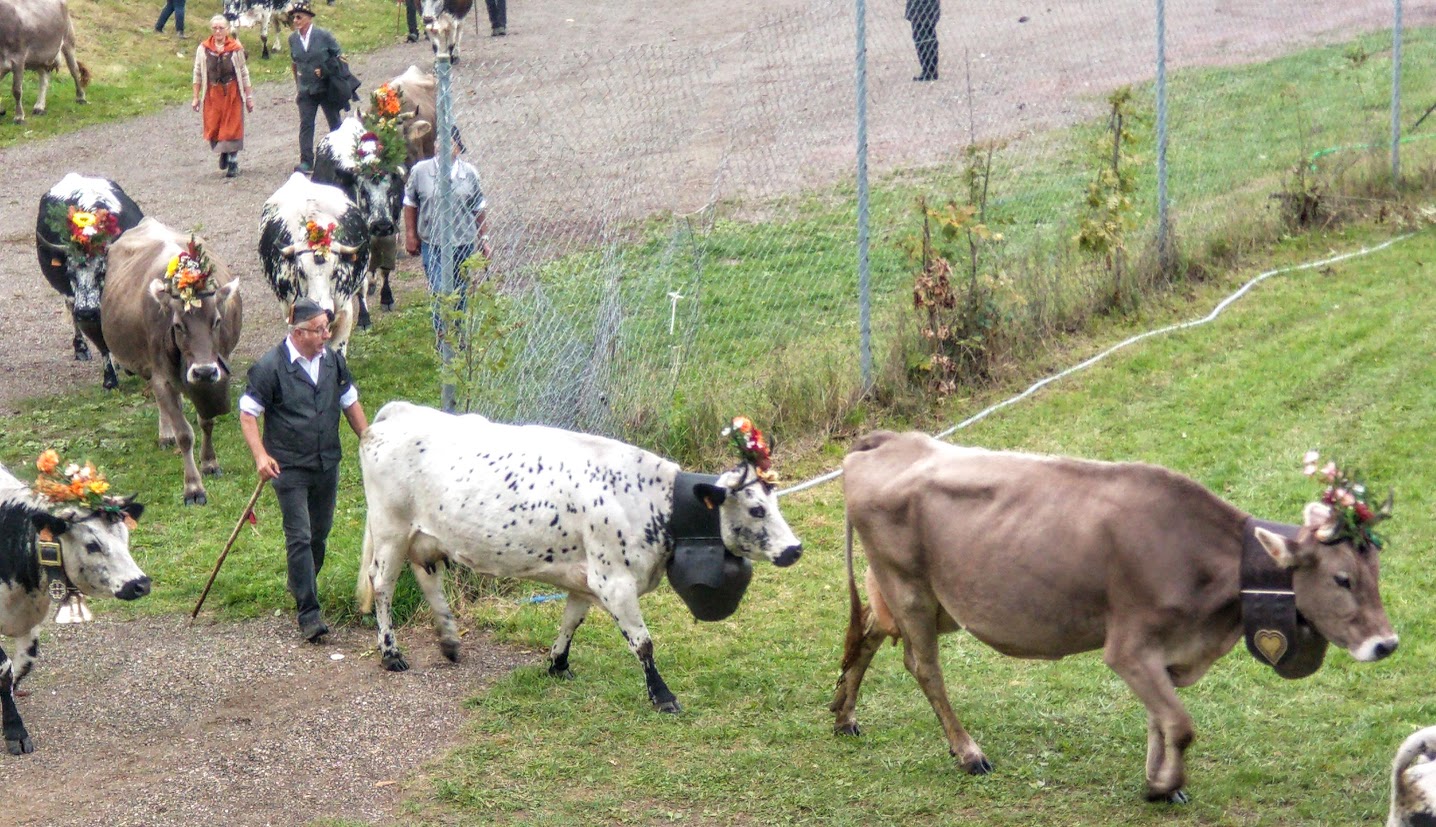
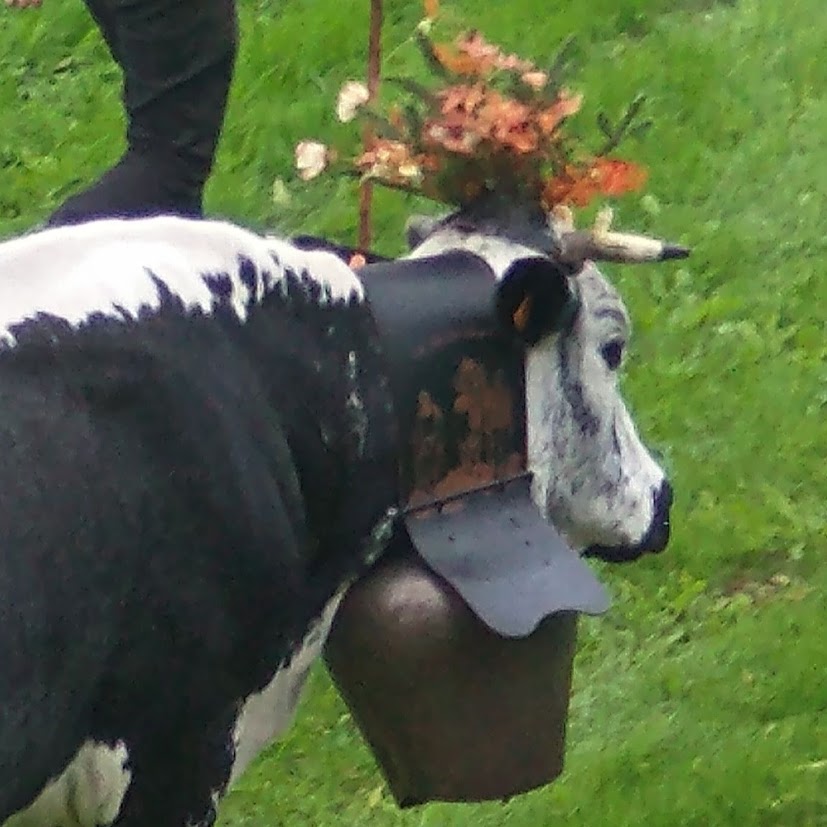
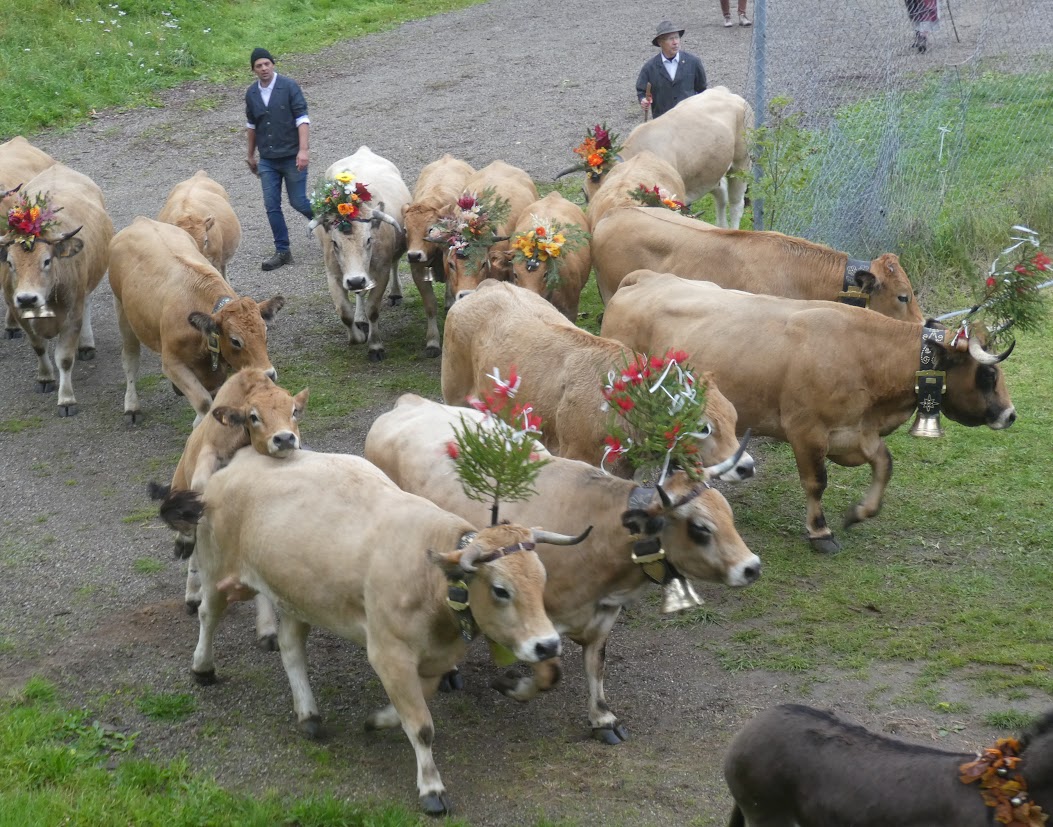
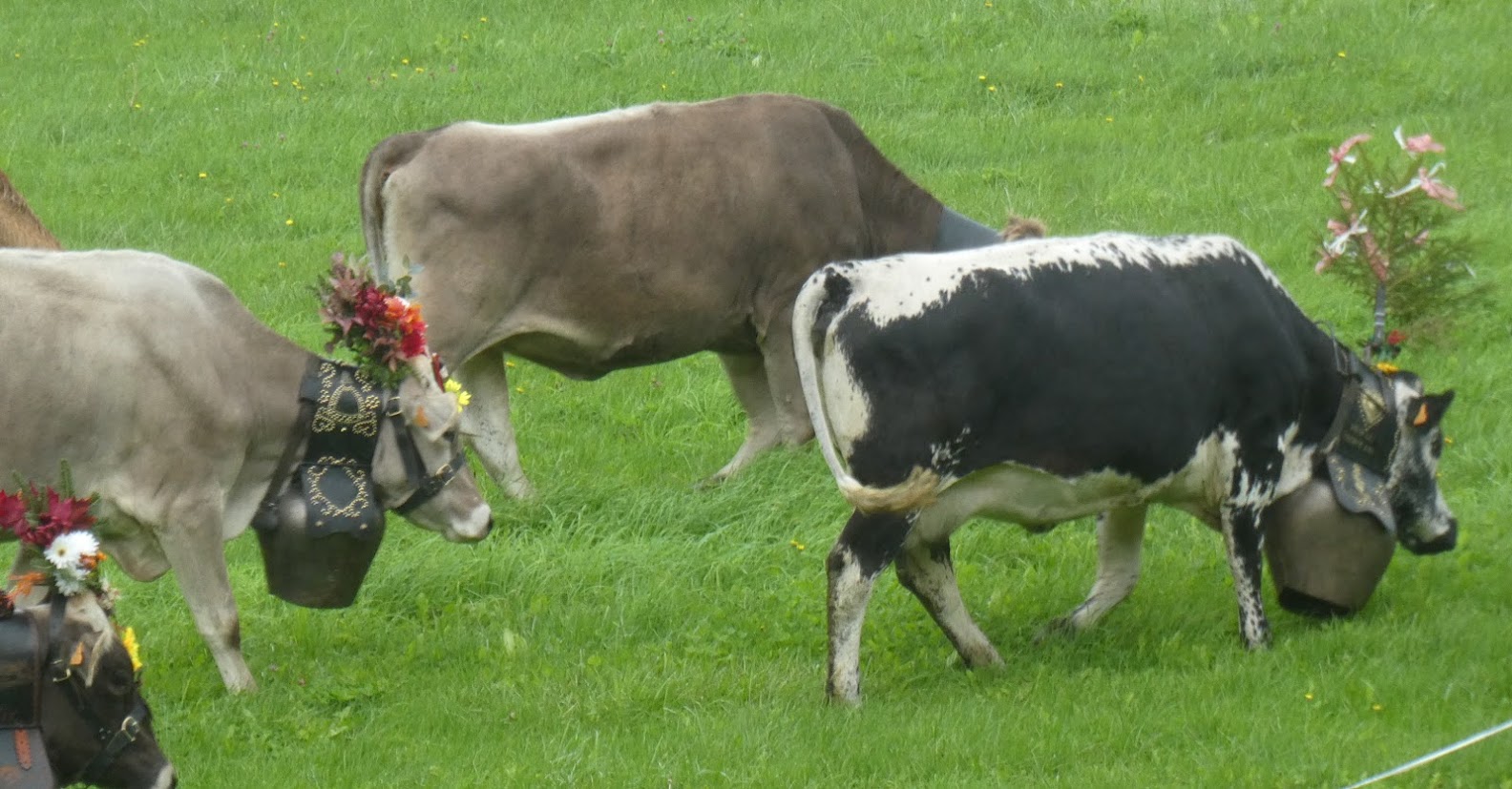
Then finally, we could hear all those cowbells clanging away, announcing that the cows were on their way. In truth the cows weren’t happy, and many of them skittered nervously about. I don’t know how much the leading cows enjoyed their fancy headdresses either: but they didn’t complain. By now it’ll be over, and they can forget all about it till next spring, when they’ll be off up the mountain again.
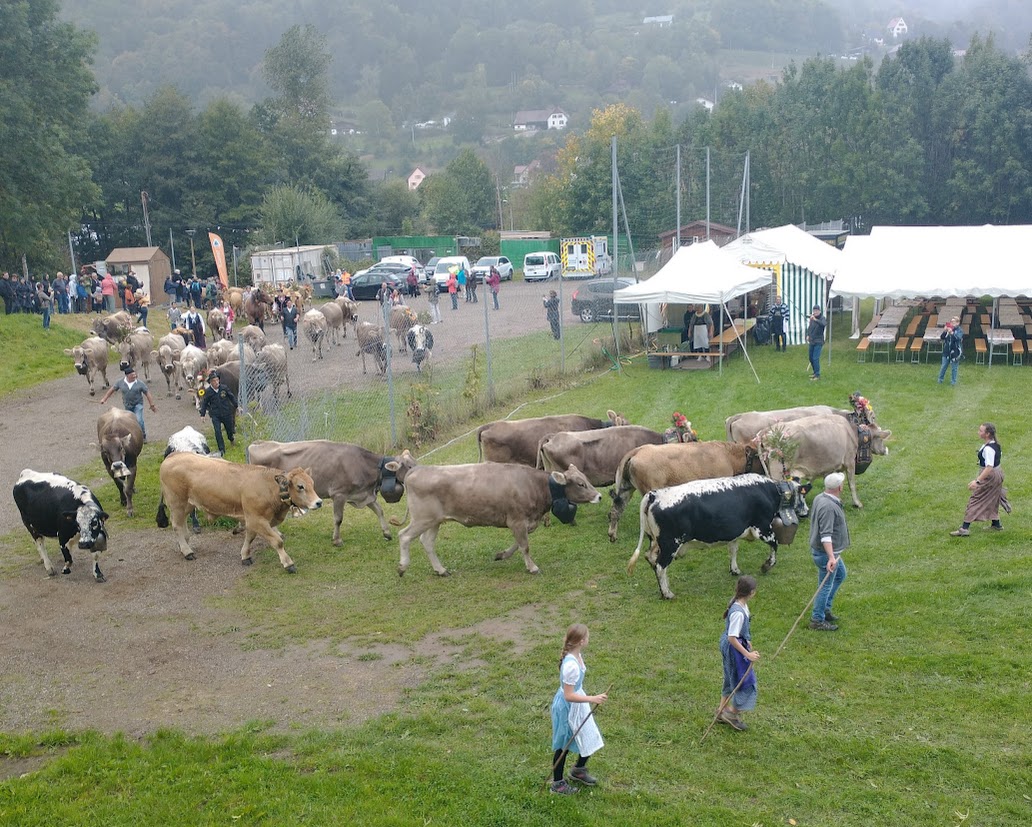
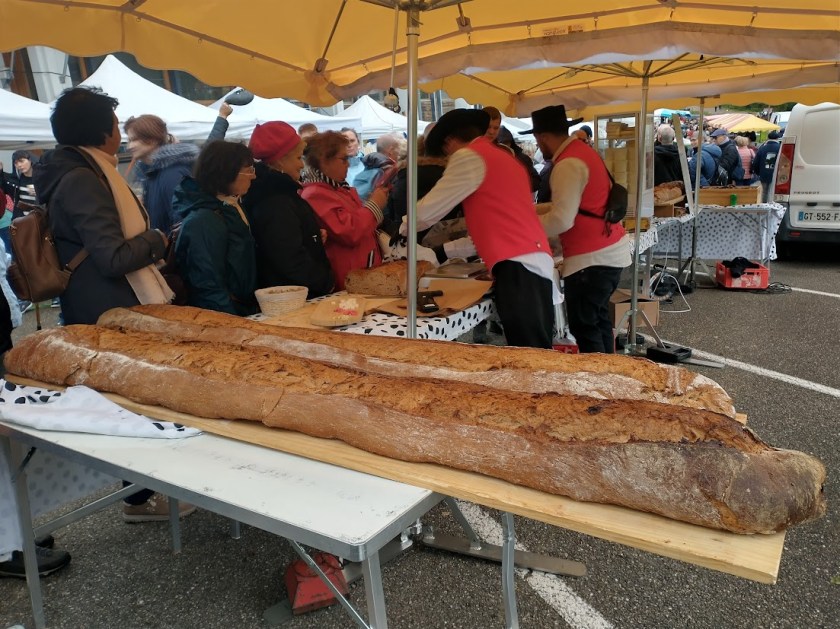
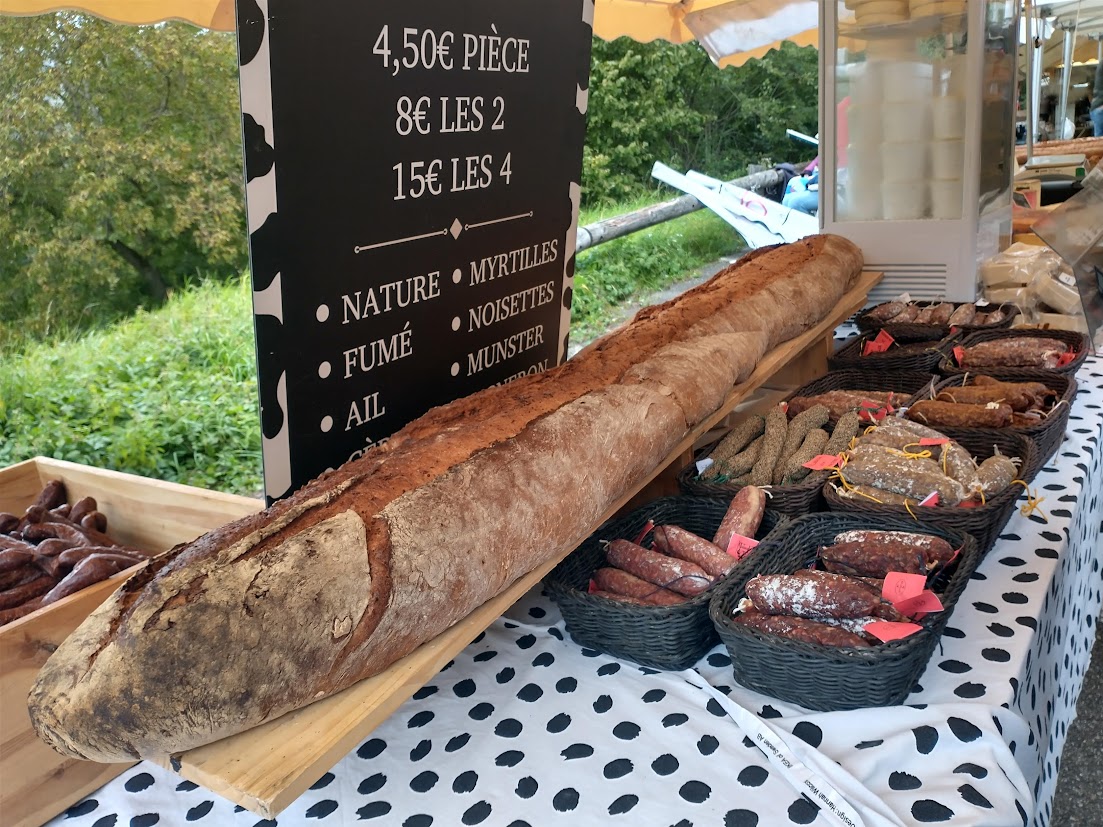
We didn’t stay for the highpoint of the event for many of the locals, the large communal meal, thankfully under canvas. But before we went, we looked round the market: local cheeses, sausage, sweetmeats – cowbells too.
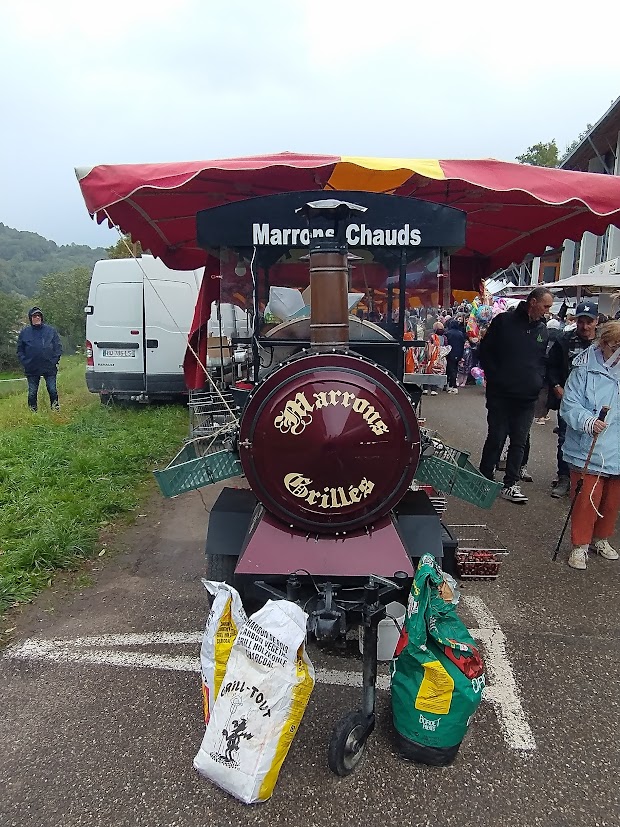
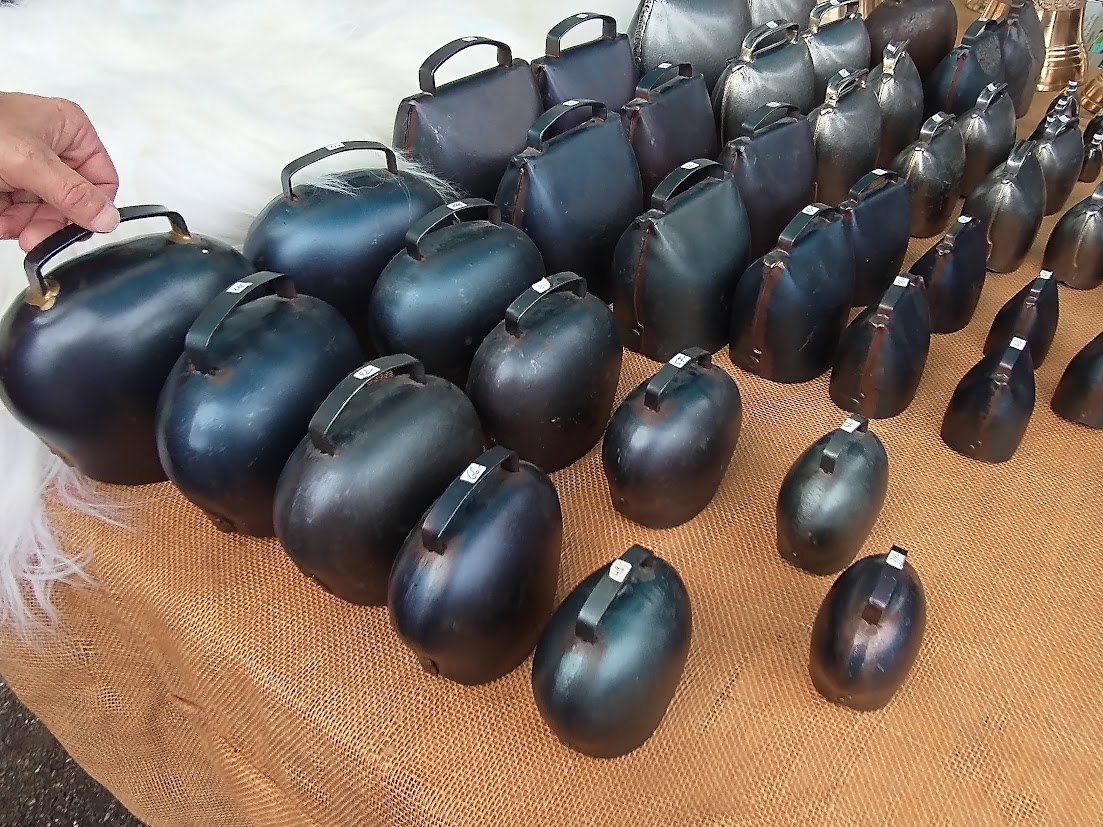
And as we were leaving, something else extraordinary. A procession of people, each holding a large cowbell, which they knocked on each knee alternately as they walked forward, producing a rhythmical cow-bell-dirge. Ouch! Poor knees!
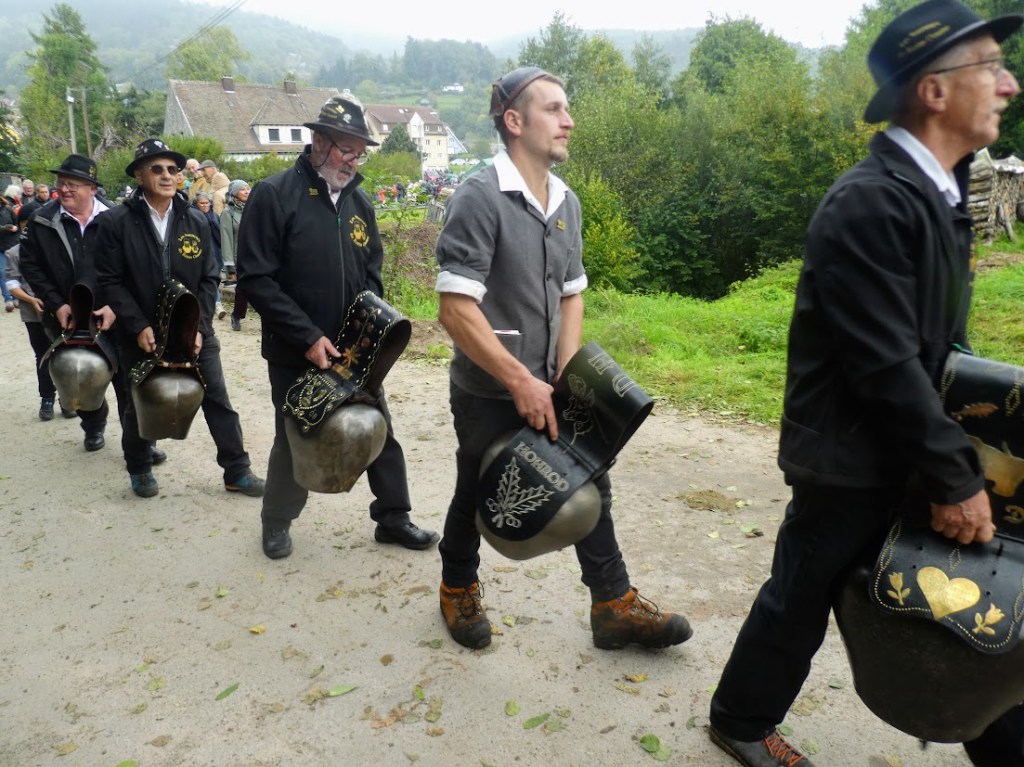
After yesterday’s experience at Colmar, which was Tourist Central, jammed with visitors (like us …) it was good to be at a local celebration: crowded to be sure, but almost exclusively with locals, many of them chatting away in Alsatian, which is widely spoken here, particularly among the older generation.
We feel as if we’ve properly arrived here now.
P.S. WP’s AI suggests the following tags: technology; art; cats.
https://travelwithintent.com/2025/10/04/its-that-fruity-time-of-year/ – Six Word Saturday
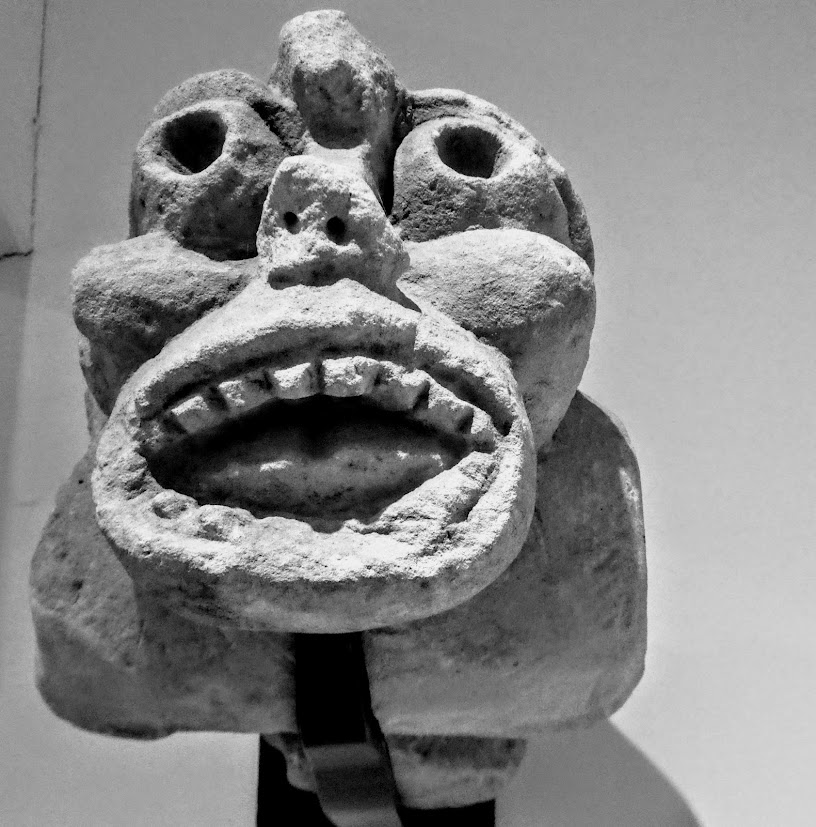
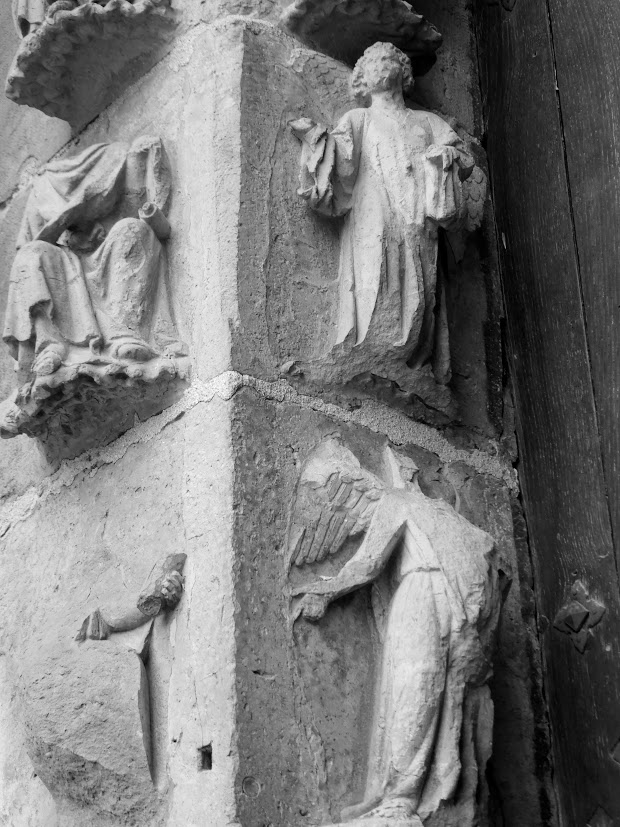
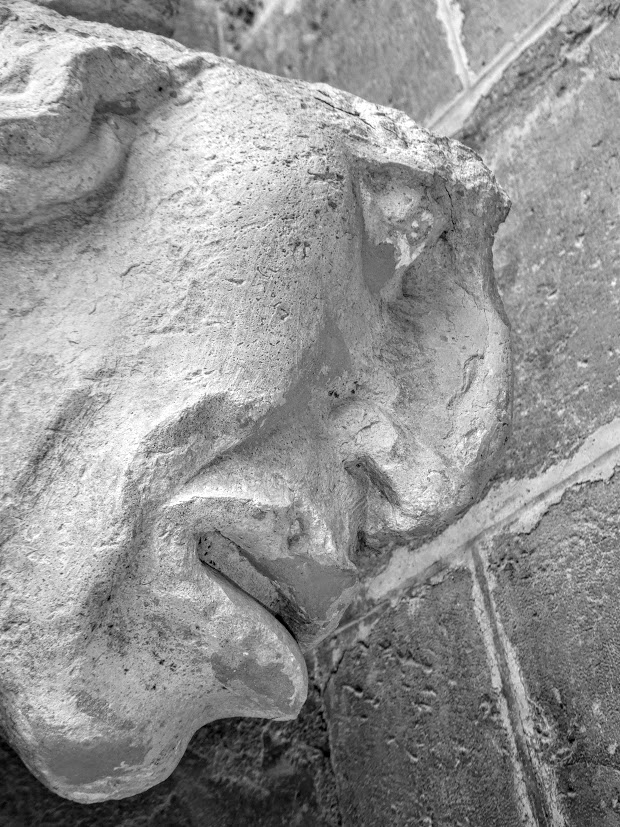
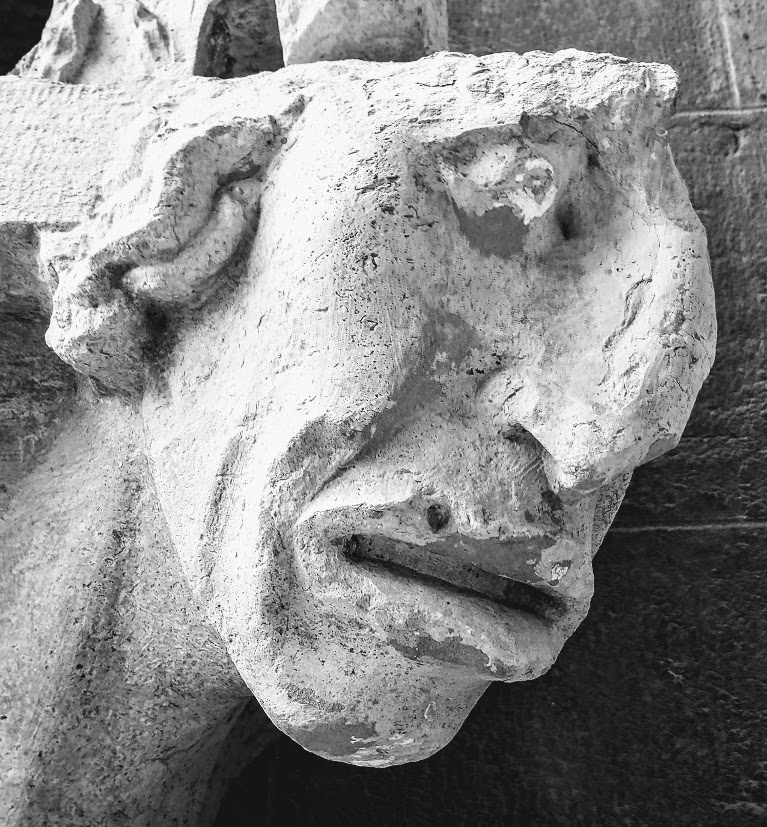
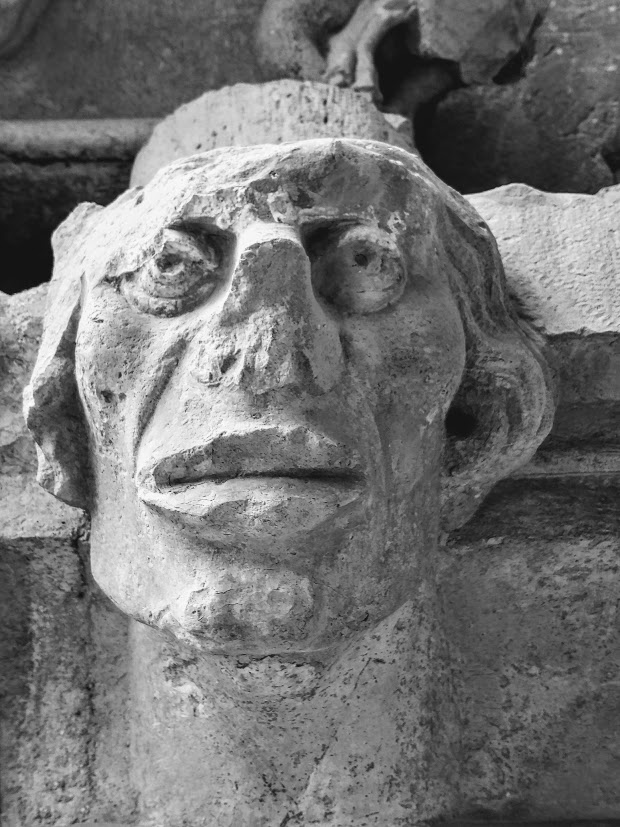
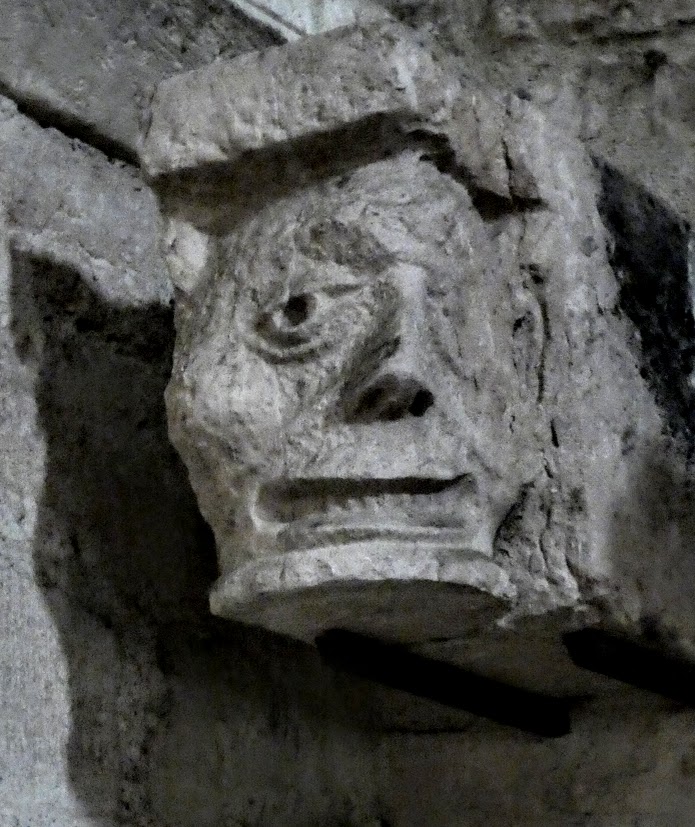
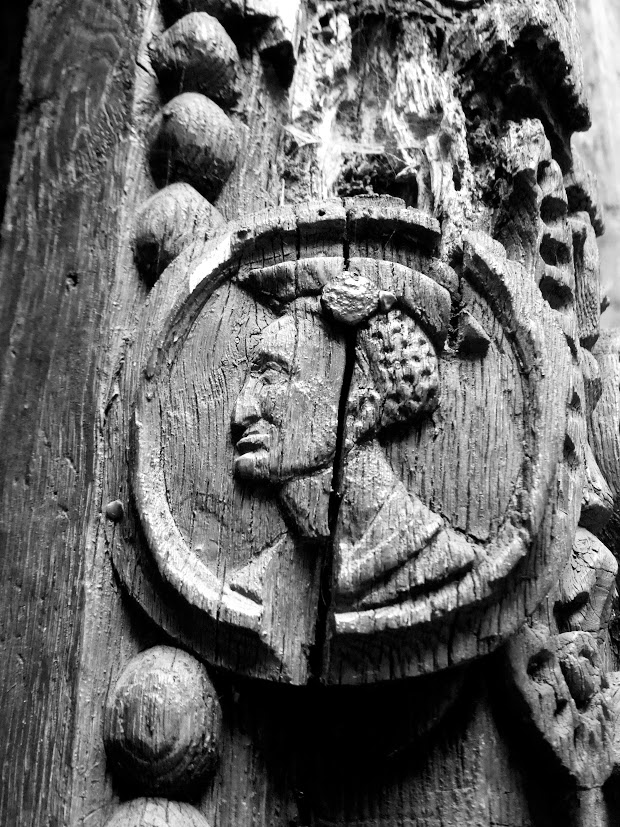
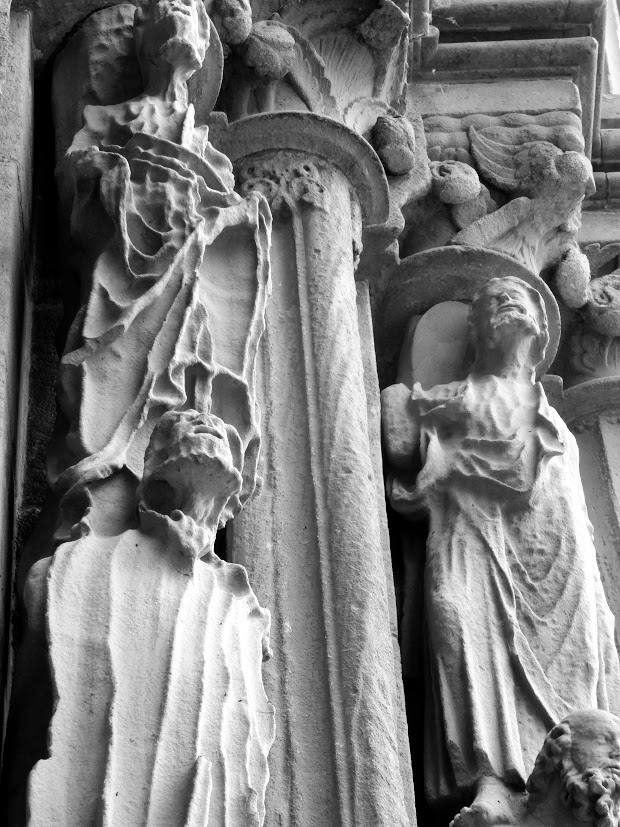
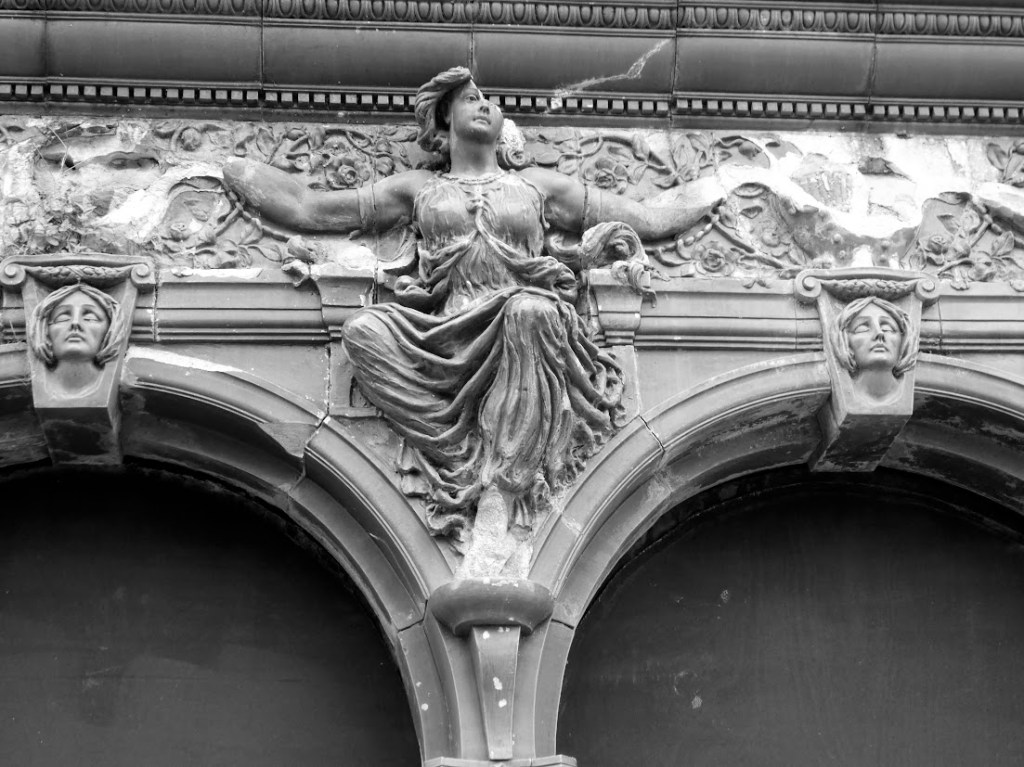
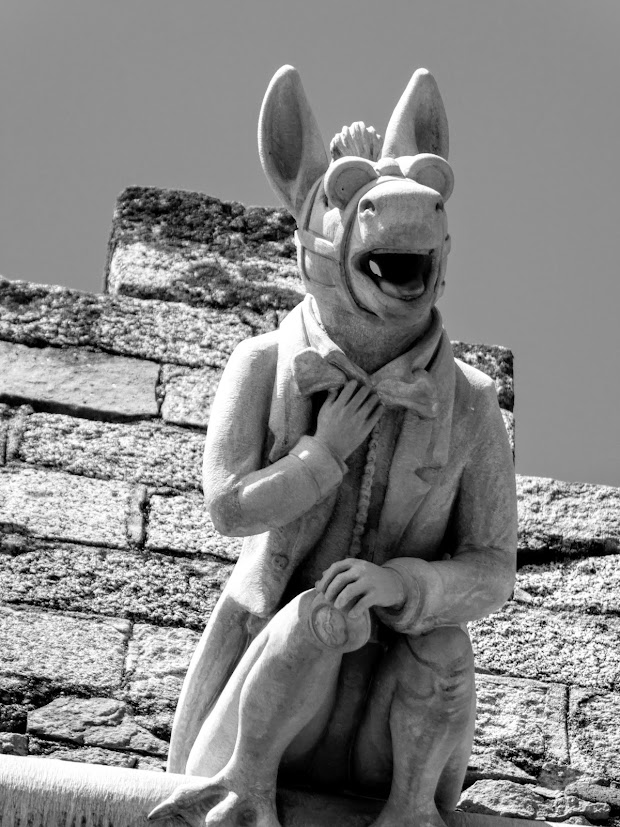
Today, for Leanne’s Monochrome Madness, Sarah of Travel with Me invites us to photograph ruins. I could so easily take you (yet again) to my favourite ruined abbeys: Fountains Abbey, Jervaulx, or Rievaulx. But Sarah herself has shown Fountains Abbey off in her post. I could take you to ruins all over this country and beyond. Instead, I thought that I’d show you not buildings, but their statues, often ruined by weather, by warfare, or quite simply the passage of time.
Best start in Rievaulx though, where carvings in its museum gave me the idea.
Off to North Eastern France, where the churches and cathedrals of Rheims, Laon and Tournus (to name but a few) have all mightily suffered from the weather eating into into the local limestone from which these were built.
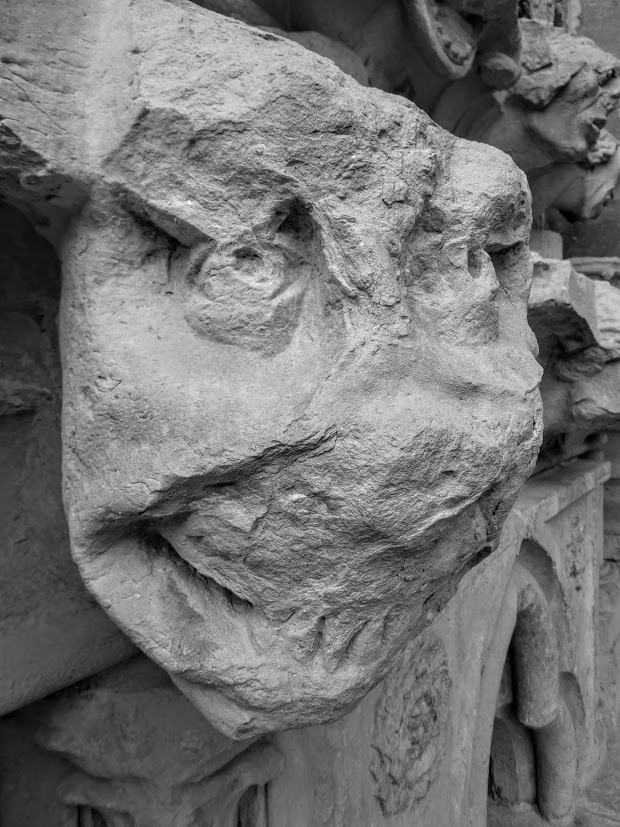
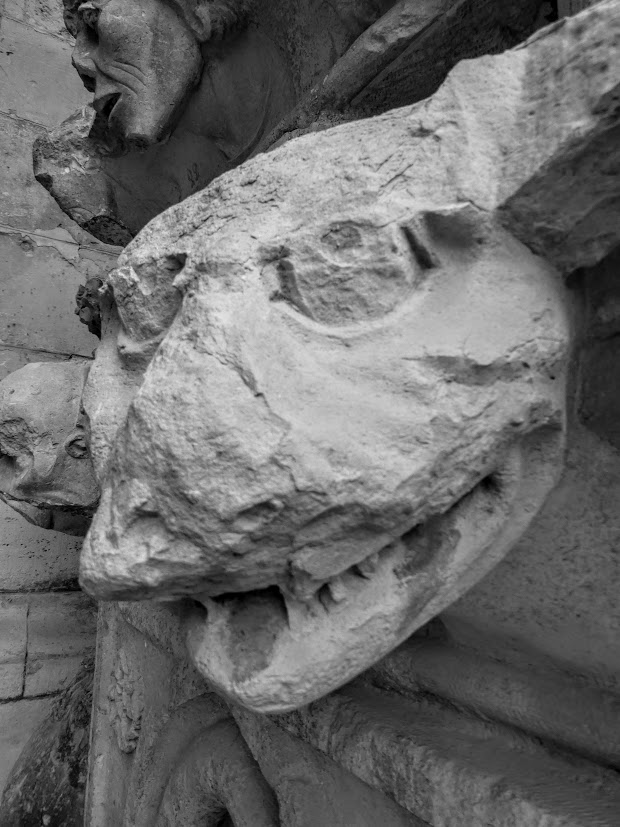

And in Troyes, wooden buildings have taken a weather-beating too.
A church in Bamberg has suffered mightily from having been contructed from limestone.
But even more recent buildings have been ruined a bit. Come to Hartlepool with me.
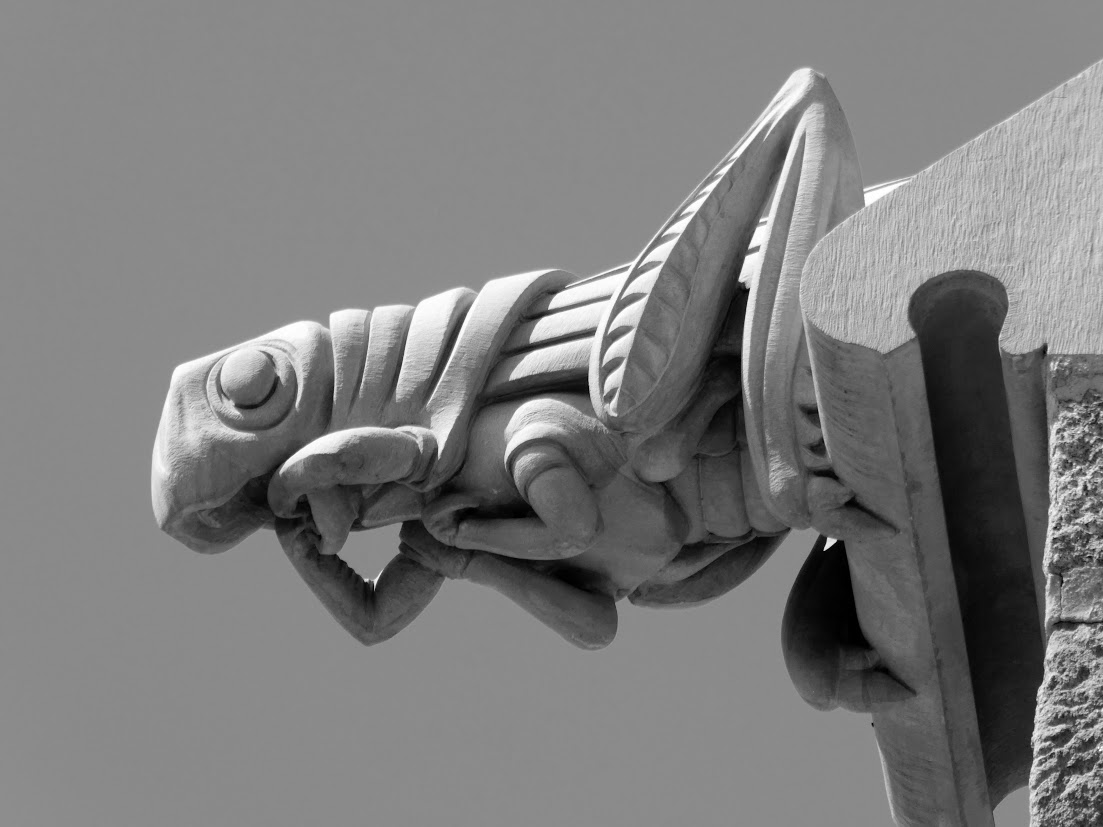
Let’s finish off by disobeying the challenge completely, at Sant Julia church, in Argentona, Catalonia. Its gargoyles were so ruined they pulled them down. And replaced them. Like this.
By the time you read this we will be at least half way down England, in transit for eastern France – Alsace. So you won’t get prompt responses to any comments I’m afraid, as we shan’t finish travelling till Friday. But I will send a postcard before the weekend is out!
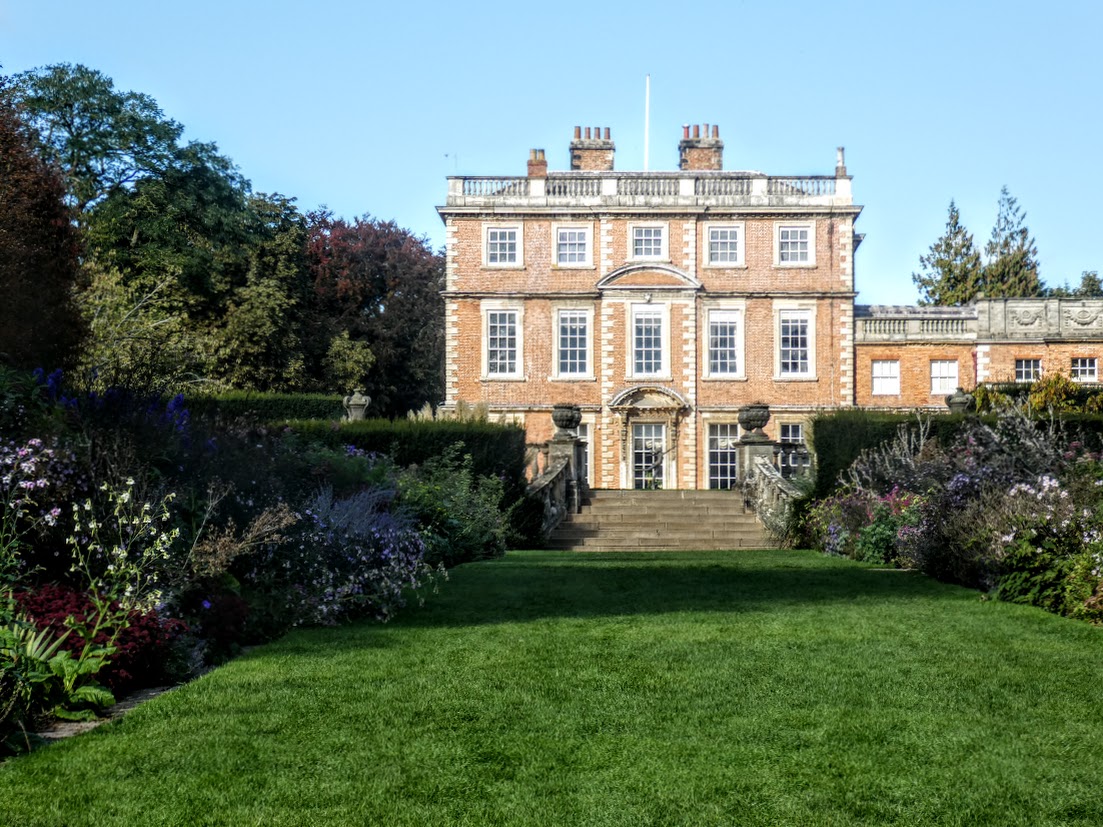
I bet you didn’t know this. Yesterday, the World Jam Festival was held for the fifth time. It was at its new home, Newby Hall in Yorkshire. Somehow, about a month ago, I heard about it. I thought I had nothing to lose by entering. Sure, I had to pay a modest amount to do so, but set that against free entry yesterday to Newby Hall and Gardens for me, and half price entry for Malcolm.
So a couple of weeks ago I entered pots in two categories: Homegrown or Foraged Jam (I entered foraged Mirabelle Jam); and Marmalade (I entered Seville Orange Marmalade). And pretty much forgot about it.
Until yesterday. Because that was the day that the entries would be displayed to a waiting world, and the winners announced. I knew I wasn’t in the running and felt quite relaxed about it all. Just a bit of fun.
When we arrived, I soon got chatting to one of the organisers. There were entries from Australia (yes, really!), the Netherlands, Poland and a few other countries. And far from English entries coming strictly from North Yorkshire, I spotted pots from Somerset, Sussex, East Anglia and all points north. AND an entry from the dreadful Jeremy Clarkson’s Diddly Squat Farm (small producers were encouraged to enter). It got nowhere, because it was visibly mouldy. Very mouldy indeed. As was instantly apparent.
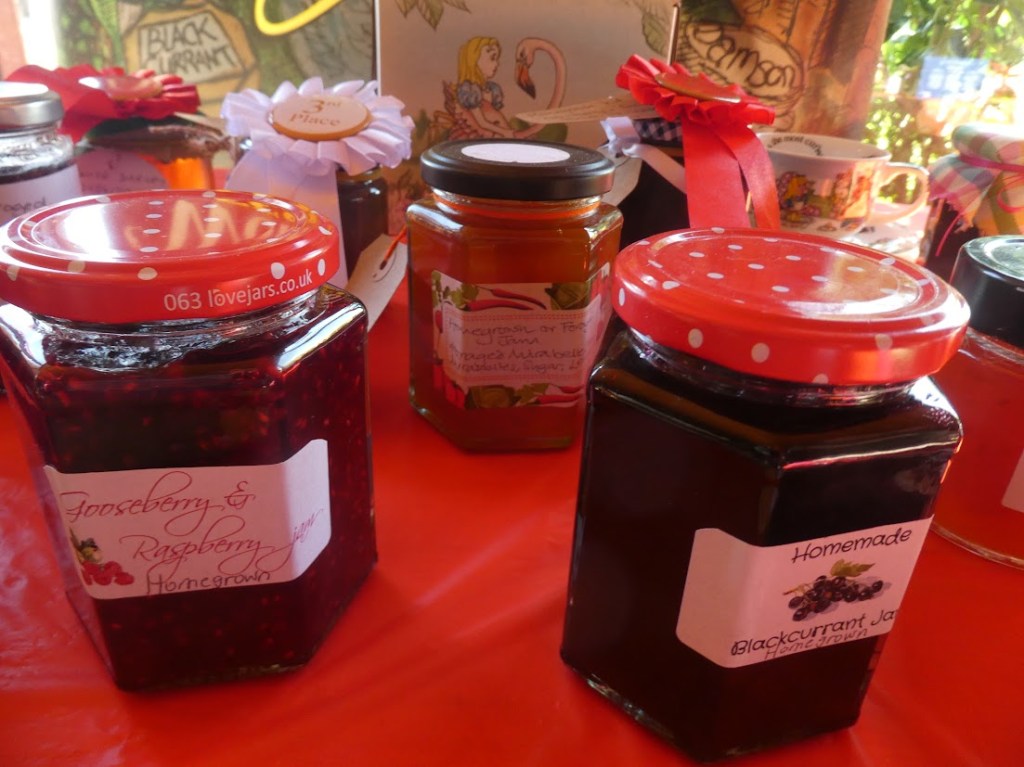
We peered about, looking at all the entries in turn. My jam was not a lucky winner. No surprise there. But look! There among the winning marmalades was mine! I had won … second prize!
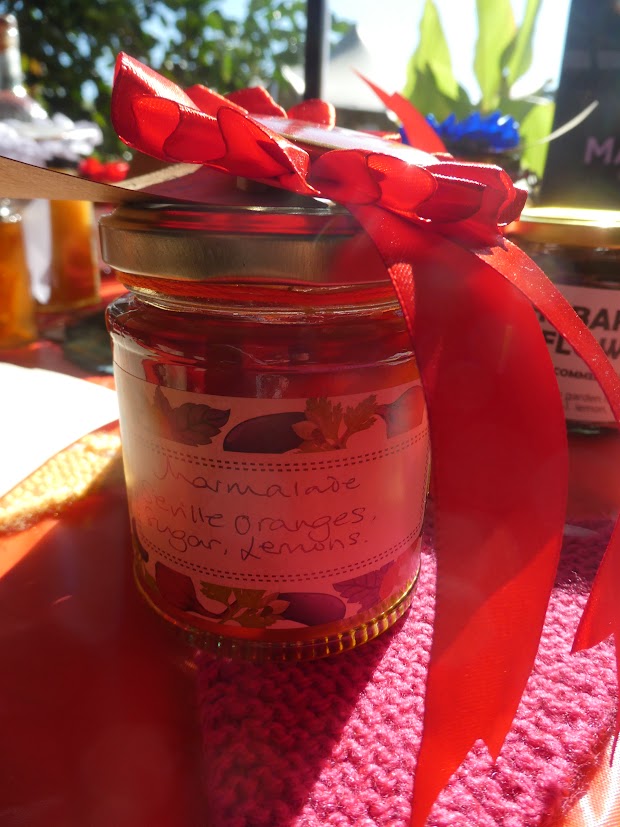
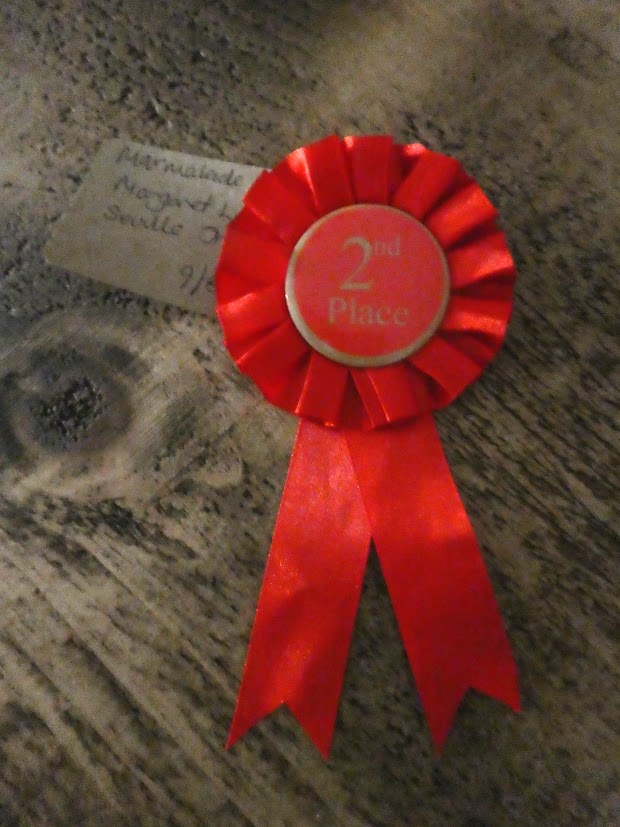
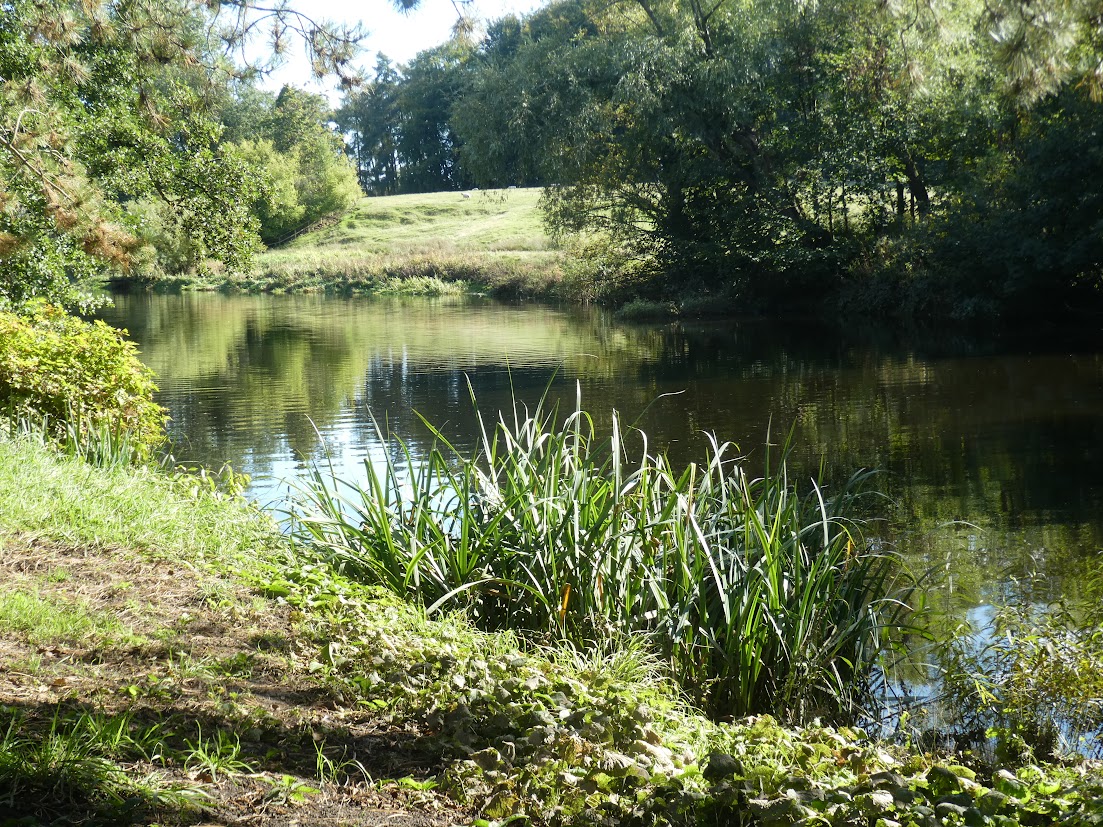
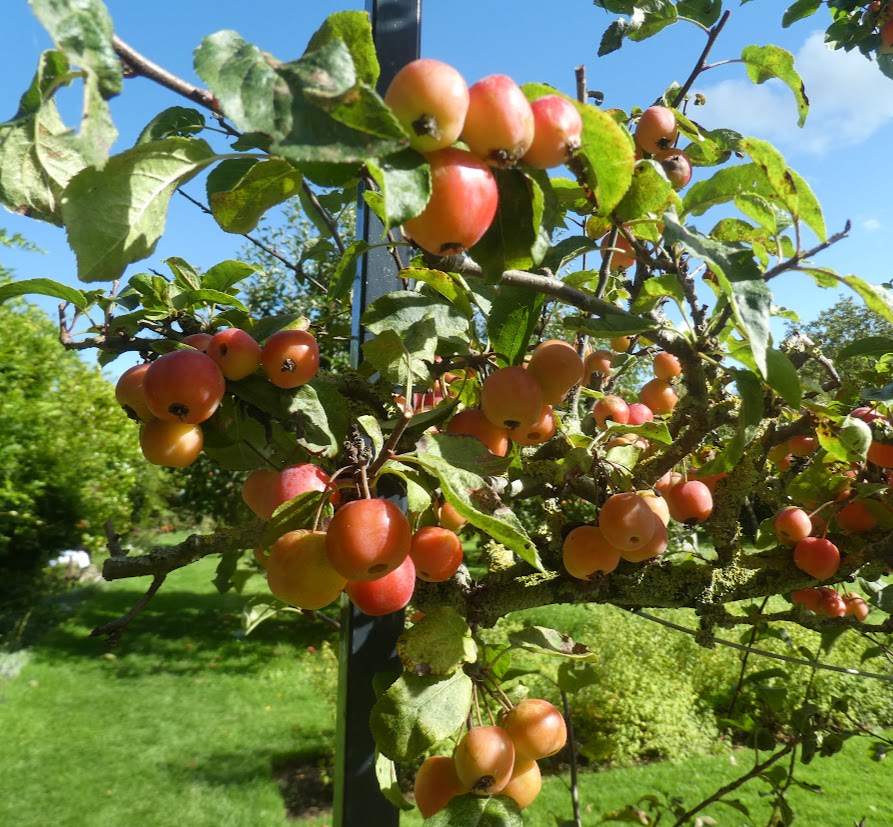
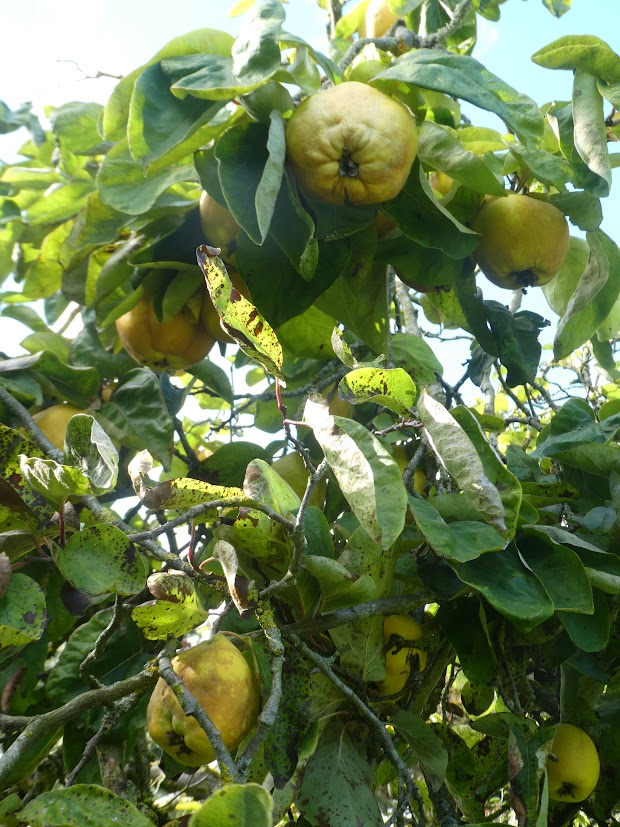
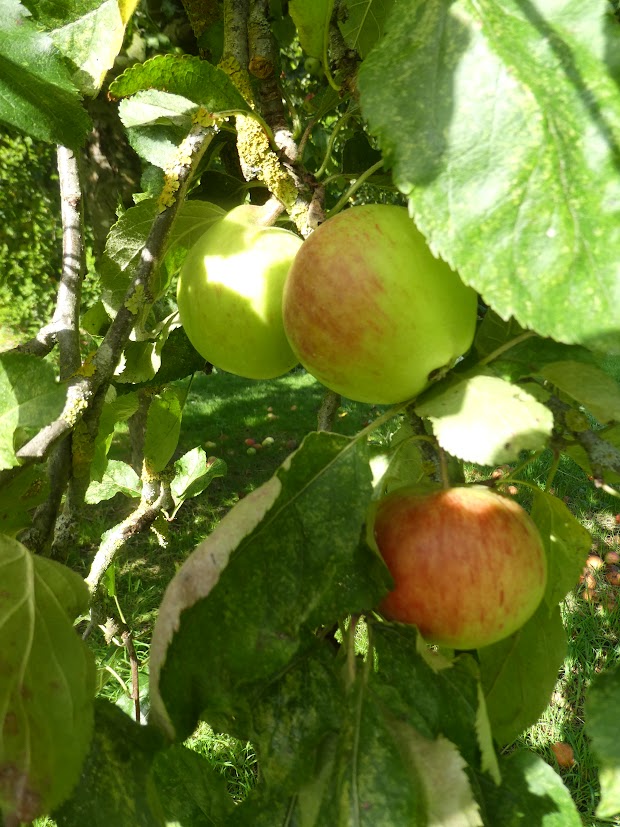
We went and had a stroll round the gardens, to calm down. They’re past their best at the fag-end of the season, but it was pleasant anyway, especially the apple orchard where we ended up.

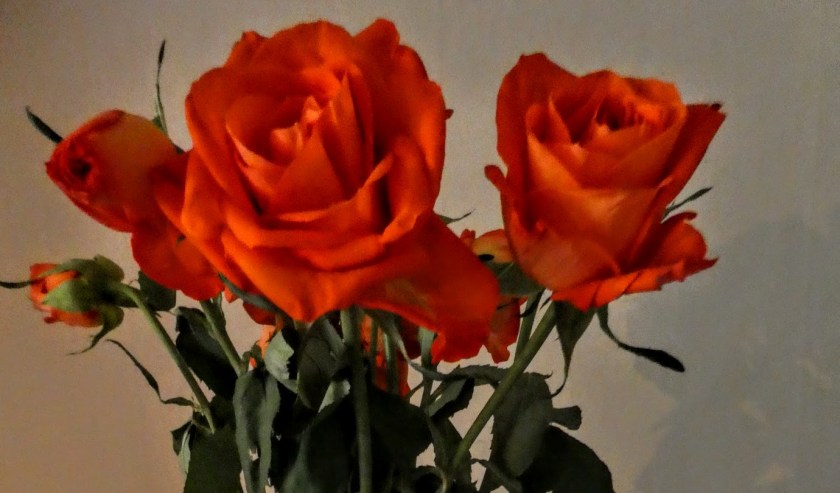
And that was that. For my prize, I had a splendid bouquet of roses (I’m rather hoping none of those Australians won: their flowers could have arrived worse for wear. Oh, wait. Interflora.
Will you enter next year? Please do!
P.S. We’re off for a break till mid month. I have a post scheduled, but beyond that, no blogging from me apart from the odd Virtual Postcard. And I may be slow in responding to comments.
P.P.S. The automatic tagging suggestions I got today, courtesy of AI, were: food; baking; chocolate; cookies; pizza.’
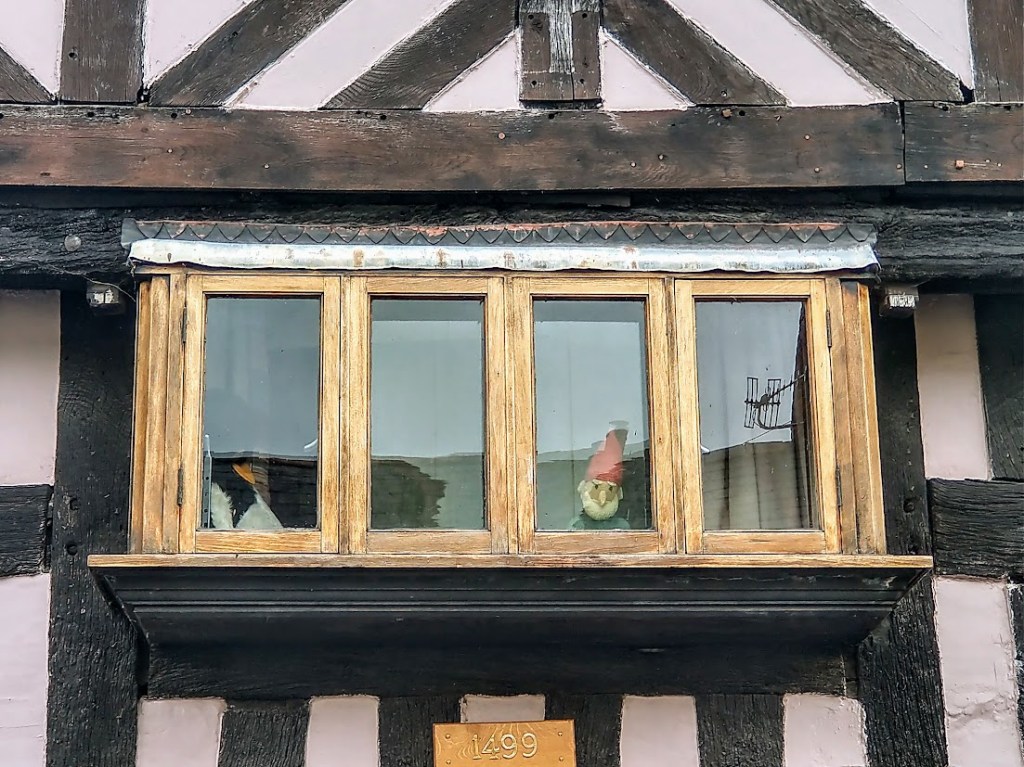
Someone has called this place home, since 1499. Current tenants? Apparently a garden gnome and a penguin. Spotted last summer in Bishop’s Castle.
For Debbie’s One Word Sunday: Home
This year Bradford is the UK’s City of Culture. This might seem unlikely. Once a town prosperous thanks to the textile industry which thrived there in the 19th and early 20th century, its vitality decreased thanks to the collapse of this industry during the mid 20th century, not long after the time that thousands of Pakistanis and Indians came to work in those textile mills. Now it’s once again finding its feet, and is a lively multi-cultural city. We don’t visit as often as we should.
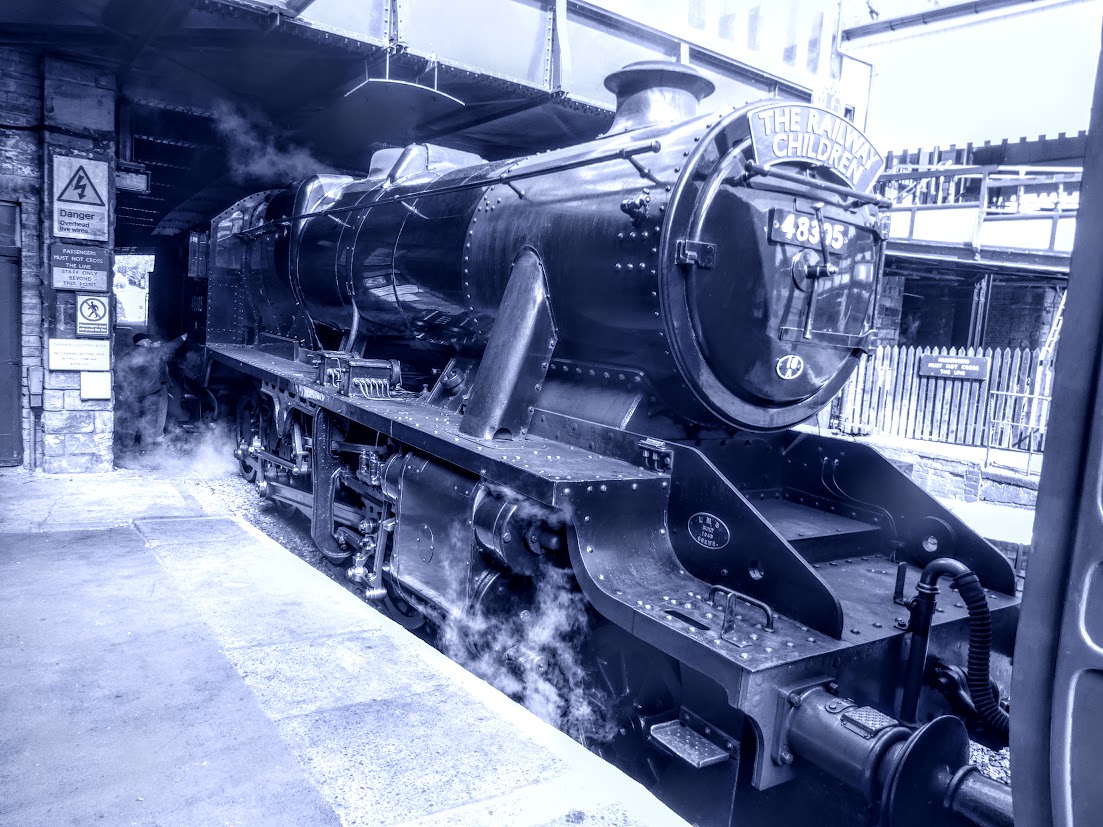
But in late August, we did. We had to see the show that everyone was talking about. In Edith Nesbit’s 1905 book The Railway Children, often since adapted for stage and screen, siblings Roberta, Peter and Phyllis are forced to move with their mother to a country cottage after their father is unjustly imprisoned for espionage. Living by a railway, they become fascinated with the trains, stop a runaway train to save lives by waving flags, and befriend their mother’s wealthy, kind neighbour, an ‘Old Gentleman’, who helps their family and ultimately finds their father. Conveniently, in this Bradford production, the mother is an Indian woman whom the children’s father met whilst working there. This allowed the children to be played by British Indian actors, to celebrate the Indian aspect of Bradford’s heritage.
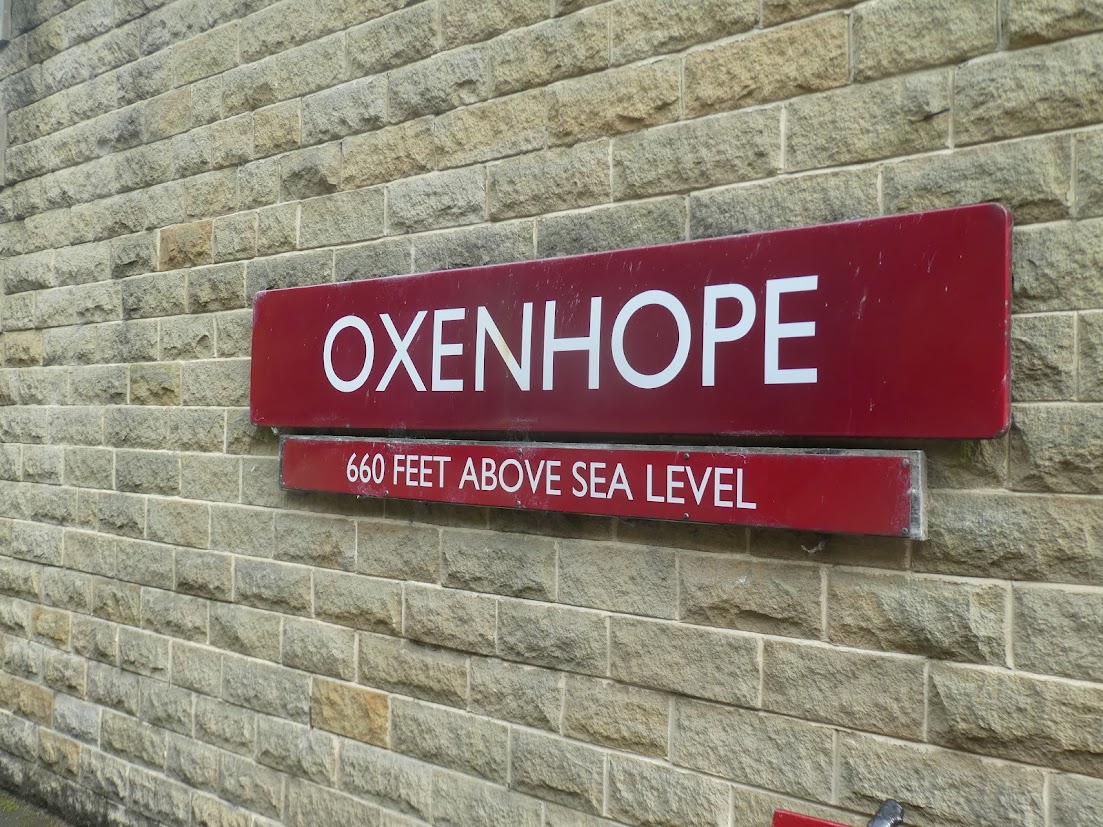
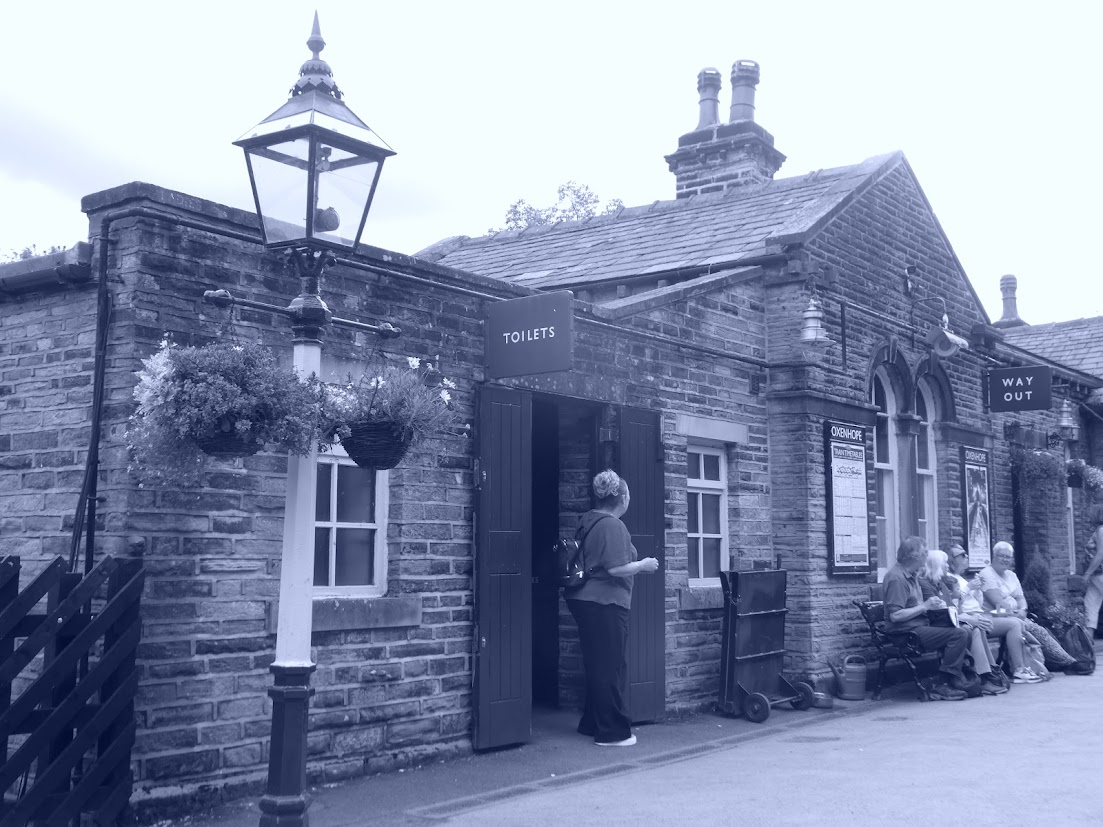
Well. Anyway. This wasn’t any old play. We had to report, several hours before the production began, to Keighley Station. Which is part of Bradford Borough. Why? Because we were to be transported by steam train to Oxenhope where the play would take place in a re-purposed engine shed.
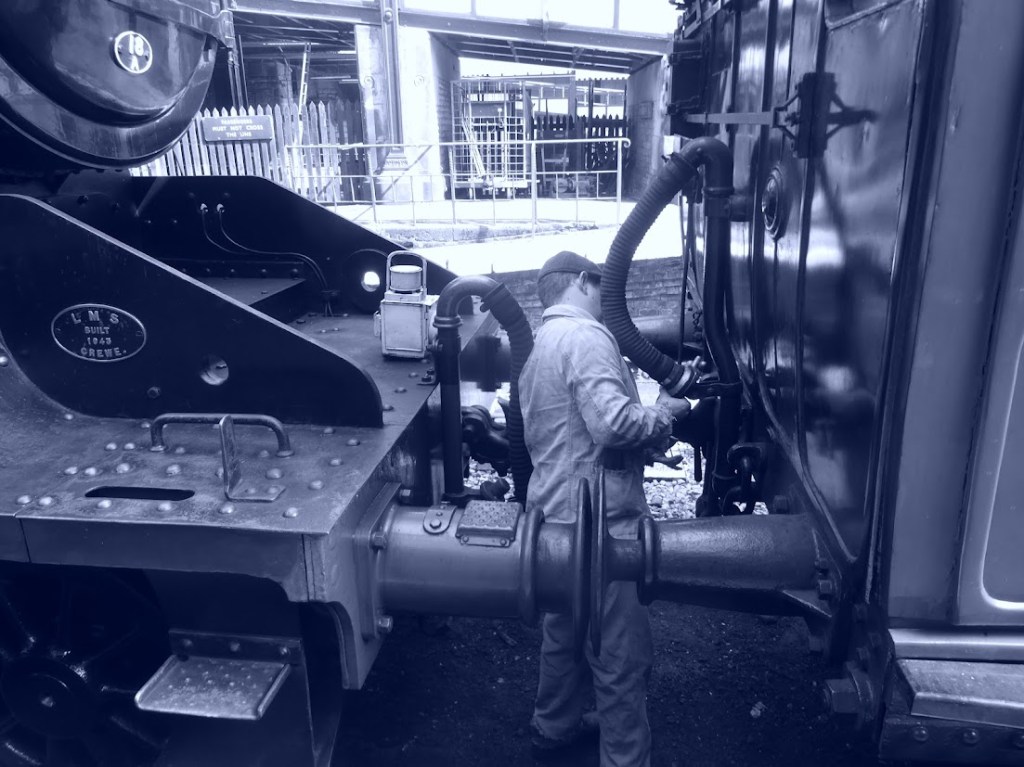
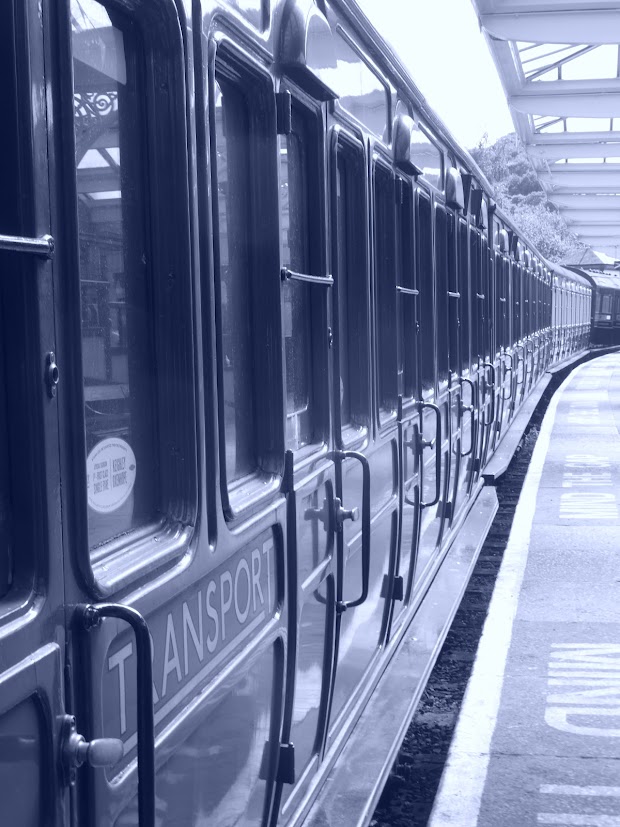
A long queue formed there and at the advertised time, we all filed forward to be packed into elderly – but spick and span – carriages and transported several miles to Oxenhope Station. We all relished the background chuffing sound, the loud, echoing sound of the steam whistle, the rhythmic clanking of the running gear and of course the distinctive mildly sooty smell, and enjoyed the instant camaraderie struck up amongst fellow passengers.
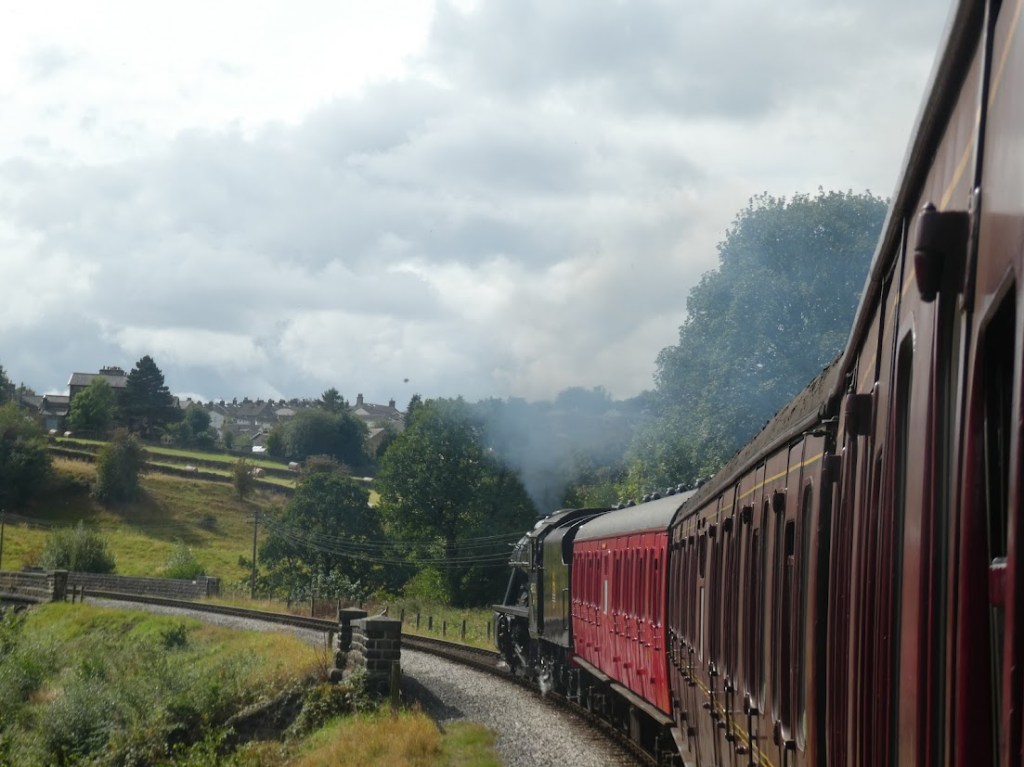
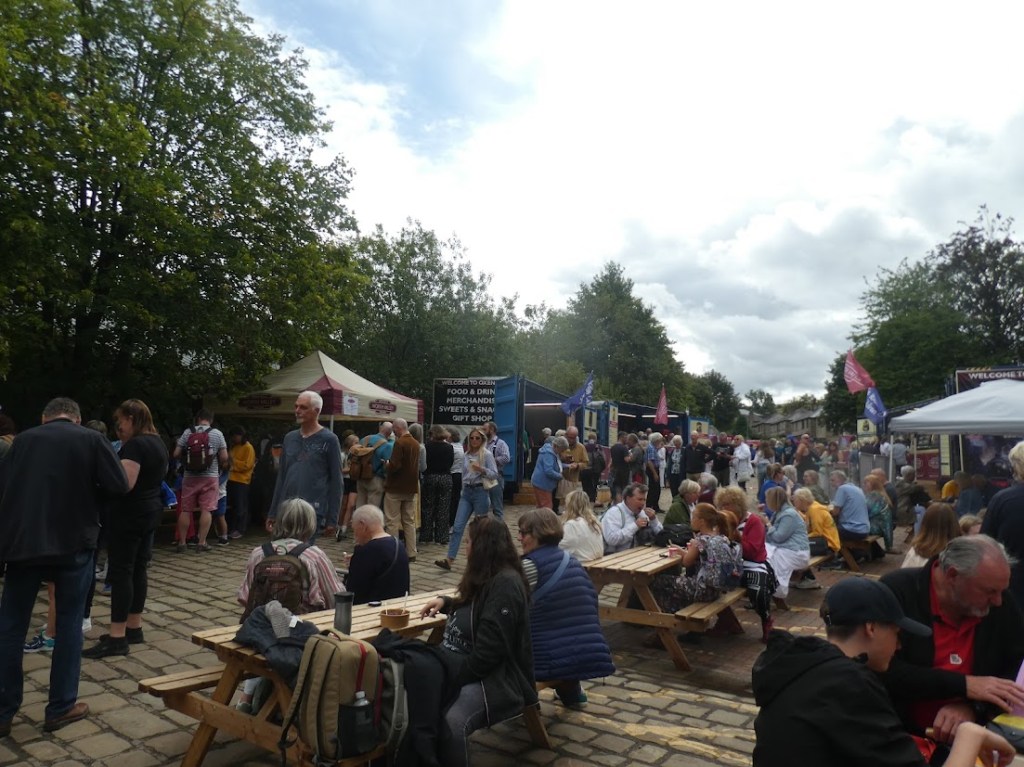
Then we arrived. Long before the play started. That was OK. We had a picnic. There was a cheery market full of food stalls and relevant souvenirs. It was sunny. Everyone was in holiday mood.
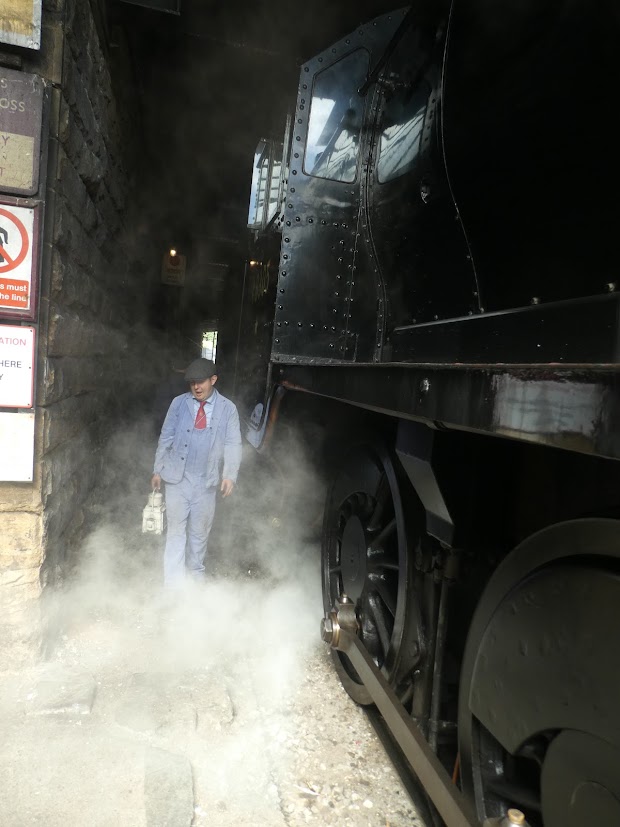
Finally though, it was time to file into the theatre. Or engine shed. Two large banks of seats rose up on either side of a railway track, above part of which was a stage: a moveable stage, as we would eventually find out. Once we were seated, the cast, all costumed up for the afternoon drifted in and mooched round among the audience, chatting and laughing . My images come from those moments, as photography was forbidden during the performance.
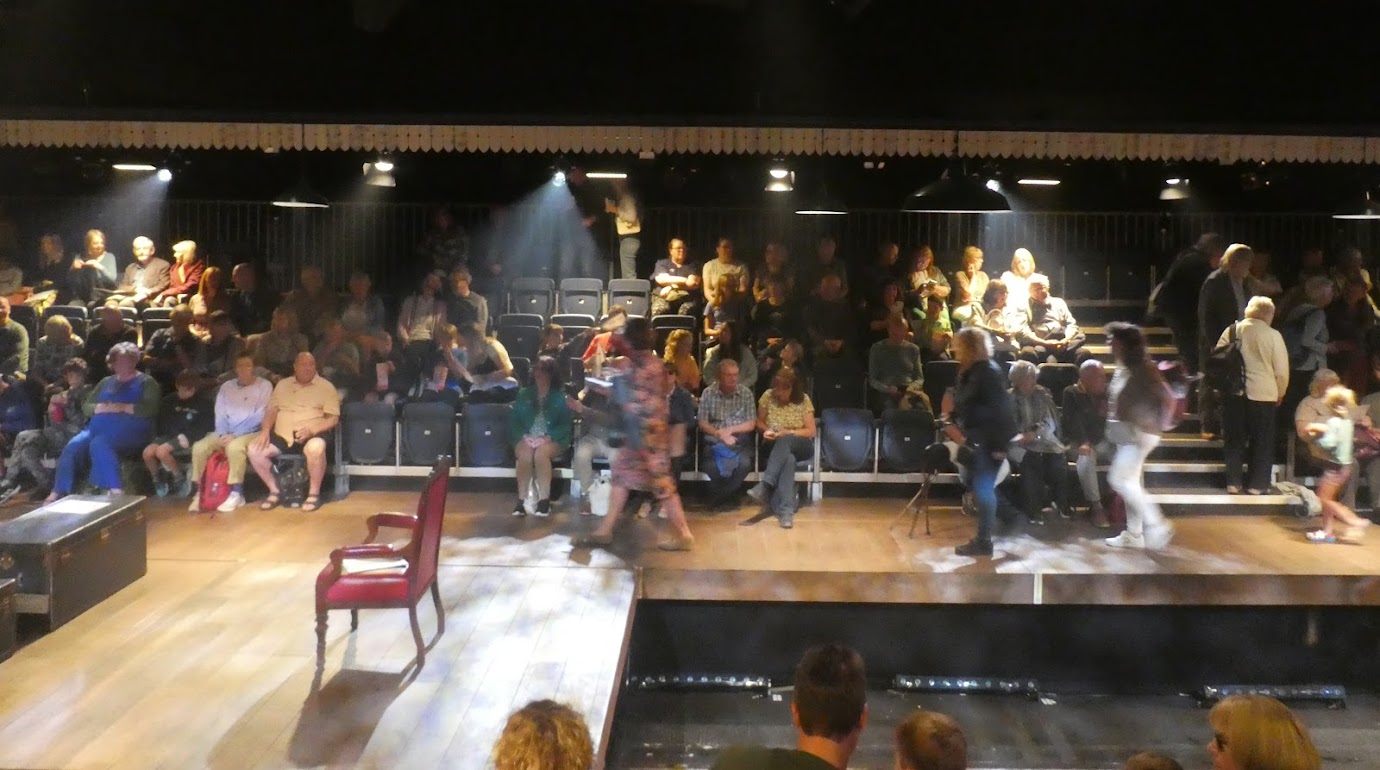
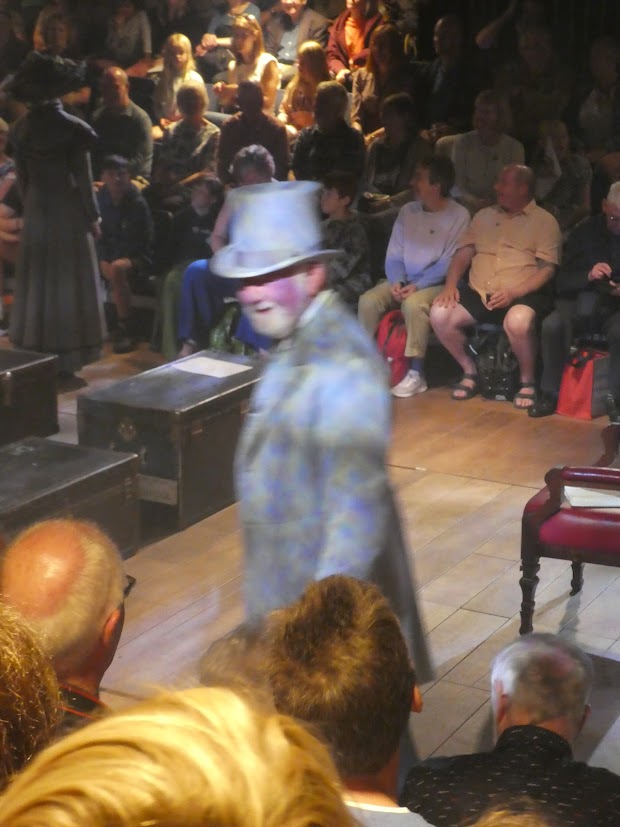
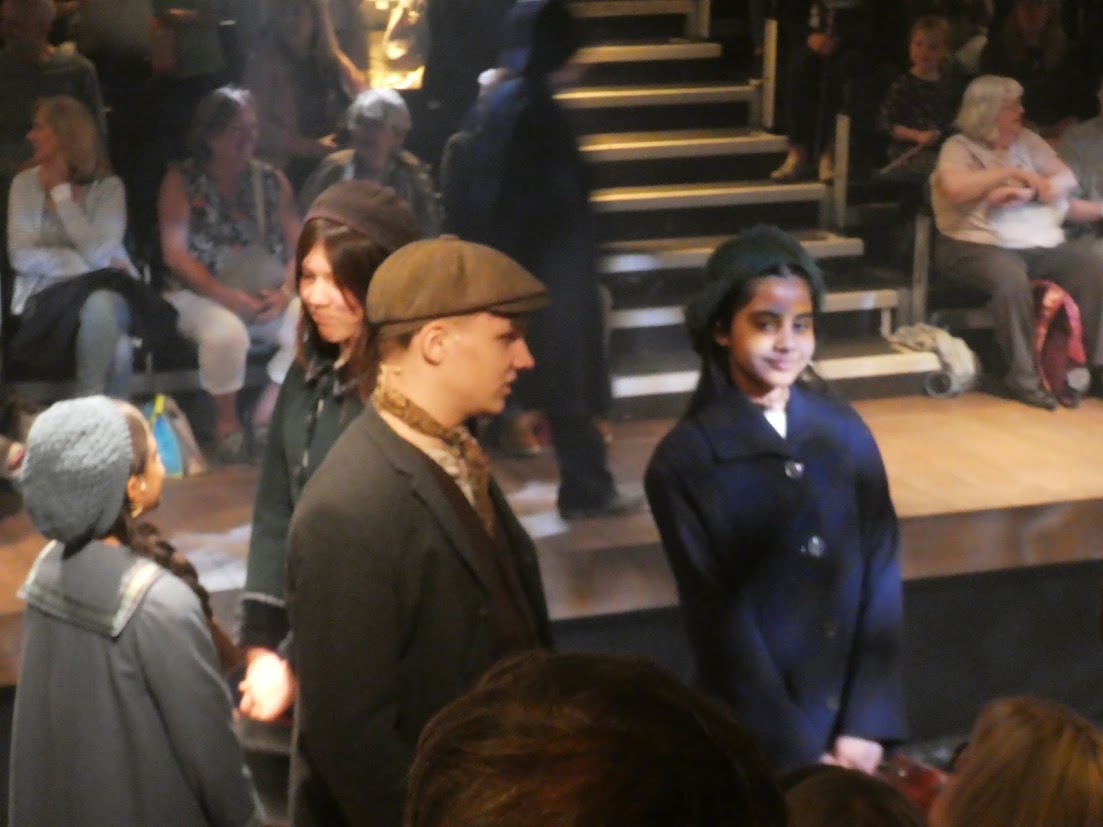
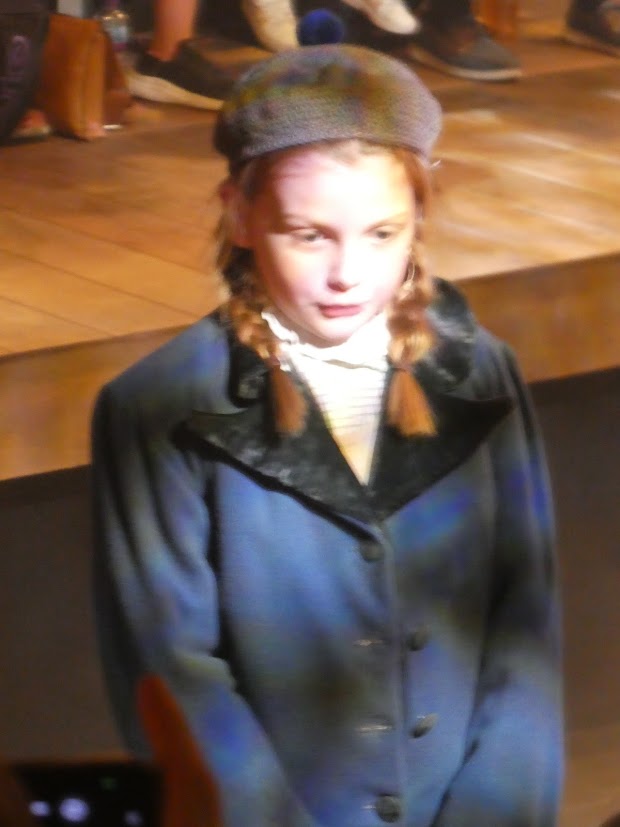
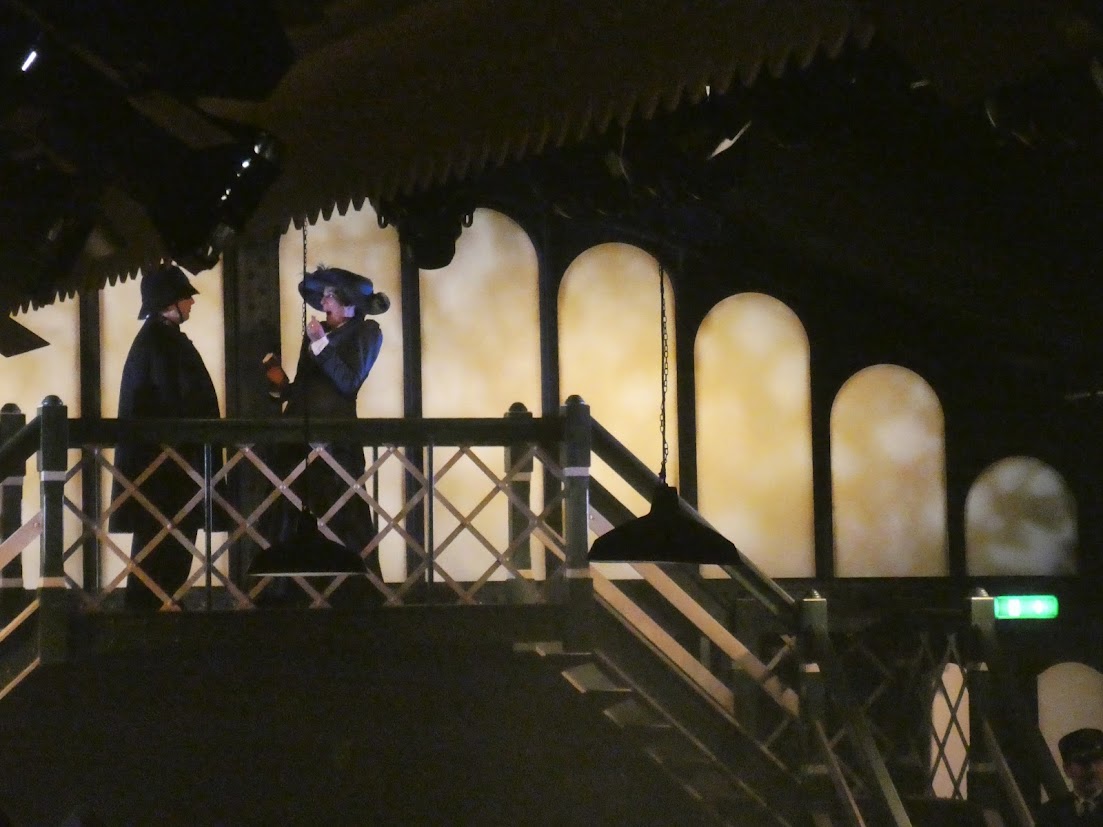
Which, when it came, entranced us. We entered into a world of family disappointment, moving downmarket, and adaptation to a new way of life. How those children grew to love the railway line that was their nearest neighbour! And how thrilled we were when the children noticed a runaway train advancing unexpectedly along the track – an actual train, surging into the auditorium before our very eyes. Waving flags and the girls’ red underskirts as a warning, the children brought the train to a halt. Just in time for the interval.
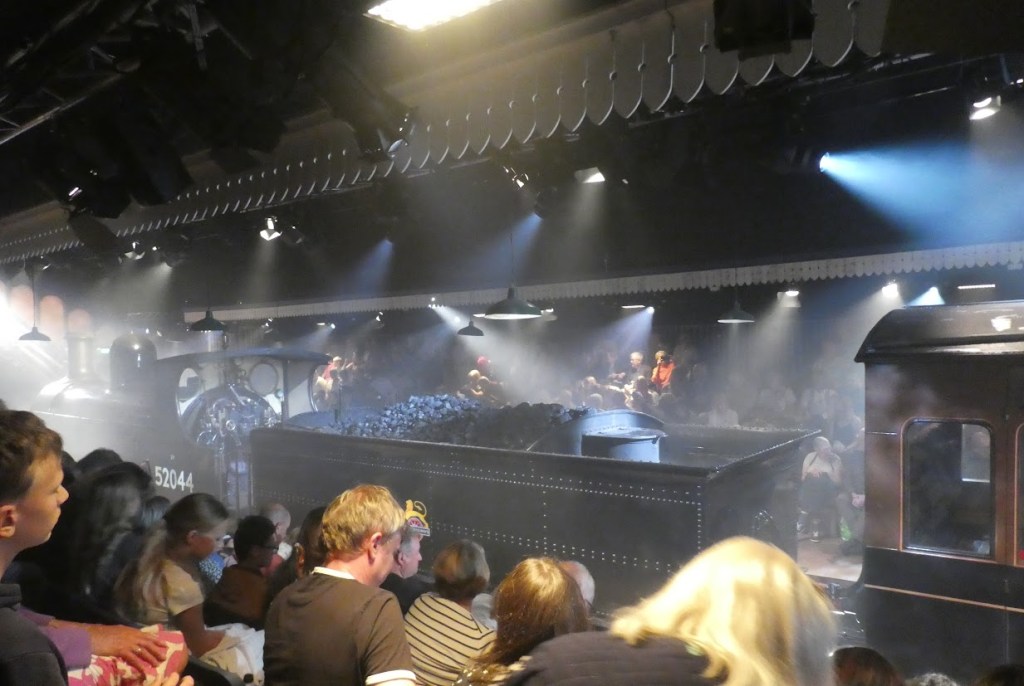
More happily mooching around in the market and on Oxenhope station before returning for the second half, which brought the story to its happy conclusion.
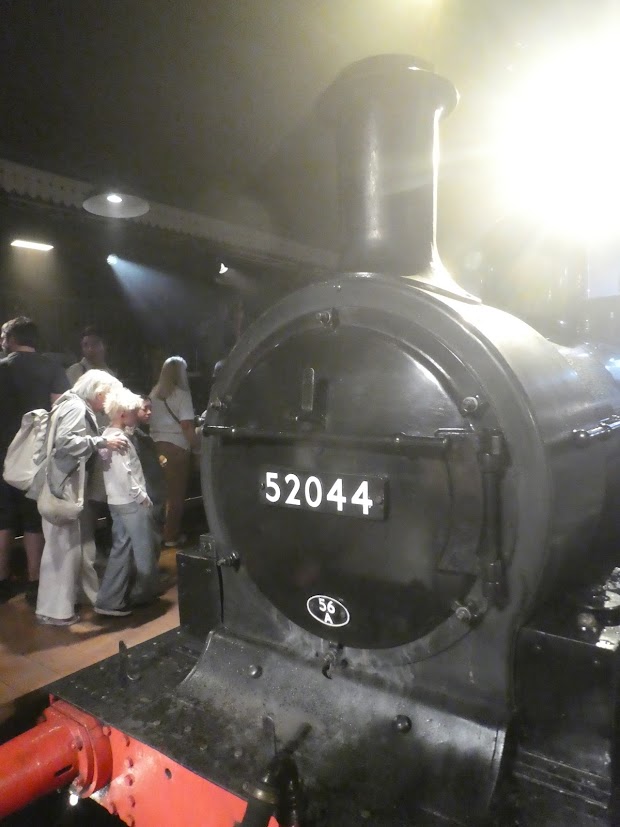
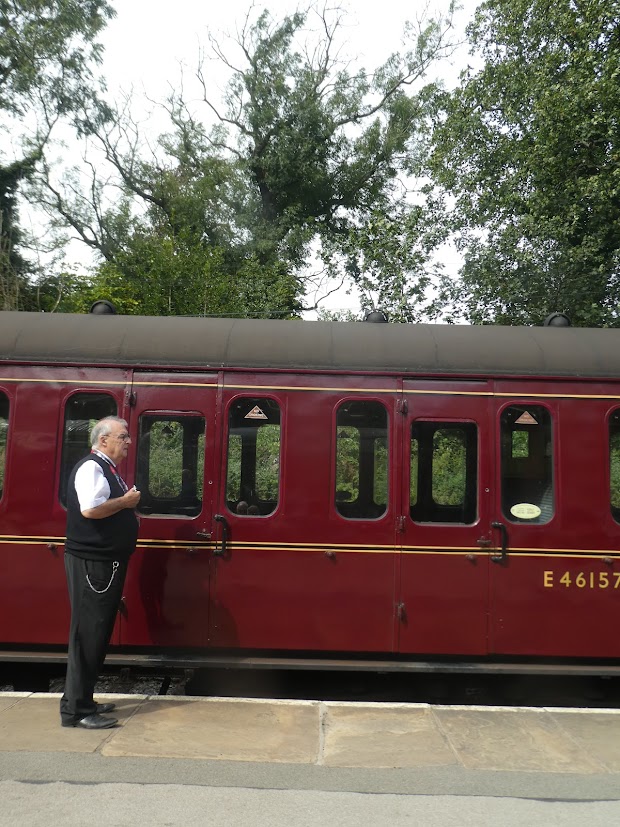
Then it was back onto the platform at Oxenhope where our train soon appeared to take us on board and return us to the station at Keighley. A very special afternoon.
I mentioned the other day our habit of having with us at all times an au cas où bag, foraging for the use of. At this time of year, this bag is a completely necessary accessory. Here’s my haul from last Thursday.

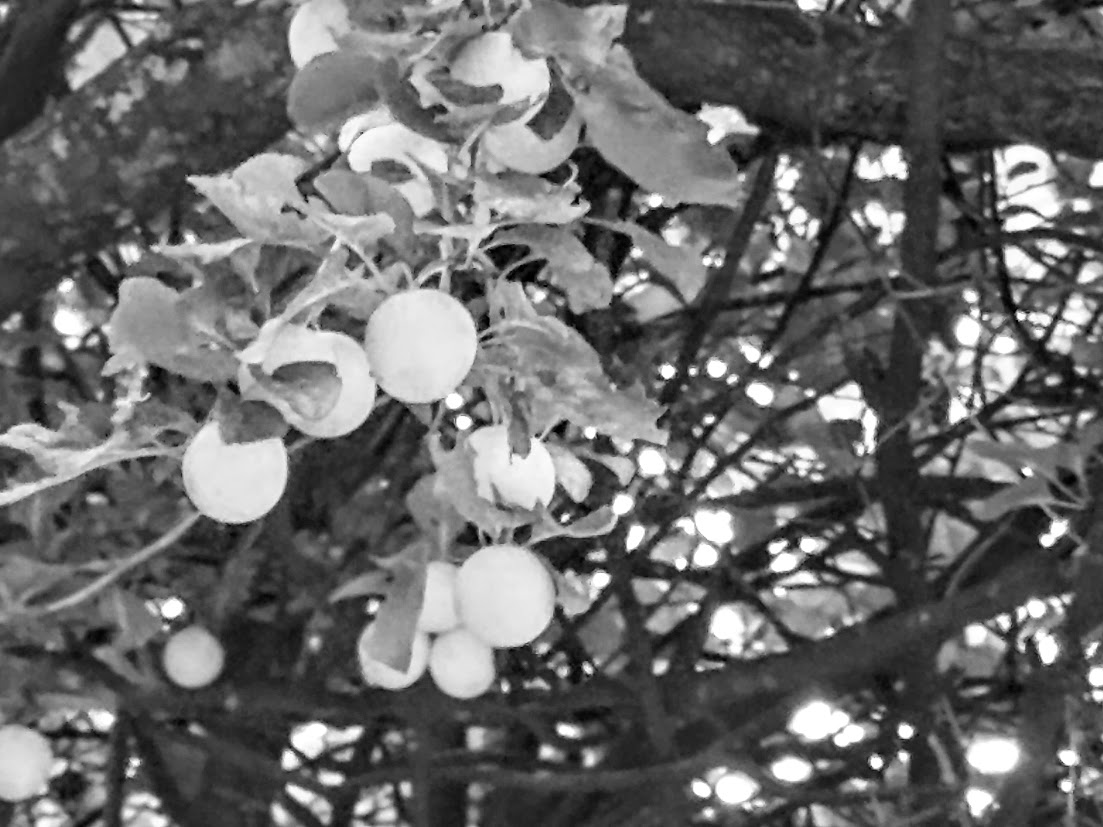
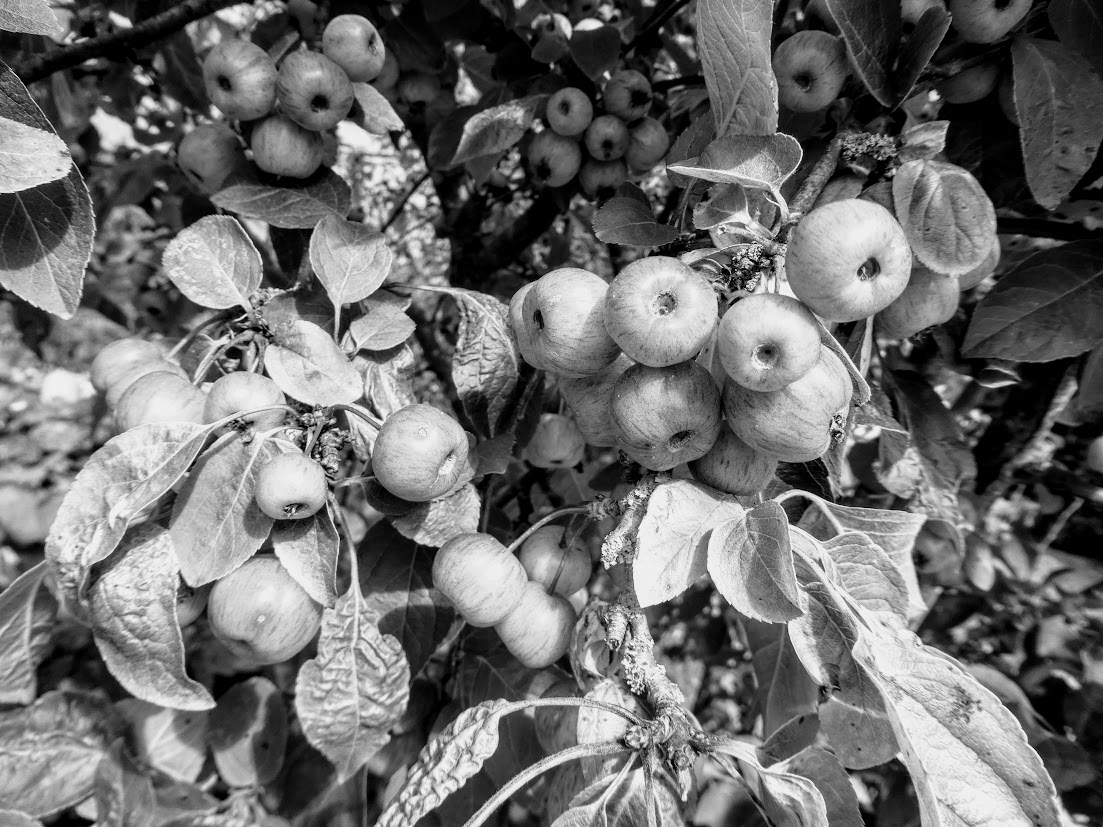
Here we are. Crab apples; cooking apples; windfall pears; red mirabelles. These have become crab apple and chilli jelly; cooked down with previously foraged then frozen blackberries; scrumped; mirabelle frangipane with a good number of them, then … not sure yet. We’ve made quite enough mirabelle jam, thank you.
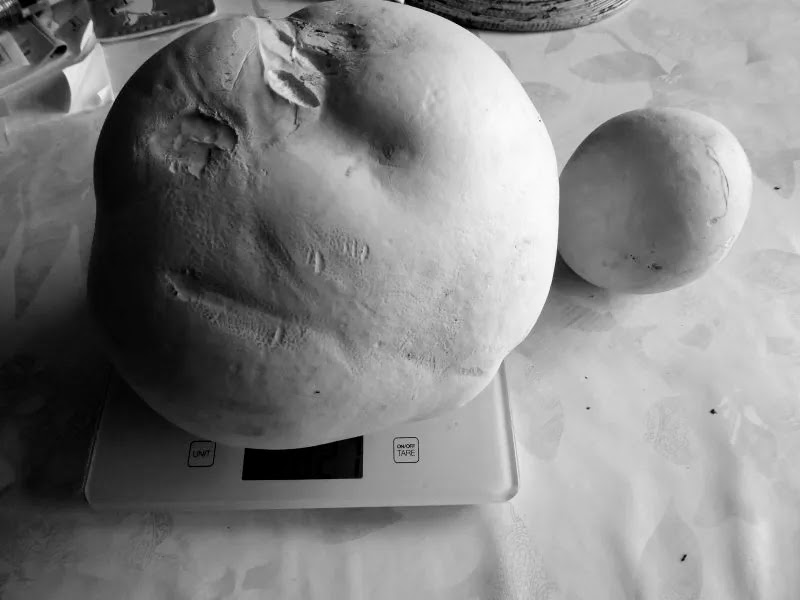
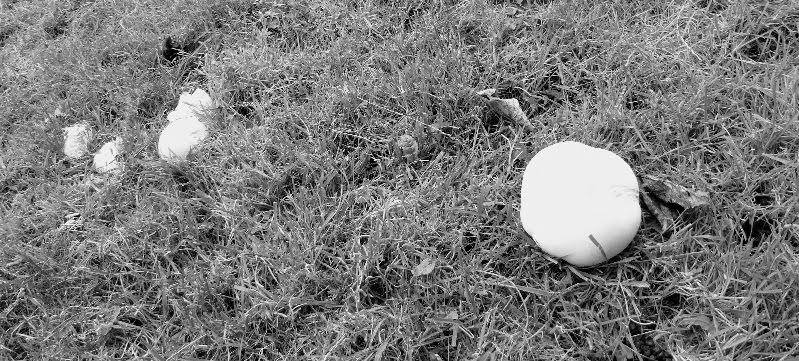
This is the time of year for mushrooming, but we haven’t been lucky yet. Apart from the obvious field mushrooms (no pictures!) I’m only confident to look for football sized puffballs (which make, apart from other dishes, excellent steak substitutes) …
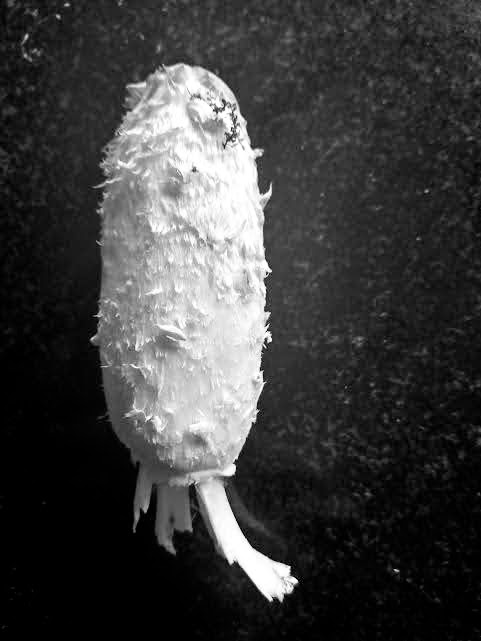
… and shaggy inkcaps, which need to come home quickly before they deliquesce into inky pools.
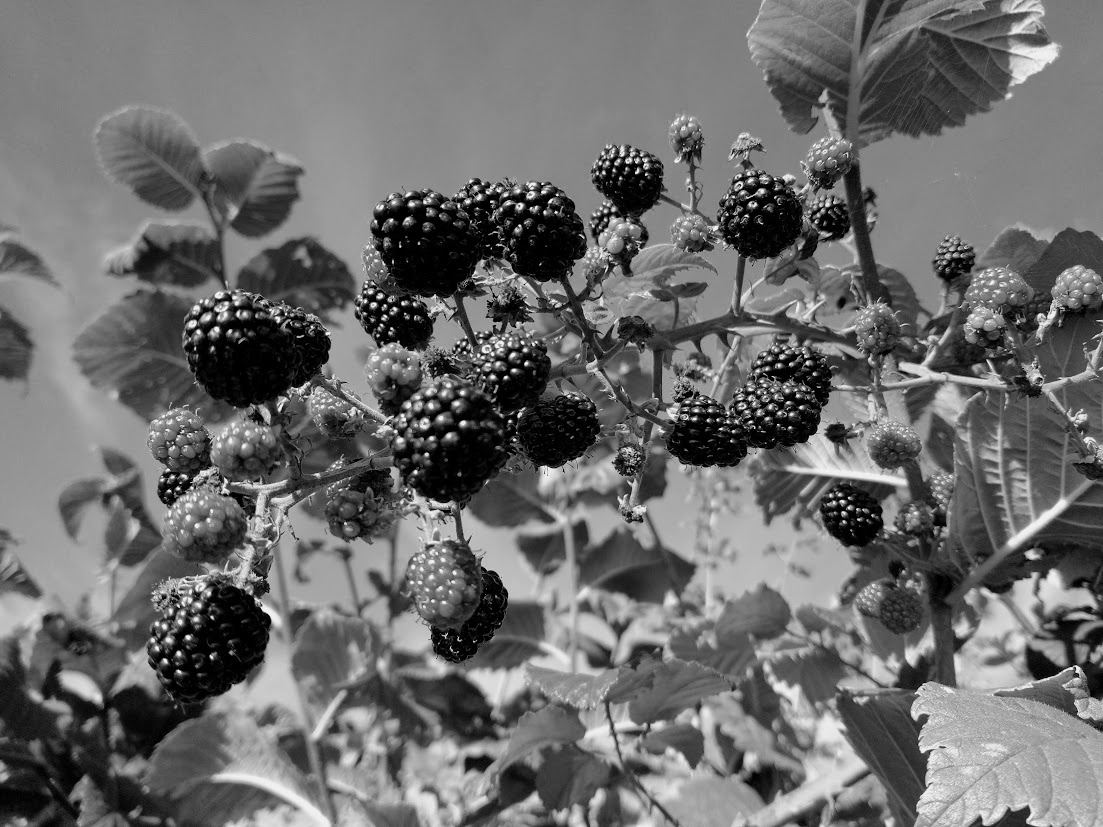
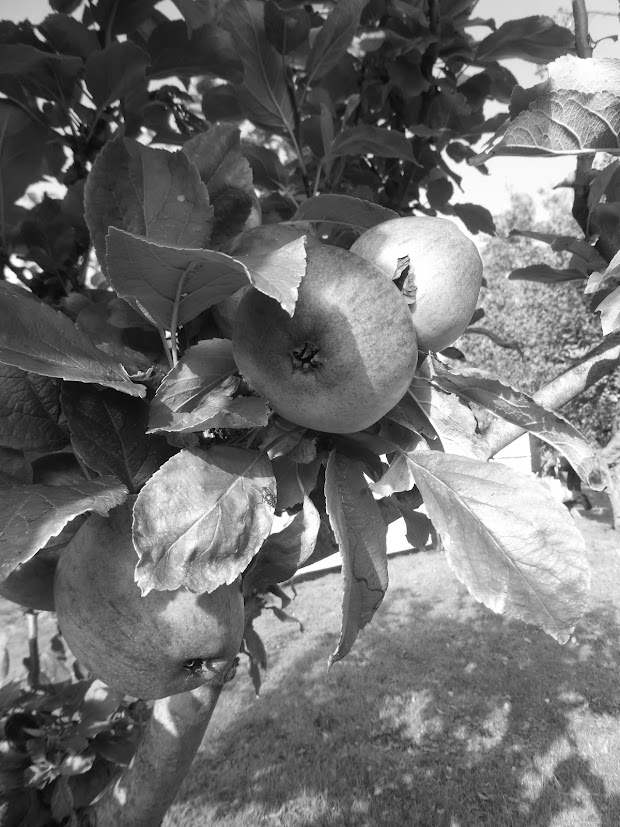
Here are some of the other regular finds: crab apples in the feature photo; mirabelles both yellow and red; blackberries; apples of all kinds.
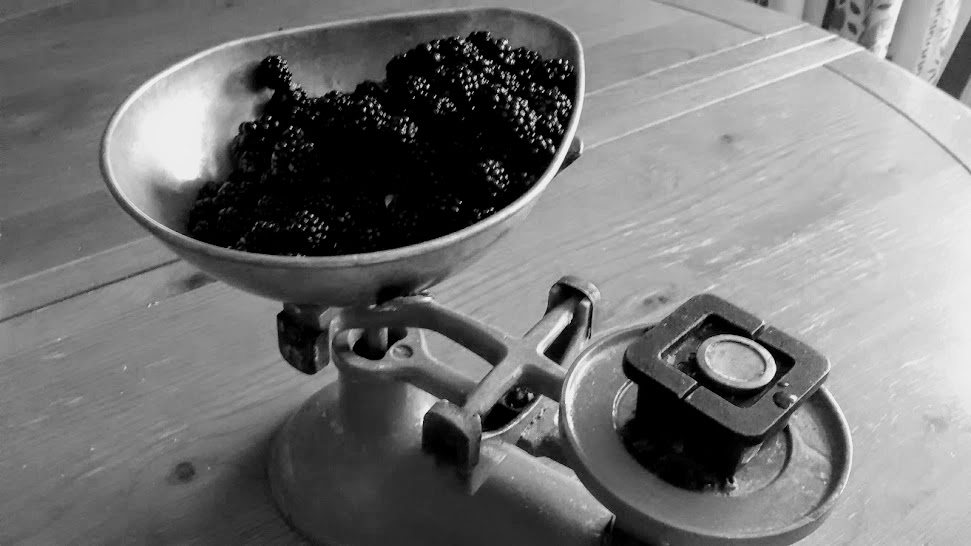
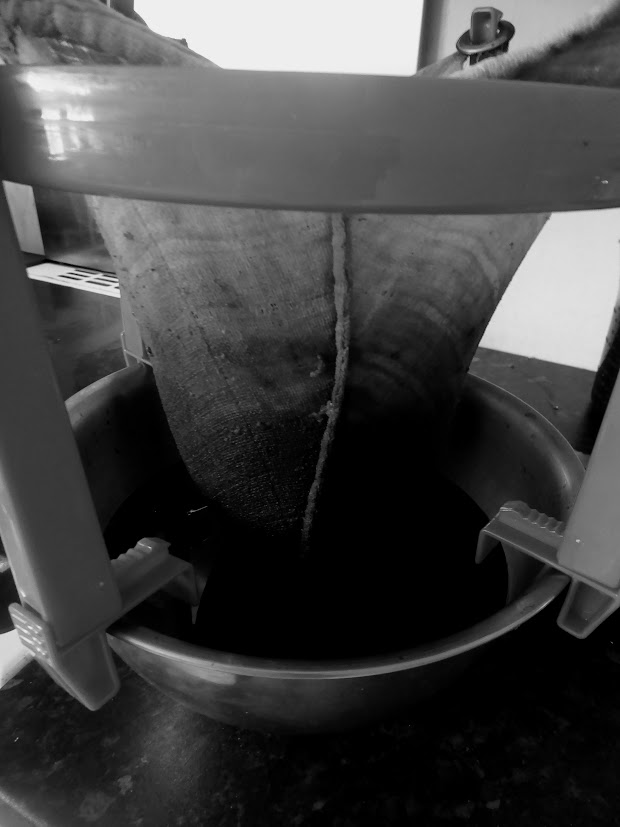
Here’s some of the kitchen activity: Weighing, then straining the juices from simmered-down fruits.
… and some of the results:
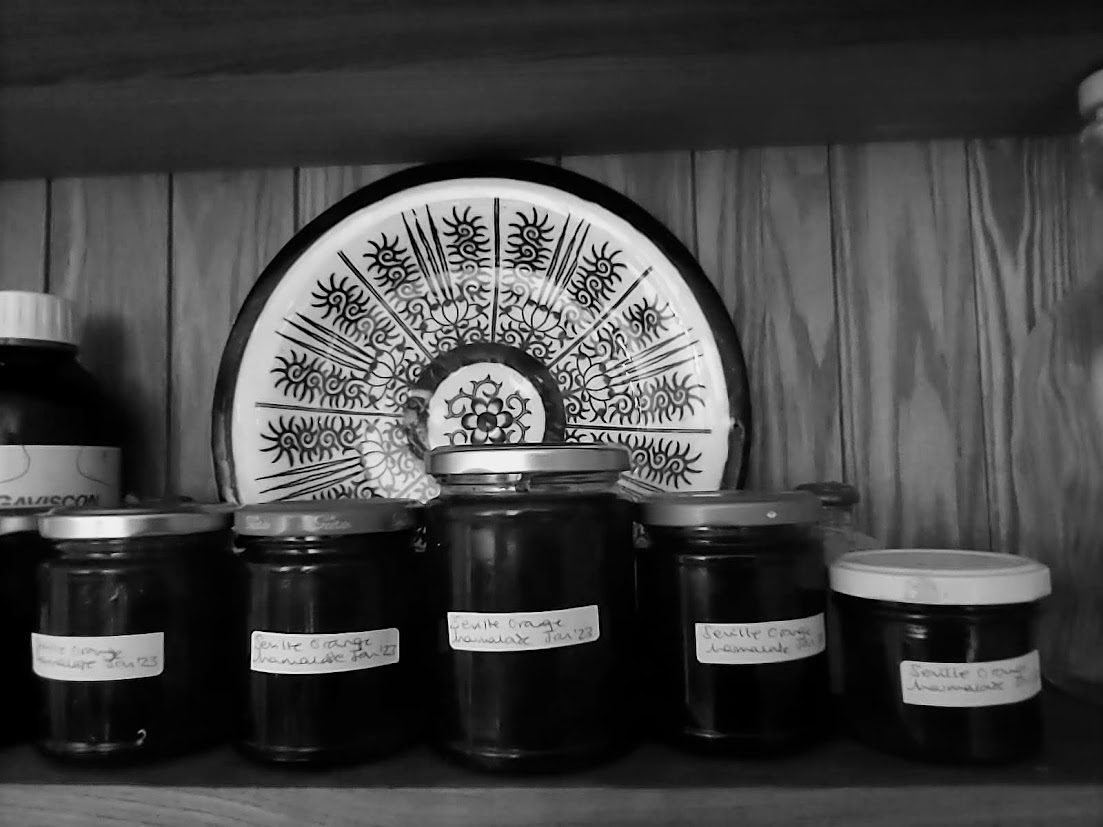
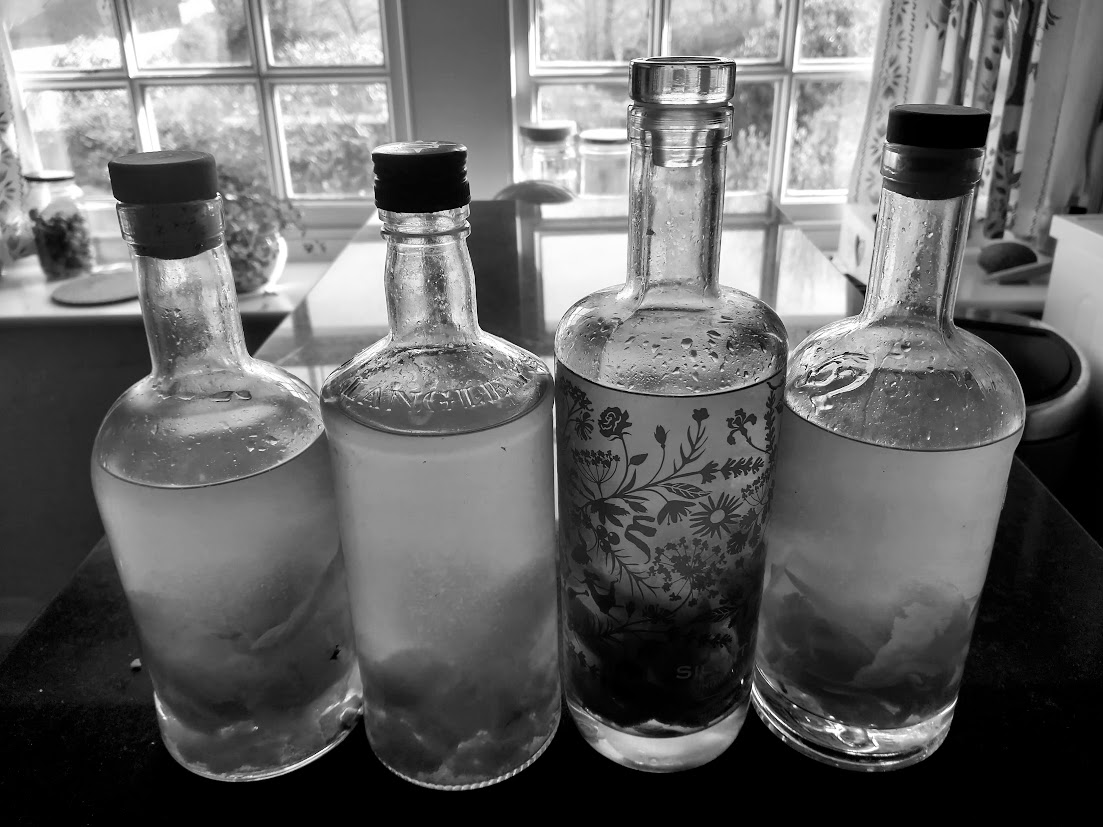
In this case, the only photo I had to hand was of jars of marmalade (I even forage Seville oranges when we’re in Spain in winter), and gin which I have made in Seville orange, mulberry, sloe, and mirabelle varieties at different times.
Foraging is some of the best fun to be had in autumn. Just don’t forget your au cas où bag.
For Leanne’s Monochrome Madness.
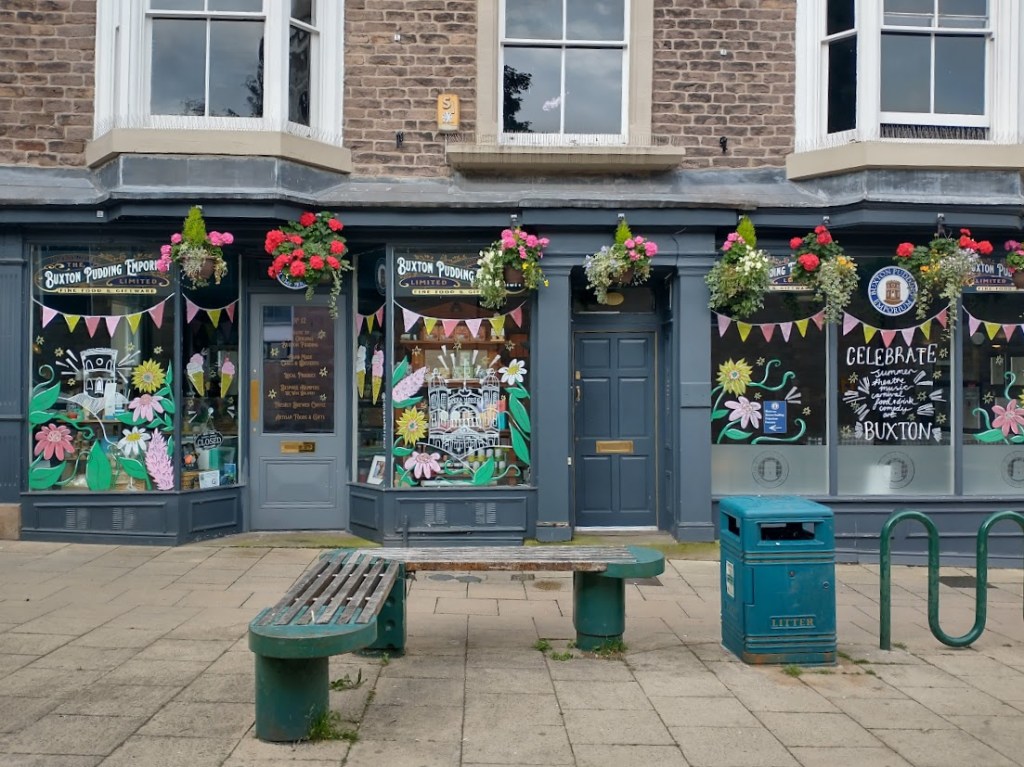
Or is it two benches? Either way, it/they could do with a lick of paint to keep up with the cheerful shop front behind.
And that, Jude, is me done with benches I think. Unless I spot anything interesting in the remaining months of the year. My archive is now a bench-free zone – apart from the ones I’ve shown you. But it’s been fun. Thank you.
For Jude’s Bench Challenge.


 From Pyrenees to Pennines
You must be logged in to post a comment.