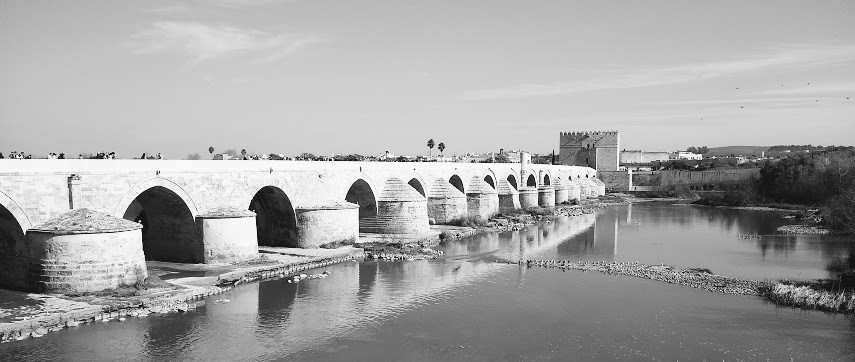
Let’s start with a Roman Bridge, in Córdoba. It’s called the Roman bridge, because it was first built during the Roman colonisation of southern Spain. But it was overhauled in the 10th century. Then in the Middle Ages. Then in the 16th and the 17th centuries, when a statue of St Raphael was added. Lights were added in the 19th century, and it was pedestrianised in 2006. It’s a wonder it can still be called the Roman Bridge. But it can. The 14th and 15 arches are still the original ones.
We’ll leap forward to the Renaissance, but stay in Spain, in Valencia, and visit the Puente del Mar. Flooding in the River Túria swept away an old wooden bridge, so in 1591, it was replaced with this:

Stone, brick, wood: all these were the traditional bridge -building materials of choice down the centuries. Until the Industrial Revolution here in England, whose original epicentre was in Coalbrookdale, thanks to its wealth of natural resources all conveniently in the same area. The world’s first iron bridge was built here in 1779.
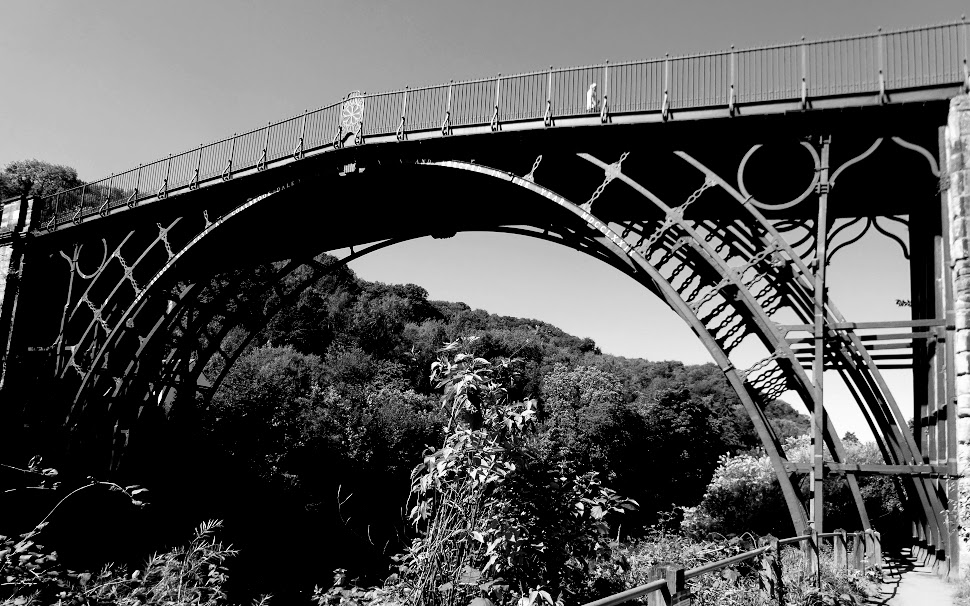
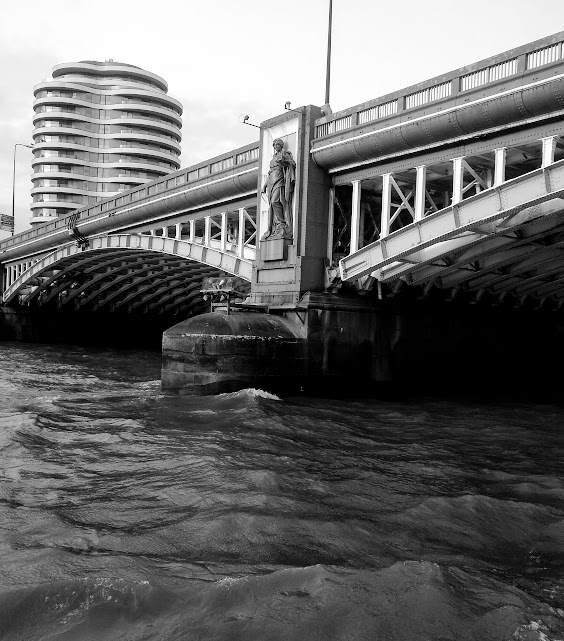
This bridge is the grandparent of almost all bridges built – in the UK at least – since then and into the 20th century. Here are three: Vauxhall Bridge, completed in 1906; the Tees Transporter Bridge, completed in 1911, and the Tyne Bridge, completed in 1928.


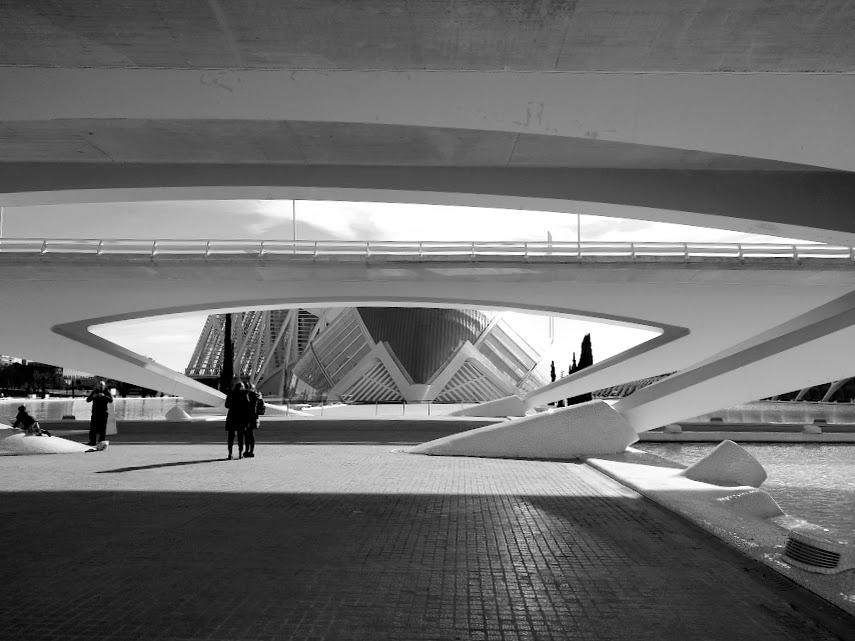
Let’s leap briefly into the 21st century, and look at one of the bridges in Valencia’s assertively future-facing Ciudad de las Artes y las Ciencias, created between 1998 and 2009.
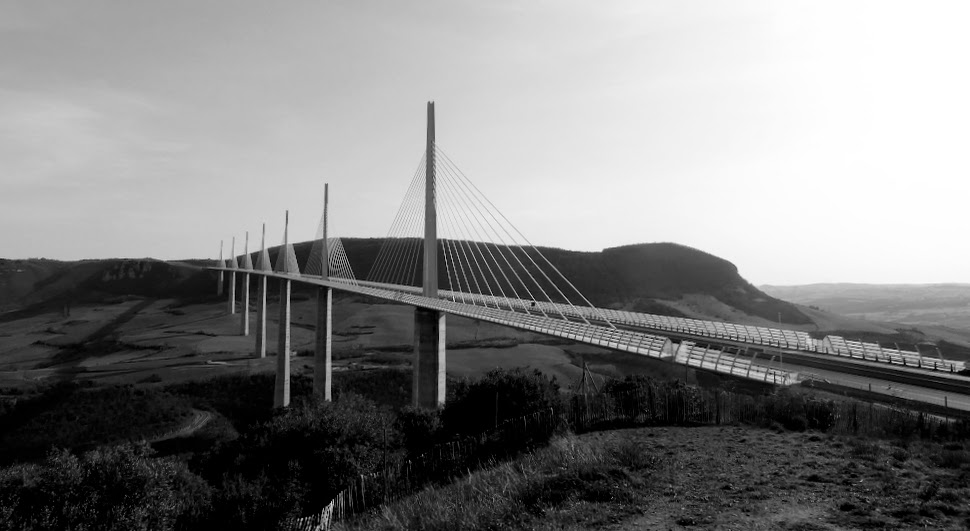
And finally, the Millau Viaduct, sweeping more than 300 metres above the Tarn in southern France, designed by Norman Foster and completed in 2004. Like Valencia’s Science Park, it’s a destination in its own right.
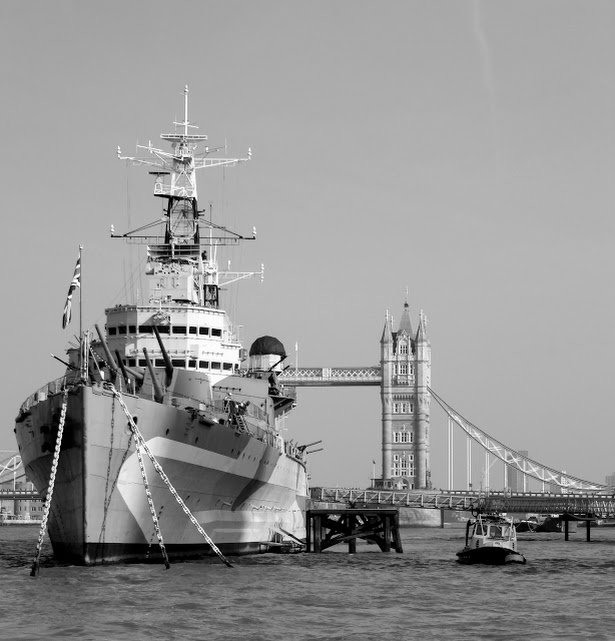
But we can’t leave without mentioning the featured photo: London’s iconic Tower Bridge, open to traffic since 1894: both road traffic, and when regularly lifted, to river traffic beneath. The photo demonstrates why the extra height is necessary: that’s HMS Belfast in the foreground.
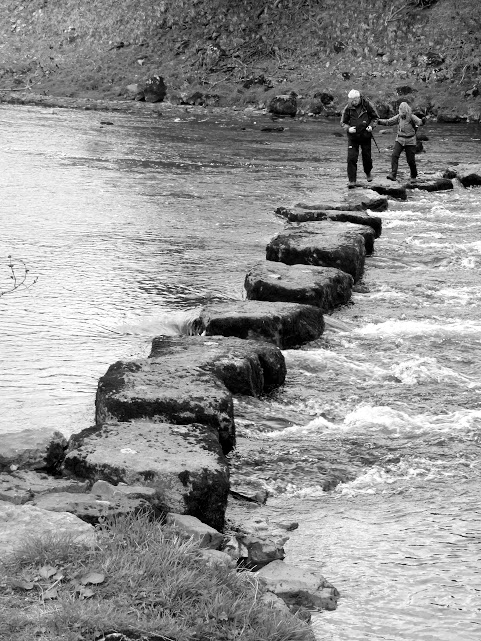
And to finish off, let’s stop at something that’s even older than bridges as a way of allowing travellers to cross water. Stepping stones. These are at Redmire Force, and are still a popular way of crossing the River Ure.
For Leannne’s Monochrome Madness#17: Bridges

 From Pyrenees to Pennines
Looks good in black and white.
LikeLiked by 1 person
Thank you!
LikeLike
this is a great historic piece about bridges.Funny that you included the stepping stones. Well done Margaret👍
LikeLiked by 1 person
Thanks Teresa. Just off to visit yours.
LikeLiked by 1 person
The bridge in Valancia is fabulous – so elegant – and I do love a Roman bridge.
LikeLiked by 1 person
Oh yes. Anything to do with Roman engineering is pretty fabulous.
LikeLiked by 1 person
Yay! Good to see the Transporter Bridge. It carried me to work a lot of years ago. In fact, I love all of these, Margaret, especially Cordoba. Bridges are a love affair xx
LikeLiked by 1 person
Aren’t they just? And that Transporter Bridge is now a tourist attraction we have yet to visit, with guided tours ane everything!
LikeLiked by 1 person
What a great post Margaret, I love all the history with the bridges. I loved it. Wonderful photos of them as well.
LikeLiked by 1 person
Thanks Leanne.
LikeLike
Excellent perspective
LikeLiked by 1 person
Thanks Sheree.
LikeLiked by 1 person
Pleasure Margaret
LikeLiked by 1 person
Such an informative and evocative tour. Those modern bridges are stunning. There’s a place though, for all of these bridges and each of them has their own beauty and character.
LikeLiked by 1 person
Thanks. Yes, bridges often produce striking effects on a journey.
LikeLiked by 1 person
Dear Margaret
thank you very much about your short history of bridges with the matching photos. We very much enjoyed it.
Keep well
The Fab Four of Cley
🙂 🙂 🙂 🙂
LikeLiked by 1 person
Ah, thanks so much. You too!
LikeLiked by 1 person
What a wonderful bridge collection, Margaret. One remarkable thing about traveling in Europe is seeing all these historical bridges still standing. Great photos!
LikeLiked by 1 person
Thanks. Yes, we tend to take older buildings and so on in our stride!
LikeLiked by 1 person
Wonderful bridges in monochrome Margaret
LikeLiked by 1 person
Thanks Brian. And thanks for commenting all bandaged up!
LikeLiked by 1 person
I was paying for it last night with too much computer yesterday 🙄
LikeLiked by 1 person
Aaagh. Lesson learnt?
LikeLiked by 1 person
Maybe…….
LikeLiked by 1 person
A man after my own heart. As far as ignoring advice goes…
LikeLiked by 1 person
What a clever idea to tell the history of bridges through your photos! Great to see the Tyne Bridge of course and I’m also rather fond of Vauxhall Bridge too 🙂 And I love the stepping stones!
LikeLiked by 1 person
I used to live near Vauxhall Bridge, and quite a few of my friends lived in the – then – council flats behind what is now Tate Britain. It’s a shock to see those same flats changing hands now for well over a million.
LikeLiked by 1 person
The Peabody estate? I know it well 🙂
LikeLike
There are SO MANY Peapody Estates aren’t there? There was a huge one one within a couple of minutes of my school, as well, where another batch of friends lived!
LikeLiked by 1 person
Very clever post, indeed! A fascinating history. I haven’t been to Valencia yet, but your images from there are very intriguing…a mixture of historic and very modern.
LikeLiked by 1 person
Highly recommended as a destination. It has tourists, but it’s not the Mecca that Barcelona, Florence, Rome et al have become.
LikeLike
Liking this ‘train’ of thought, Margaret 🙂
LikeLiked by 1 person
Thanks Tish. So many bridges, it was hard to decide quite what to do with them. Lots in the reject pile!
LikeLike
Was especially pleased to see the Iron Bridge of course.
LikeLike
A brilliant collection of bridges, Margaret! Bridges have so much symbolism embedded in their structures. To me, bridges symbolize the connections we forge in our lives—bridging gaps between differences, overcoming obstacles, and fostering unity. They remind me that we can build pathways to understanding and collaboration, transcending barriers to create a more harmonious existence.
LikeLiked by 1 person
I love your positive and optimistic take on the world, Rebecca!
LikeLiked by 1 person
The bridges are magnificent and your photos are great. I especially liked the reflections in the Puente del Mar. The stepping stones are a down-to-earth and quirky reminder of simpler alternatives 🙂
LikeLiked by 1 person
Thanks. I love that bridge in Valencia. In fact Valencia does bridges rather well, old and new.
LikeLiked by 1 person
Margaret, your photos of these bridges are so fabulous, old and new.
LikeLike
Thanks so much Rebecca.
LikeLiked by 1 person
My favourite photo is Puente del Mar, Valencia – such beauty reflections, and I love the slightly pointed arches.
LikeLiked by 1 person
It is indeed a lovely bridge, and always has beautiful reflections below. You should see it in colour!
LikeLiked by 1 person
You spanned the years magnificently Margaret!
LikeLiked by 1 person
Oh well said, Peter! Thanks!
LikeLiked by 1 person
WOW!
LikeLiked by 1 person
Well, that’s history lessons for you!
LikeLike
well these are all rather fabulous – hopefully you will like my three BOA ones when you visit plus the two aqueducts
LikeLiked by 1 person
My goodness. You’re going to be packing a lot of sight-seeing in. Hooray!
LikeLiked by 1 person
ah but remember my Bradford is like a couple of streets of your Bradford!!
LikeLiked by 1 person
That’s fine, We can do a comprehensive tour! Good to hear you referring to it as ‘My Bradford’ already!
LikeLiked by 1 person
Beautiful, amazing and sometimes scary, I think everyone loves bridges.
LikeLiked by 1 person
We do, don’t we? You’ll have seen quite a good few in your travelling years.
LikeLiked by 1 person
When I think about it, the Golden Gate and Tower Bridge are pretty special and I do wish I’d seen those really long bridges in France, the US and Scandinavia. We have one here in Melbourne, the Westgate that sends chills down the spine of locals of a certain age. During construction a section of the bridge collapsed sending many workers plummeting to their deaths. On a brighter note, my all time Aussie favourite is not Sydney, but a classic in Brisbane the Storey Bridge. I used to do a bit of work in Brisbane and the sight of driving over that bridge at dusk, with the city lighting up and hundreds of fruit bats flying overhead was magical.
LikeLike
I’ve just looked it up, and can see why your bridge in Brisbane captivates you. I think every country in the world must have a few bridges that really get under your skin.
LikeLiked by 1 person
Where is this ?
LikeLike
There are ten, all in different places in England, Spain and France. But the text explains each of them.
LikeLike
Hi Margaret, Thank you for the history information behind these bridges! “The world’s first iron bridge was built here in 1779” good to know. Beautiful black and white photos. Love the last one especially.
LikeLiked by 1 person
Ah, thank you. All those bridges are favourites of mine in different ways.
LikeLike
What a great history of bridges, from stone to modern. Beautiful photos Margaret!
LikeLiked by 1 person
Thanks so.much, Anne.
LikeLiked by 1 person