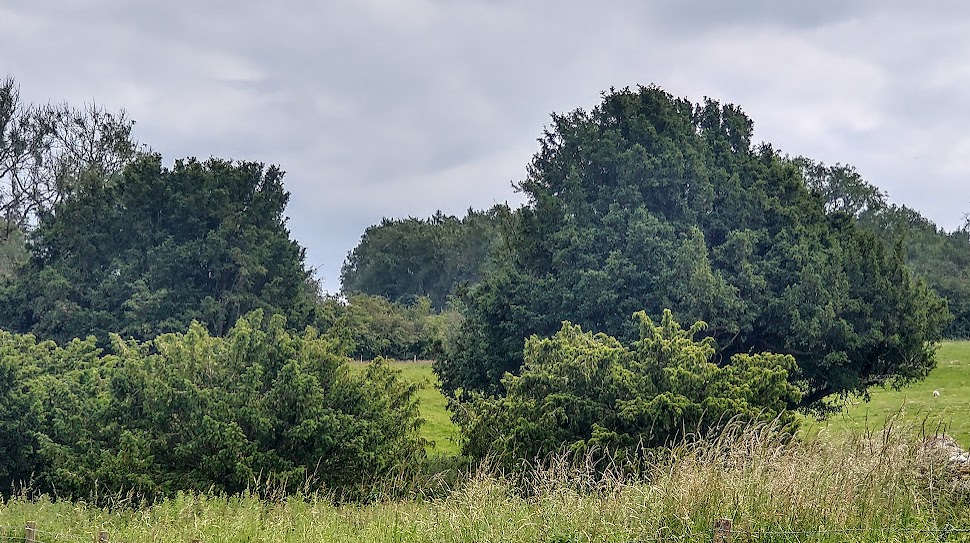
Just beyond the walls surrounding Fountains Abbey estate is a farm rented by a tenant farmer. It includes a small patch of land, untended and fenced off, because several trees got here first. They’re yew trees, and they’re thought to be about 1400 years old.
Think how long ago that was. It was only a couple of hundred years after the Romans had finally left these isles. It was several hundred years before the Norman invasion of 1066. By the time a group of monks from York had come to the site to build a Cistercian community here in 1132, those trees were already some 500 years old. This area would have been wooded, wild and interspersed with occasional farms. There would have been wolves, wild boar, lynx, otters, red and roe deer. But no rabbits. There’s no archaeological evidence for rabbit stew in any of the nation’s cooking pots from those days. They probably came with the Normans.
Those trees – once seven, now only two – would have been witness to the monastic community maturing: to the abbey and all its supporting buildings and industries developing. They would have seen the community grow, then all but collapse during the Black Death in 1248: and slowly prosper again. Until Henry VIII dissolved all the monastries, and Fountains Abbey’s roof was hauled down in 1539, leaving it pretty much the ruin it is today. By then, the trees were working towards being 1000 years old.
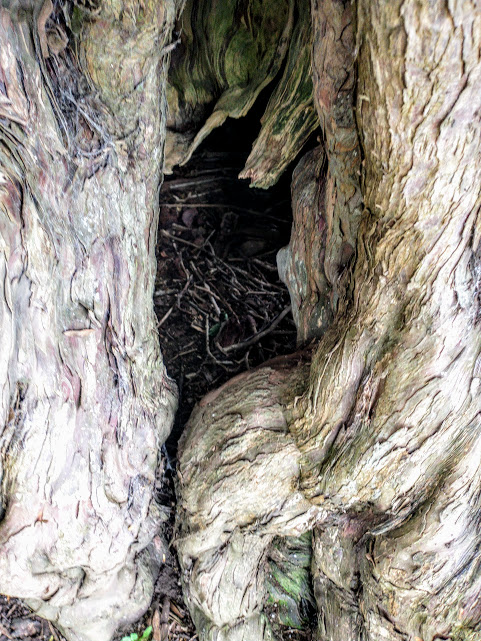
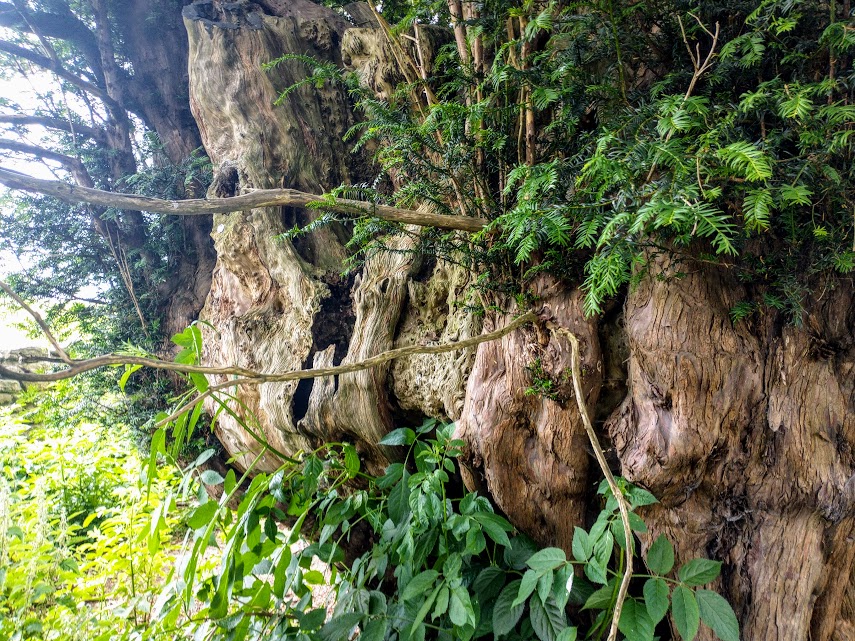
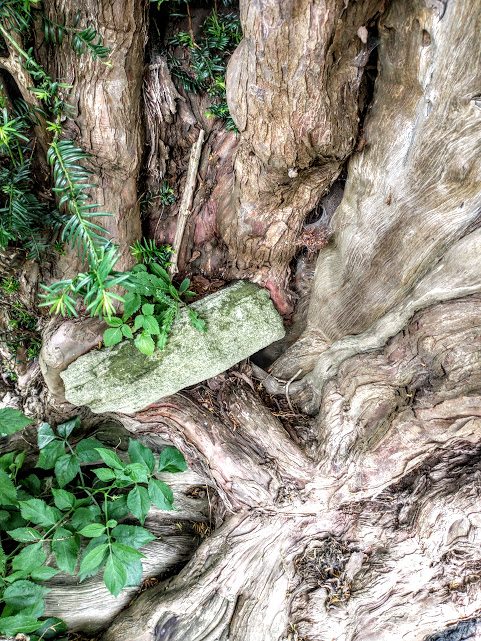
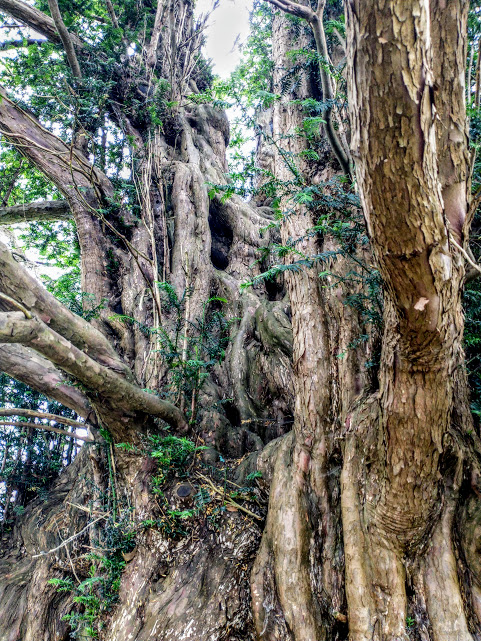
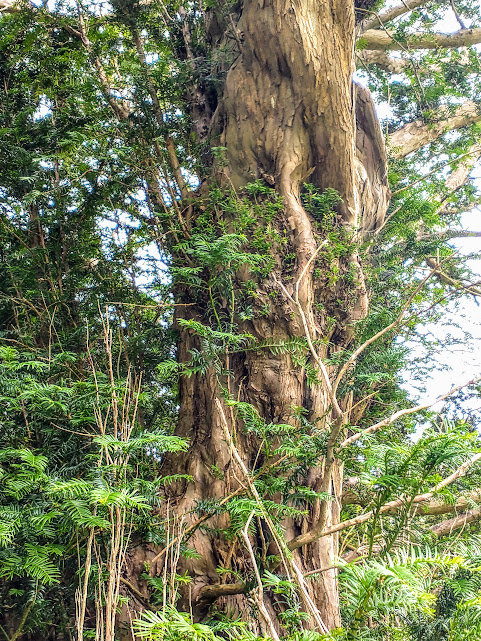
They’ve always been a bit out on a limb, these trees, and that’s what has made them such a rich habitat. They offer protection and nest sites for small birds, who can also eat their berries . Caterpillars feast on the leaves. These days, they’re home to eight species of bat, and a wide variety of owls. Yew trees are famously toxic to most animals – that’s why they’re fenced off – but badgers are able to eat the seeds, and deer the leaves.
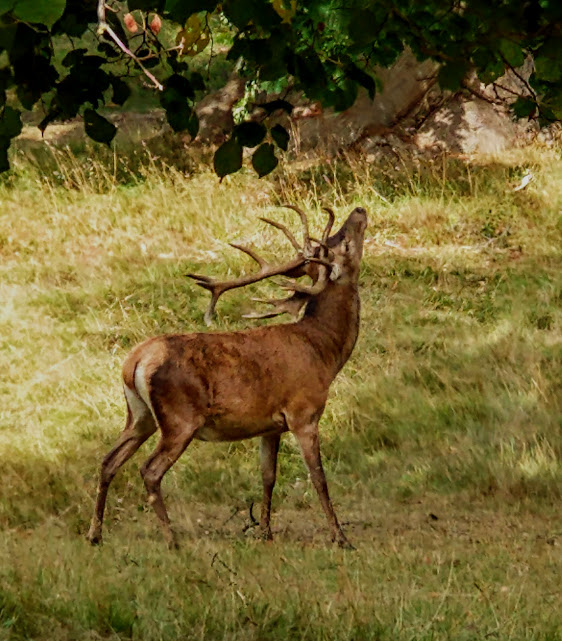
I can’t show you any of the creatures for whom these trees are their neighbourhood – apart from a grazing deer at nearby Studley Royal. Just the ancient trees themselves, the nearby Fountains Hall, built in late Elizabethan times when they were already 1000 years old, and a slightly more distant view of Fountains Abbey itself. My featured photo, the last image I took in June, is of those yew trees, looking as though they’re ready for the next 1000 years.

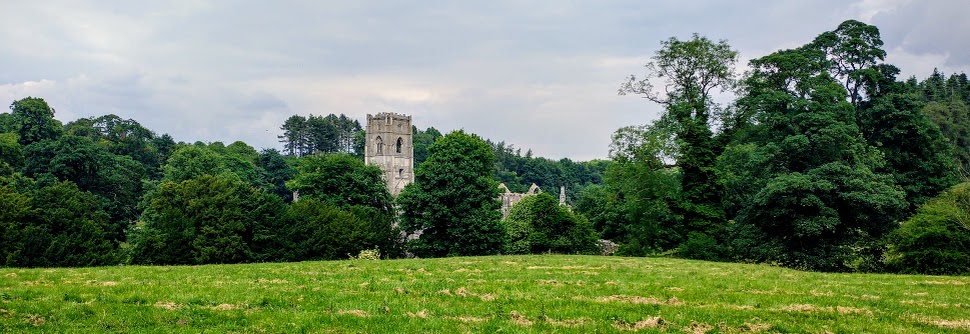
This is for Brian’s Last on the Card, and – somewhat tenuously – for this week’s Lens-Artist Challenge from Tina: Habitat.
The phrase ‘Half as old as time’ was actually coined by John William Burgon in 1845, in his poem ‘Petra’.

 From Pyrenees to Pennines
So when did rabbits come on the scene, Margaret, and where from? We take a lot for granted, but I do sometimes wonder if we folk should be here at all.
LikeLiked by 1 person
Indeed. And apparently originally rabbits hail from the Iberian peninsula,though I’ve never met a rabbit in Spain. Several sources claim the Normans brought the rabbit over here.
LikeLike
Ahh! We’ve seen rabbits in our hills. I don’t suspect that they’re strong swimmers.
LikeLiked by 1 person
🤣
LikeLike
They’re magnificent! I remember being awstruck by olive trees in the south of France reputed to be well over 1,000 years old but hadn’t realised that yews might have similar longevity.
LikeLiked by 1 person
They’re both pretty long lived, and can go on for 5000 years or more, apparently.
LikeLiked by 1 person
Puts humans into perspective!
LikeLiked by 1 person
Just a bit.
LikeLiked by 1 person
Remarkable. To be able to stand under those remaining trees and feel the history would be a huge privilege, though of course I appreciate that they are fenced off and for good reason. Your words are a very close second. May they live on for many years to come.
LikeLiked by 1 person
Indeed. And we did get up close and personal. Besides the fence … there was also a gate.
LikeLiked by 1 person
Perfect!
LikeLiked by 1 person
Magnificent. If only they would run for parliament I’m sure we’d get a better government!
LikeLiked by 2 people
Definitely. Slow, steady and reliable.
LikeLiked by 1 person
I can’t wrap my head around something surviving for so long. Thanks for writing about these amazing trees.
LikeLiked by 1 person
They are simply astonishing, aren’t they?
LikeLiked by 1 person
Thanks for all the history and information. At least you had foxes to control rabbits. Now we’re pestered by both!
Thanks for joining in 😀
LikeLike
Intoduced species are wreaking havoc everywhere. If only we could turn the clock back.
LikeLiked by 1 person
Love this ‘yews’ eye’ history, Margaret. A good piece of times-past conjuring.
LikeLiked by 1 person
I still can’t get my head round it really. Just … astonishing.
LikeLiked by 1 person
Those trees are just amazing 😊
LikeLiked by 1 person
They are. Very.
LikeLiked by 1 person
It’s really amazing to consider everything those trees have ‘seen’and lived through.
LikeLiked by 1 person
It makes me dizzy trying to get my head round it.
LikeLiked by 1 person
Yew did a marvelous job of presenting these historic trees! 1400 years is so fantastic.
LikeLike
Yew are too kind! Aren’t THEY marvellous?
LikeLiked by 1 person
They are mystical and enchanting!
LikeLiked by 1 person
What utterly venerable old yews..
LikeLike
They really are.
LikeLiked by 1 person
Great photos, great commentary! The universe has all the time in the world. Us, not so much. 🤷♂️
LikeLiked by 1 person
Exactly. Even compared with the natural world taht surrounds us.
LikeLiked by 1 person
How wonderous and beautiful
LikeLiked by 1 person
Quite mind-bending, Cindy.
LikeLike
Yews are amazing. I have seen the one at Fortingall which is allegedly several thousand years old. It must be 3/4 as old as time!
LikeLiked by 1 person
Oh, that one is famous and venerable indeed. They seem to have ways of calculating their ages these days.
LikeLike
Yes, I’m not quite sure how – counting 1000s of tree rings would be a bit tedious!
LikeLiked by 1 person
Also impossible if you don’t lop the tree down!
LikeLike
Very true!
LikeLiked by 1 person
This is amazing, Margaret. You showed us a beautiful world through your photos. Those trees are impressive to say the least.
LikeLike
Oh no! I just found you in Spam! Thanks – yes, such ancient trees ARE impressive, aren’t they?
LikeLike
I love them. About spam, I sometimes also find regular readers’ comments in my spam. I guess it’s just a WP glitch.
LikeLike
The trees are amazing Margaret, as is the history you shared and of course the habitat they provide for so many creatures. Beautiful photographs of these amazing specimens.
LikeLiked by 1 person
Thanks. It was an unexpected treat, this visit, so I only had my phone with me.
LikeLike
You have to love an old yew, they are the guardians of the land. We are just passing through.
LikeLiked by 1 person
Unfortunately, our brief passage seems to leave more traces than those of the yew.
LikeLike
Yes we seem bent on leaving marks everywhere
LikeLike
An interesting post. I am now wondering who it was that planted the yews. And did they know they were poisonous. Most yew trees are to be found in churchyards where they are ‘fenced’ off.
LikeLike
I doubt if back in the 8th century anybody planted them. The area was very lightly populated then. But I’m sure those people who did live in the area knew a great deal more about plants and their properties than the average person does now! There’s an interesting piece about why yews were planted in churchtyards here: https://www.plant-lore.com/plantofthemonth/churchyard-yews/
LikeLiked by 1 person
Amazing. But seven coming down to two, is that due to natural causes?
LikeLiked by 1 person
It’s uncertain, as it was quite a long time ago. Probably. But their descendants are growing there now.
LikeLiked by 1 person
A wonderful post, Margaret! I thoroughly enjoyed every image and every word. Great take on the theme. I didn’t know they grew that old! Your way of fitting in history into the growing of the trees is a great thing. Maybe you should write a book about them? A children’s book with illustrations, telling history through them. Ah, now I am dreaming away…
LikeLiked by 1 person
Writing for children is super-hard. You could come and do the photos for it ??? 😉
LikeLike
1000 years old… There must be many, many untold stories under and around these trees.
Love the deer photo. The last one is beautiful, yes, they’re ready for the next 1000 years.
LikeLiked by 1 person
It quite bends the mind, thinking about it, doesn’t it?
LikeLike
That is awesome and inspiring Margaret. I sometimes pass trees that I have known all my life and I am humbled. Now those damned rabbits…some misguided soul brought a pair out to Melbourne in the 19th century and in the blink of an eye they had populated the country! If only they weren’t so cute.
LikeLiked by 1 person
Ach, introduced species! Thay cause nothing but trouble. Himalayan Balsam is our bugbear here … and I saw my first parakeet ‘up north’ only the other day.
LikeLiked by 1 person
Oh, poor darling must have overheard the other birds talking about flying north for the winter. 😎
LikeLike
That’ll be it!
LikeLiked by 1 person