Honestly, we do try. Our weekly vegetable shop is a seasonal organic veg. box from Riverford, which arrives in a re-useable cardboard box and nowt else. We supplement this with a trip to the market, taking our own packaging. Household and bathroom products such as washing up liquid and shampoo come from the refill station at our local GreenHouse. But still plastic packaging enters the house – every time we visit the supermarket actually. The cheese that’s packed in plastic: the odd box of blueberries: the package of pitta bread … and so on and so on.
This week The Big Plastic Count invited us to join in and count all our plastic waste for one week only. So we did. It was tricky, because the family from Spain was here, and spending our time with our three year old granddaughter and her two month old baby sister was the priority. But we bunged everything in a sack, and with the family now gone, made our inventory this morning.
And it was shocking. The smoked mackerel we can’t buy loose; the toothbrush pack (I haven’t embraced the bamboo toothbrush); the pizza bases bought for an easy supper that three year old Anaïs could help create … and so on. Here’s what we learnt.
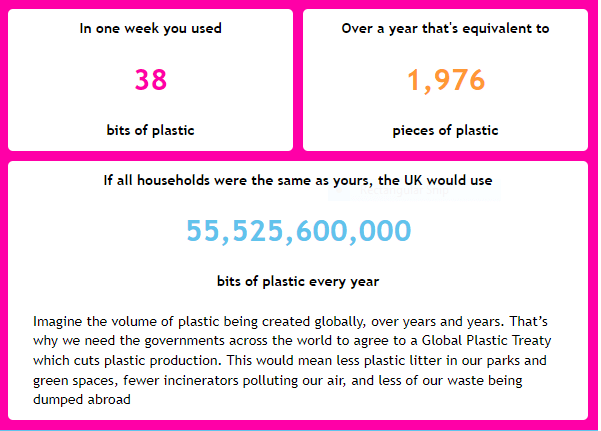
Like almost everyone who took part, I imagine, we do try to think about what we buy, and avoid packaging where we can. Yet our plastic footprint is huge – larger this week no doubt because of our visitors. What about those who because too busy or lacking motivation have an even larger footprint? Shops – especially supermarkets – and manufacturers don’t make it easy for us. Who, for instance, needs to have their bananas packaged in plastic? Why can’t supermarkets sell us the number of apples we actually want, rather than supplying them packaged in units of six or so?
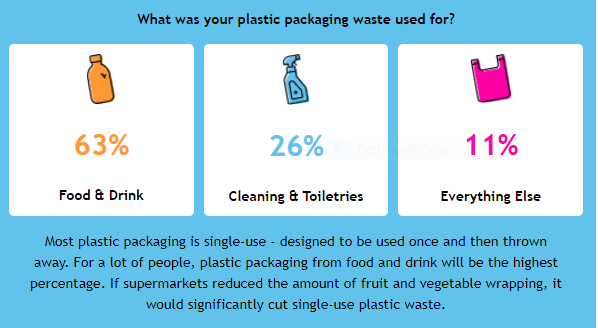
We take any plastic bags we do acquire to a supermarket recycling point, but that’s a faff too. It’s usually full to bursting point.
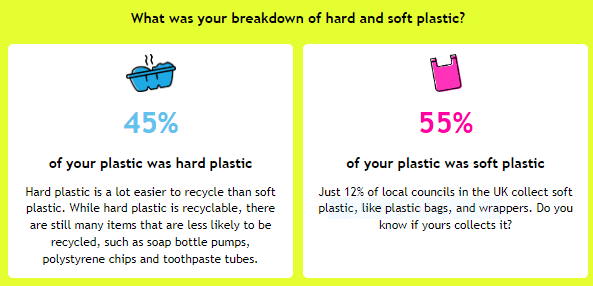
And here’s what happens to it.


But even that’s better than this horribly common sight, a tiny proportion of the result of an urban litter pick. …

The Big Plastic Count is being conducted among individuals like us, and in some schools as a project, as a means of raising awareness among children. And the results are being fed to the Government. Individuals and groups, however well meaning. really can’t effect much-needed change alone. And we have an election in the offing. I can’t imagine lobbying by The Big Plastic Count will make an impact on a dying-throes government chaotically falling apart. Another year of inaction. Another year wasted.

 From Pyrenees to Pennines
Food for thought… I know I would end up with a much higher count. We do try. Often, though, it’s nigh on impossible to get anything in an unwrapped state, or, the loose items are far more expensive. And yes, convenience often wins. Perhaps, I give into convenience too easily, when I could decide not to…
LikeLiked by 1 person
It shouldn’t have to be such hard work, should it? Or more expensive either. It shouldn’t be down to people who have more time and more disposable income to effect change That’s not exactly People Power, is it?
LikeLiked by 1 person
So true! Making the right, eco-friendly decision, should be the easiest thing to do for everyone. A no-brainer, really.
LikeLike
Ours is definately a highr count! It is shocking when you see the figures like that! 😐
LikeLiked by 1 person
It really is!
LikeLiked by 1 person
I completely agree with everything you say, I’d just add that even when supermarkets do sell fruit and vegetables loose, it’s usually works out more expensive than buying them in a packet. There are no financial incentives to buying unwrapped produce, and for many, many people the cost has to be the bottom line.
As with organic food, electric cars, eco toiletries, etc, being eco is still the preserve of the more affluent middle classes. I recently read an interview with two ladies who were having to do several low paid jobs at the same time just to make ends meet. They said they’d love to have electric cars but there was no way they could even contemplate buying one.
I think government subsidies are the only things that would work, and unfortunately I very much doubt they’d be vote winners.
Similarly, re fossil fuels – every time our council tries to dissuade people from driving into town there is a HUGE pile on from people who say they won’t go into town at all unless they can park in front of their favourite shop. We have a good town bus service but a very poor country one, and in rural Scotland this dissuades many, many people from using public transport. A better bus provision would help, but more subsidies for that are again unlikely to win votes.
I think the younger generations are far more positive about making changes and accepting minor inconveniences for the greater good. One of my daughters has just returned from Amsterdam, which is a long journey from Glasgow, but she did it all by train as she refuses to fly. Another friend’s daughter is travelling by train all the way to a family reunion in Portugal this summer with a 2 year old in tow (by herself too.)
Sorry, have wandered from the immediate topic of plastic waste! But I feel it’s all connected, and all a combination of government inaction and disinterest, and, in my and older generations in particular, an insistence on clinging on to whatever makes life easier in the short term. I’m sure I’m just as guilty of the latter as anyone else, though I do use public transport a lot and drive only when absolutely necessary.
My plastics recycling bag seems to be full of biscuit wrappers, fruit and vegetable bags, wild bird food bags and bread wrappers.
LikeLike
You make such a lot of good points. We use the car far more then we’d wish, because our village has four buses a day – none in the middle of the day, evenings or Sundays. A recent pilot for an on demand bus service failed from insufficient usage, meaning that each journey was costing the local authority £18 per passenger journey. Too many people found it too inconvenient to organise compared with jumping into a car. Grrr. The whole Green issue is very hard work, and as you rightly say, something of a middle class privilege. But if we can, we must soldier on until the Big Guns take notice!
LikeLike
Aaargh……
LikeLiked by 1 person
Quite.
LikeLiked by 1 person
😟
LikeLiked by 1 person
It’s both distressing and infuriating, isn’t it. We do our best, too, avoiding supermarkets when we can but we have the time to do that these days. Packaging often seems to be for vendors’ convenience. Why on earth can’t pressed cardboard be used routinely for fruit and veg, for instance.
LikeLiked by 1 person
Hear hear! Traditional groceries are in decline, and for many communities, it’s the supermarket or nothing. And they need to try much harder. One of our local ones prefers cardboard packaging for many fruit and veg, items, but they’re a lot more expensive. Why?
LikeLiked by 1 person
Over here in the states, my community doesn’t have local markets unless it’s summer time and then it’s mostly produce.. The grocery stores offer loose produce, but it goes in plastic bags. We recycle at the curb – paper, cans, bottles, and plastic and we pay a fee per load. I’ve found a place to recycle plastic shopping bags and often take some into the food pantry where I volunteer. It takes a village.
LikeLiked by 1 person
Repurposing plastic bags till they fall apart is definitely better than single use, certainly!
LikeLike
Great project! Despite everyone’s good intentions, it’s amazing how much there still is but things are improving.
LikeLiked by 1 person
I think France has come on a lot since we were there, when our commune was not – shall we say – in the vanguard.
LikeLiked by 1 person
You’re right Margaret
LikeLiked by 1 person
Groan… I often despair at the amount of our plastic waste. But we rely on the supermarket too much. No convenient grocers or fill your own shops, though a couple of expensive farm shops. I reuse plastic trays as seed trays, but that doesn’t make much of a difference. Manufacturers need to be made to produce biodegradable plastic for foodstuffs. And as for all those hard plastics like children’s toys that can’t be recycled, what is the answer?
LikeLiked by 1 person
At least those plastic toys have a reasonably long life, and don’t end up in the ocean – I don’t think. Plastic trays are the bane of my life and not easily dodged.
LikeLiked by 1 person
From what I have read they take a very long time to break down and do end up in landfill, incinerators and the ocean. Because they are made of mixed materials they can’t be recycled. I just think kids have far more toys than they need. 😡
LikeLiked by 1 person
I agree about indulged kids (that’s nearly all of them these days). What’s wrong with just giving them the box the toys came in? Always the best. Shocking, what you’ve read about the end of life of those toys. We can only bash on doing our best …
LikeLike
That is really quite terrifying. But shock tactics are helpful; I will redouble my efforts going forward.
LikeLiked by 1 person
Hooray! Big Plastic Count next year?
LikeLiked by 1 person
Yes definitely. I’d never heard of it before 😊
LikeLiked by 1 person
👍
LikeLiked by 1 person
A lot of good points raised in the comments, Margaret. We try here too, but it’s quite ineffective overall. I don’t actually know what happens to ours after we put in the communal recycling 😗❤️
LikeLiked by 2 people
We have household blue recycling bins here which I use , but must admit I’m a bit cynical as to what happens to the waste once it’s taken? I see it all tipped into the wagon every fortnight and wonder!
LikeLiked by 1 person
I think many councils are trying harder. Here’s what Leeds is up to: https://margaret21.com/2018/03/29/landfill-zero/, and North Yorkshire has a similar facility at Allerton. It’s a start.
LikeLike
I don’t know where Portugal stands on all this either Jo. Mainland Europe generally seems to be rather better than us.
LikeLike
I’ll try and find out, Margaret. I don’t have your confidence. There are ample collection points and regular clean ups on the beach. I was pleased to find on Sunday that the council sponsored walk for everybody had installed temporary water refill points, rather than handing out plastic bottles, as they used to.
LikeLiked by 1 person
The water point thing sounds an excellent start.
LikeLiked by 1 person
I have not had the nerve/guts to dare look into this.
LikeLiked by 1 person
Hold your nose and take the plunge!
LikeLike
I work for a philanthropy which is working to curb plastic pollution. We are advocating for a global plastics treaty and I have spent most of today editing a paper that will be presented to the fourth session of the Intergovernmental Negotiating Committee in Ottawa next month. We are pushing for a plastic pollution fee that polymer producers will have to pay.
LikeLike
Excellent news. Initiatives such as the one you work for are potentially able to achieve far more by research and lobbying then we poor householders can.
LikeLike
Consumers can only do so much. It’s industry and business that needs to change. We are targeting industry, specifically the fossil fuel companies that make plastics, to make changes. We have already produced a Plastic Waste Makers Index which named and shamed the world’s top 20 plastic polluters… https://www.minderoo.org/plastic-waste-makers-index
LikeLike
I’ve only had a cursory glance at this website so far, but goodness, even the headlines make disquieting reading. But do those principal waste-makers, even if named, feel any shame? It feels as if, here at least, a hefty donation to the party in power buys a lot of silence. All power to organisations like yours for raising awareness!
LikeLike
I try to cut back plastic, but it sneaks in without us consumers realising quite how much. I think the key would be for less to be used in the first place but I suppose it isn’t so simple! The litter drives me bonkers, I’m sure a deposit system on cans and bottles would help a lot.
LikeLiked by 1 person
Thumbs up to a deposit scheme. The Germans among others, make it work, so why couldn’t we? And commercial solutions can be found. It’s much easier now for instance to buy plastic-free teabags than it used to be (though loose leaf is even better). If we can try harder, so should the big companies.
LikeLike
Australian has a deposit scheme that works for small drink bottles and cans mainly to prevent littering. 10c an item is good. My 2 crates of bottles and cans usually net me up to $15 so that’s my lunch in town for the day.
I could go on as this is another pet project.
I have my own net bags for fruit and veg at an independent green grocer, have been using calico bags for shopping for over 20 years, recycle everything where possible, buy from butcher so no plastic trays just bags for products, no leaky blood like the old days and butchers paper.
Not having a garbage service made my household aware of what they are buying. Only thing in my bin now we have a garbage service is non recyclables and that goes out once a month, never full.
I would love to see a plastic count done in Australia too
LikeLiked by 1 person
Oh Brian, you’re an example to us all! I try to shop as you do too, but seem to have a bit more rubbish than you do. But making it less with every passing month.
LikeLiked by 1 person
It was hard at the start trying to find the right butcher, fruit and veg have always been easy. Getting my own mesh bags reduced cut that plastic out. When I buy only a couple of anything I just have it loose. Cut vegetables, like Pumpkin are wrapped in plastic, so that’s my only waste now, the soft plastic, since the recycling fell apart in Covid.
I put everything I buy in my own bag as I walk around so know how heavy its getting
LikeLiked by 1 person
Exactly! Yes, I take my own bags too, and people are slowly finding it less weird.
LikeLiked by 1 person
That’s actually very good! We did that too and got 52 which was down from last time’s 77.
LikeLiked by 2 people
Well done! And the target for next year ….
LikeLike
Hopefully downwards! It is sobering just how much plastic we get through.
LikeLiked by 1 person
I know. Even with the best intentions…
LikeLiked by 1 person
it is so hard isn’t it.
I have found that switching to Abel & Cole has helped loads as they sell everything and do their absolute best to make sure it is plastic free, or that you can return the plastic for them to re-use it. So since using them for my veg, meat, cheese and more I do feel I am doing more but even so some still sneaks in
And then like you there are some items I can find no appropriate alternative. And others where think you are doing good (ie Naked Sprout) only to discover courtesy of a Which? report this morning that even the sustainable ones are not as sustainable as they say.
I do remain convinced though every little thing does make a difference, and the more of us who try the more likely the pressure will build on those who can make big changes ie the corporate giants and governments
LikeLiked by 1 person
I do hope you’re right. If you’re still in quest of a replacement for your Naked Sprout loo paper, BBC R 4’s Sliced Bread programme (https://www.bbc.co.uk/programmes/p07012sf) examined green claims made by various companies, and is worth a listen. We can only do our little best, but until the Big Guns really do a lot more than pay lip service ( Yes, M&S, I’m looking at you), not much will change for the better.
LikeLiked by 1 person
Ooh thanks for that, I’ll listen on my walk tomorrow
LikeLiked by 1 person
We recycle everything we can too, and our council is better than many in the variety of plastics it will accept, but some just won’t go in. I think we’ll have to do this count next year, although I’m a bit nervous about what we’ll find!
LikeLiked by 2 people
Honestly Sarah, I think you will be horrified, whatever your level of virtue. It’s impossible to be squeaky-clean, I think.
LikeLiked by 1 person
Oh Margaret! To me this is a “wicked problem” that is complex, contentious and for many of us a disaster that continues to evolve, no matter how hard we try to make a difference. Plastic’s widespread use in packaging, consumer goods, and industries contributes to its persistence in the environment. Recycling challenges, lack of proper disposal infrastructure, and low public awareness further hinder effective plastic waste management. The durability of plastic, coupled with its lightweight and versatile properties, make it a preferred material in various applications, exacerbating the global plastic pollution crisis. Thank you for a great post.
LikeLike
I think if we continue to shop in supermarkets the problem will not go away. It’s shocking and our household is worse than yours. We were recently instructed to seperate out cardboard and paper into (yet another) bin, when they came to take it away I watched them tip it into the usual recycling bin to take it away. None of this is joined up thinking.
LikeLiked by 2 people
Joined up thinking? What’s that to the authorities? And I agree about supermarkets, but it’s hard. We have no grocer or greengrocer in a town of 16,000 inhabitants, though there is still a weekly market. And four major supermarkets, with another on the way squabble for our trade.
LikeLike
This is a worthwhile project to promote plastic awareness. A few years ago a group of us hit on all the bars and cafees to ask them to replace plastic straws with carboard. Most obliged and many don’t automatically give straws at all now. One of the biggest problems is the single use plastic in the form of satchets of ketchup, mustard and mayonaise. Supermarkets are a big problem with their prepack meats. I try and use the butchers counter whenever possible but if I am forced to buy I keep the plastic trays for seed trays
LikeLiked by 1 person
Well done you! And yes, single use sachets are the bane of the catering industry.
LikeLiked by 1 person
Your efforts, and those of so many, are admirable, but I do fear that there is no really serious aim from ANY government, or from many individuals (I want to write “most individuals”) to fix this deadly problem. We already have micro plastics in the food chain! I have never seen so much litter discarded everywhere, and there is a definite view that “it is not my job to pick it up” if anyone is challenged. Most of us use whatever system is in place for recycling but many fail to understand how little is actually recycled. The main issue is that to fix the problem, and to reverse the harm, will cost a great deal of money, and that money can only come from us. Yes, we can tax industries, manufacturers, retailers etc but that has to be passed on to the consumer, ie to everyone. Politicians do not have the will to do what is necessary because they know they will be voted out. Retailers are reluctant to find alternatives to plastics because every other choice is more expensive. All solutions return the same result – more cost to us; but not finding the solution will result, I believe, in a very sick and rapid decline of the human race.
LikeLike
I like how you participated in the plastic count. I think it’s a great way to become more conscious of our waste. I wish scientists would look beyond plastic to packaging that is either recyclable or biodegradable. Thanks for highlighting this issue.
LikeLike
The stats are frightening aren’t they. If only supermarkets would do their bit, it would help. The old brown paper bags did the job well and would reduce waste substantially.
LikeLiked by 1 person
ExACTly. But nobody listens to us, do they?
LikeLike
We come from an era when there was a dog to eat the bones, chickens to turn the scraps into eggs, a cow to mow the grass, and a goat to polish off anything the others couldn’t eat! What would we know about recycling.
LikeLiked by 1 person
I can’t claim that, having had a townie childhood. But we threw away almost nothing. Make do and mend was our motto. Still is to a large extent.
LikeLiked by 1 person
Instead of pushing local councils to collect plastic waste and encourage people to sort their waste, wouldn’t it be more effective if manufacturers were penalised for using unnecessary packaging on their products? I’m quite happy buying cucumbers without a plastic sleeve for example, nor do I want apples in a cardboard base and swathed in a plastic blanket.
Sigh
LikeLiked by 1 person
Exactly. Hard-pressed councils are having to mop up after a problem not of their own making. And consumers are forced into buying choices they don’t want to make.
LikeLike
The numbers are shocking and worrisome! We do all we can to clean plastic containers before we put them into our recycle bin. Yes, plastic bags are out of control everywhere…
LikeLiked by 1 person
Quite. And all we can do is our tiny little bit.
LikeLiked by 1 person
Thanks for this post. Very sobering. Sadly, much recycling is just a form of green washing for the plastics industry it seems. The question is how can big business and governments best be pressured into changing, but its hard to see meaningful answers … Perhaps it helps to look around to find examples of change even if just at local level.
LikeLiked by 1 person
It really is all we can do, isn’t it? But it’s depressing to know that however hard we try, it’s not enough. It’s the Big Boys who have to step up.
LikeLike
Yes indeed – it is depressing, but we need to find the hopeful stuff!
LikeLiked by 1 person