Here you are in Barcelona. You’ve strolled down Las Ramblas, and fought your way through the scrum in La Boqueria market. You’ve queued to get round La Sagrada Familia: and in fact visited every other creation you can think of by Antoni Gaudí . At my insistence, you’ve visited the Hospital de Sant Pau (here and here). You’ve got a bad case of Museum Foot, and you’re fed up with the crowds.
Perhaps I could make a few suggestions? One’s yet another museum, but it’s only been opened a for a short while and you may have the place almost to yourself. It’s the Museu de l’Art Prohibit. Here’s the story:
During the ARCO 2018 edition, collector Tatxo Benet acquired an artwork by artist Santiago Sierra, titled Presos Políticos en la España Contemporánea (Political Prisoners in Contemporary Spain). Shortly thereafter … the gallery that sold the piece removed it from its stand. The mere labelling of ‘political prisoners’ triggered its CENSORSHIP…
This incident laid the groundwork for conceiving a distinctive collection. Five years later, the accumulation of works subjected to CENSORSHIP, CANCELLATION or DIVERSE FORMS OF ATTACK has given rise to the Museu de l’Art Prohibit.
The Manifesto: Museu de l’Art Prohibit
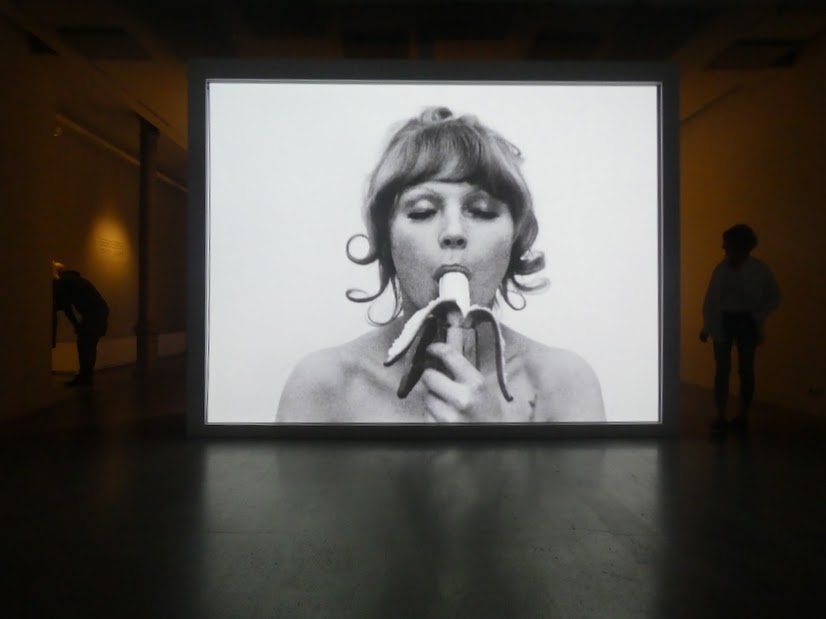
Here, you’ll find work by the likes of Goya , Picasso, Banksy, as well as names less familiar to me like Amina Benbouchta and Charro Corrales. The works shown here have fallen foul of political, religious or sexual censors. It’s powerful stuff and I urge you to go and make your own mind up.
It’s not just repressive or totalitarian regimes that practice censorship. It’s not just the Catholic church or hardline Muslims who do so either. I was quite surprised to find that I too was practising self-censorship when deciding which images to share on a public platform. In the end, I went with these.
This MacDonald’s refuser really liked this one:
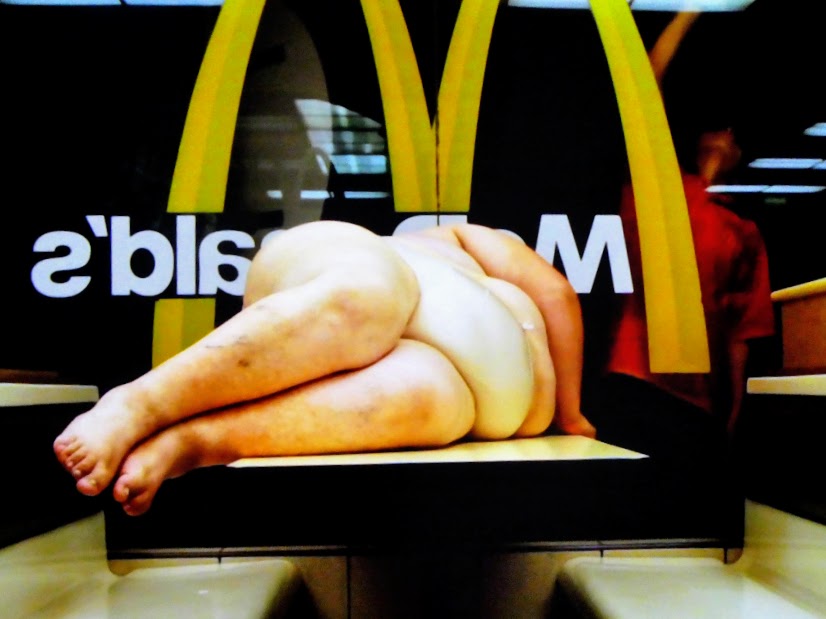
There was this:
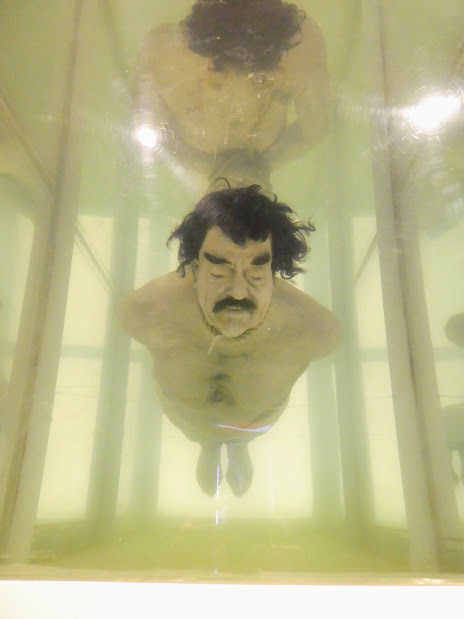
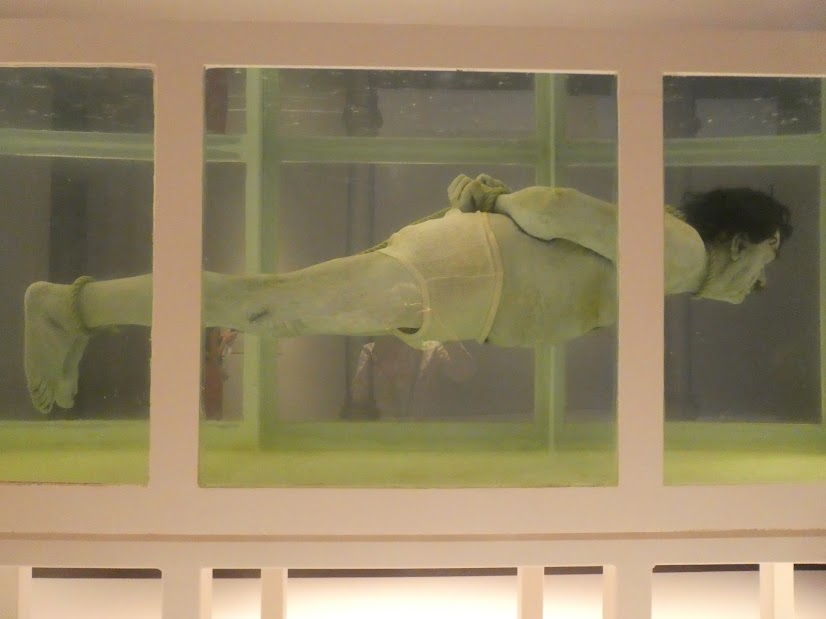
David Cerny 2006: Shark. Saddam Hussein in a shark tank 2005. A Belgian town demanded its removal as being offensive to Muslims and off-putting to tourists.
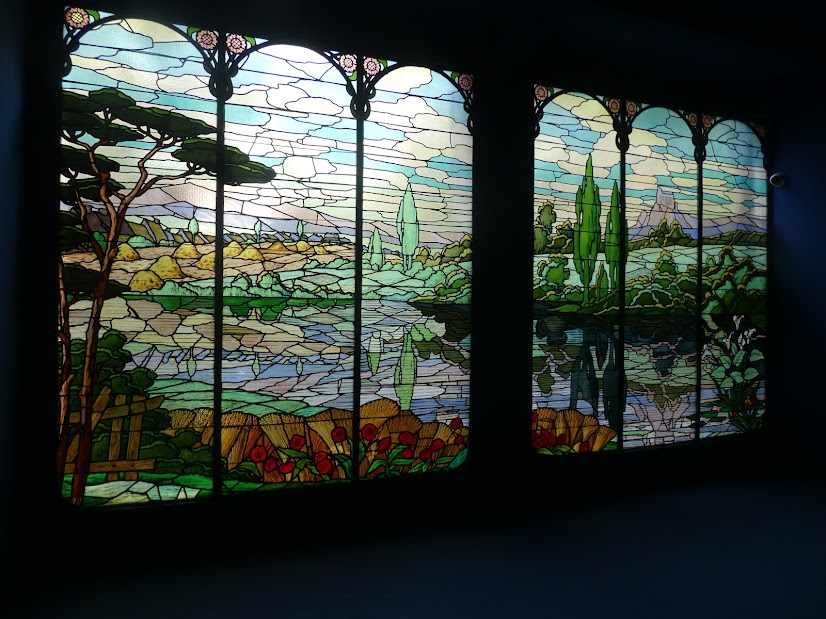
It’s housed in an elegant Modernist building, the Casa Garriga Nogués. These windows give you a taste of it.
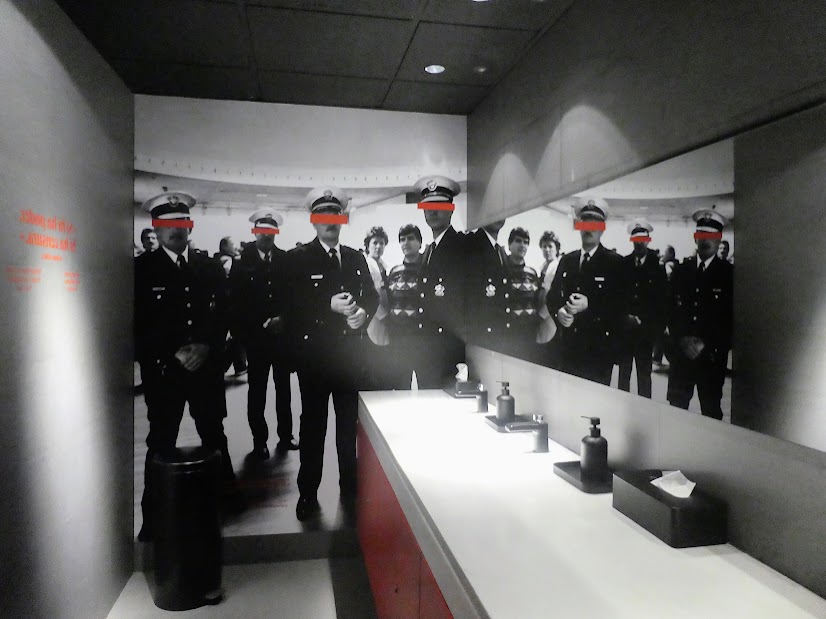
I found the whole thing thought-provoking and was glad to have spent a couple of hours there. I wondered whether I’d been wise to go to the women’s toilets though. The featured photo shows what confronted me as I walked in.
Next week we’ll stay in Barcelona, but I’ll take you somewhere restful and restorative: that’s so long as you don’t get lost. And you will…

 From Pyrenees to Pennines
An unusual article! But interesting.
LikeLiked by 1 person
Thanks. It was an interesting place.
LikeLiked by 1 person
This sounds excellent. It does us all good to be challenged now and again, I think.
LikeLiked by 1 person
I think so. Much of it was uncomfortable, or in some cases unintelligible (to me), and in a few cases funny, but it was well explained and contextualised.
LikeLiked by 1 person
Thanks and noted
LikeLiked by 1 person
Excellent. Thanks.
LikeLiked by 1 person
I like the windows. The rest is well… makes me wonder what you didn’t show. Thought provoking.
LikeLiked by 1 person
There’s no doubt that some readers would have been offended by some of the images and ideas. But yes, it made me think – especially when I found myself self-censoring.
LikeLiked by 2 people
I guess it’s a Gaudi tour next week 🙂
I loved Barcelona getting lost in back streets with, as we liked to call “Chaos Tours”
LikeLiked by 1 person
Nope. Not Gaudí. You were the first to notice my now-corrected major typo- thank you! Gaudí can manage without my help. I’m after the less-visited, and I’m heading outside the city centre next.
LikeLiked by 1 person
I’m intrigued. I visited the monastery outside the city centre, which was a real treat. As you say there is more to Barcelona than Gaudi.
LikeLike
Ah, thanks for sharing your post. We loved Pedralbes,both the monastery and the community surrounding it. Definitely worth making the effort to get out of the usual tourist rut.
LikeLiked by 1 person
Intriguing place. Certainly provocative.
LikeLiked by 1 person
Definitely. In many cases it was easy to see why certain works got people hot under the collar.
LikeLiked by 1 person
Unusual museum, definitely thought-provoking.
LikeLike
I thought so. I hope it becomes better known.
LikeLiked by 1 person
This sounds fascinating – the sort of place where, even if you don’t like all the art, you’re glad to have seen it?
LikeLiked by 1 person
Absolutely. Though it was easy to see why some pieces gave offence, it wasn’t always clear. Human sensitivities can be very sensitive indeed!
LikeLiked by 1 person
It has to be said…Were the officials there to take down your particulars?
LikeLiked by 1 person
Luckily, they must have been cooped up in the toilets while I was there.
LikeLiked by 1 person
Definitely more to Barcelona than Gaudi…
LikeLiked by 1 person
Definitely, Sue.
LikeLiked by 1 person
😊
LikeLike
Definitely worth seeing
LikeLiked by 1 person
I think so.
LikeLike
Thank you Margaret so interesting!
LikeLiked by 1 person
Oh thank you. I wanted to share this experience because it was a new one for me.
LikeLiked by 1 person
I like your title and off the beaten track suggestions. Thanks, Margaret.
LikeLiked by 1 person
Good-oh. More to come.
LikeLiked by 1 person
Great!
LikeLiked by 1 person
That looks like an interesting museum. Confession: I have never been to Barcelona.
LikeLiked by 1 person
That’s not a confession! It’s a wonderful city whose principal sights seem to get overcrowded and therefore exhausting to visit. I just wanted to showcase one or two other places. I avoid big cities these days. I’ll make an exception for Glasgow.
LikeLiked by 1 person