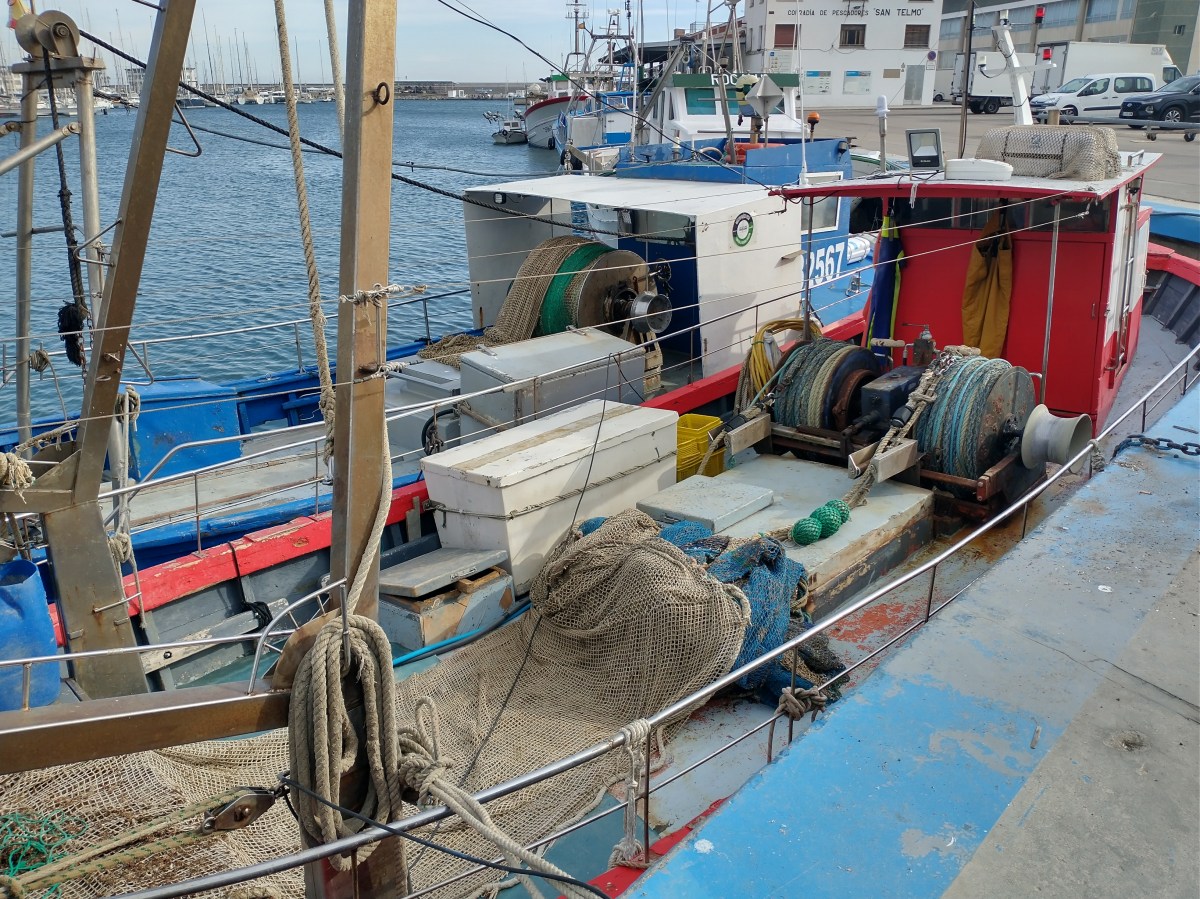
Here I am in Spain on Granny Duty. Today, I’m not needed till 5.00, when I collect Anaïs from nursery. So I took myself off to Arenys de Mar, just up the coast from here. Once upon a time, it was an important ship-building town, and remnants still exist in the form of repairing and restyling yachts and other craft. And it’s still a fishing town, so off I went to the fishing port, where I had long since missed the daily fish auction. Oddly, this starts high and the bidding goes lower till it sticks. I can’t quite get my head round that.
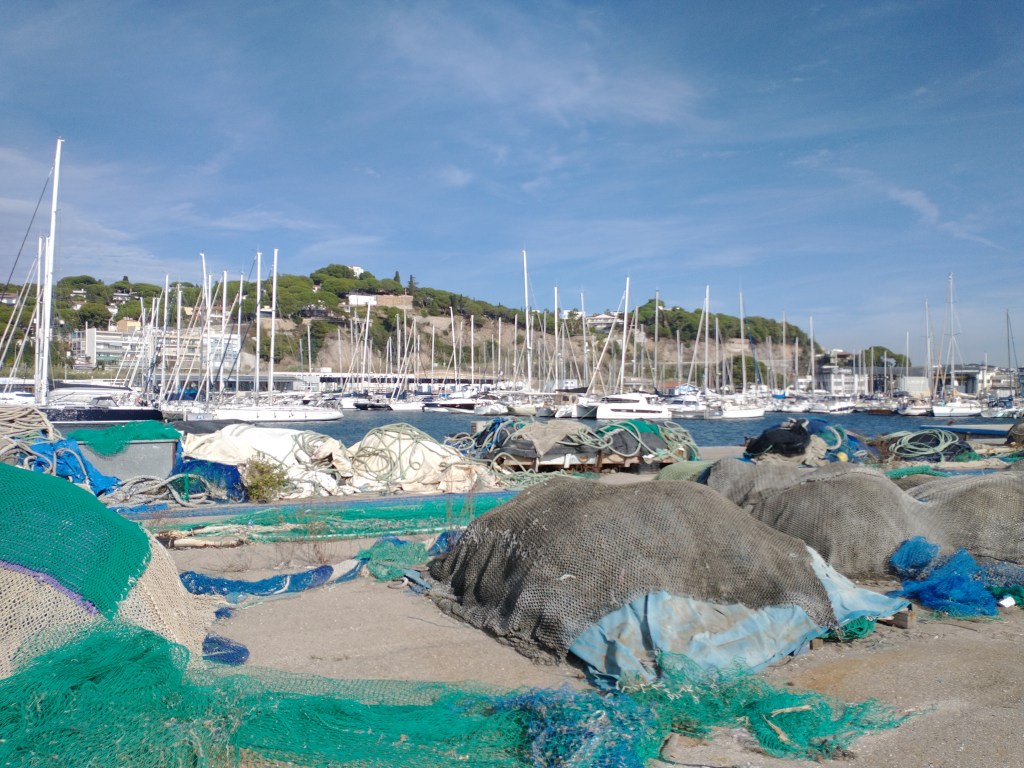
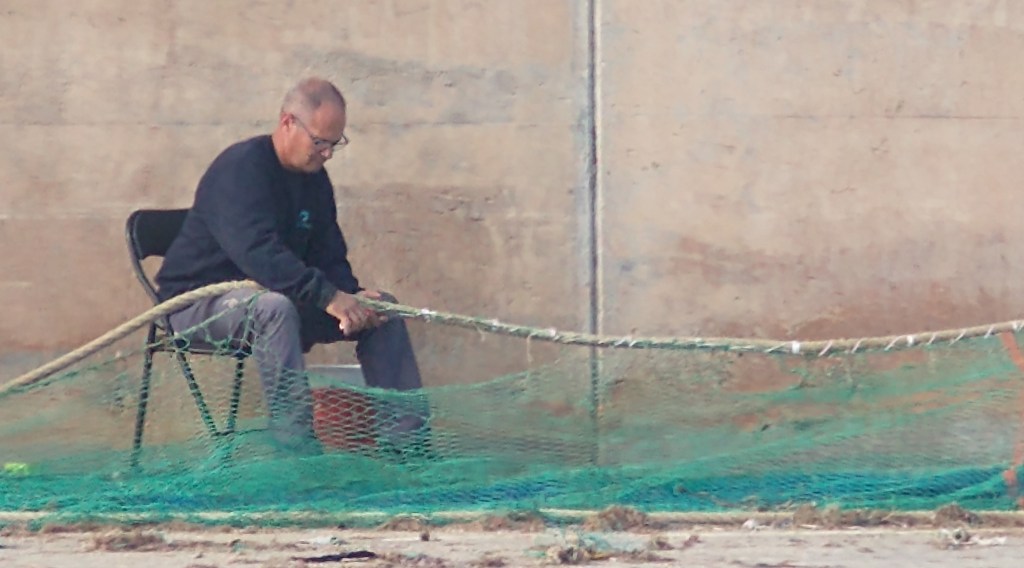
The boats here are small family-run craft. Industrial fishing it ain’t. So fishermen were out and about doing running repairs to their boats, and sitting down checking their nets and mending them. It all seemed time-honored and traditional.
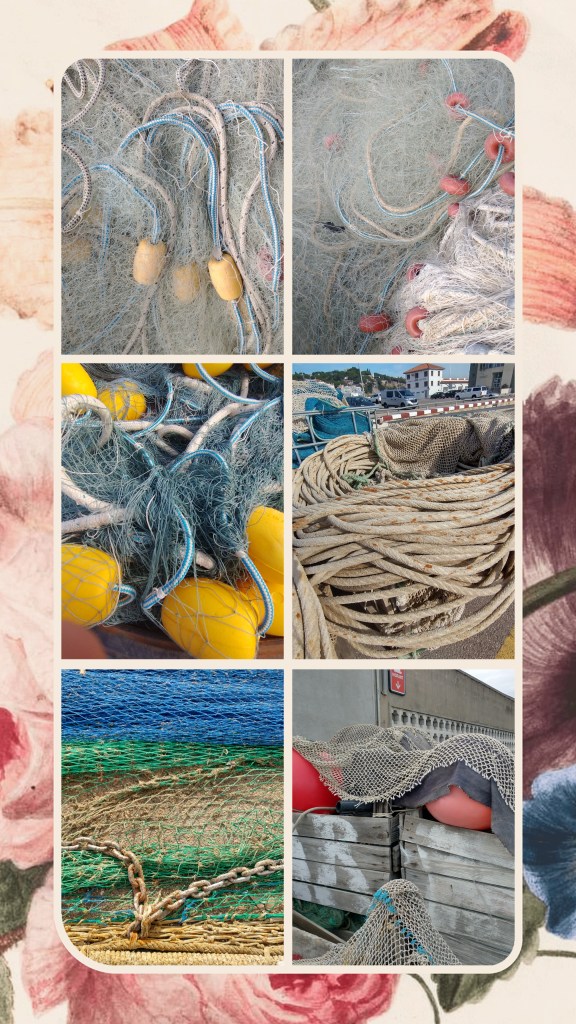
Who knew that fishing nets could all look so different?
Next time I go, I’ll be in time for the auction. Maybe.

 From Pyrenees to Pennines
Turning duty into fun. Nice photos. I especially liked the one with the man mending the net.
LikeLiked by 1 person
I have more on my camera. We’ll see how they turn out later…
LikeLiked by 1 person
Nice study of fisherman attending to his net
LikeLiked by 1 person
I hope I have better ones on my camera too. Obviously these are all phone photos.
LikeLiked by 1 person
Well, they still tell a story
LikeLiked by 1 person
I love fishing villages, such a shame that they are on the decline. You got some great shots.
LikeLiked by 1 person
Thanks. The town itself no longer resembles a fishing village, it’s only the port that’s fishing-y these days.
LikeLike
Well that’s something at least.
LikeLiked by 1 person
I love visiting fishing villages. You reminded me of a Vincent Van Gogh quote:
“The fishermen know that the sea is dangerous and the storm terrible, but they have never found these dangers sufficient reason for remaining ashore.”
Fishermen face the unpredictable elements of the sea, testing their abilities and resilience. They must possess a deep understanding of the water, weather patterns, and the behavior of different fish species. The thrill of the catch, the satisfaction of providing sustenance, and the sense of accomplishment from mastering their craft make the life of a fisherman truly compelling.
LikeLiked by 1 person
I suspect the Mediterranean may not be as tough a workplace as say, the North Sea. But it’s still not a life I’d willingly choose, whatever the thrills and satisfactions might be. Neither would I have been a wife. The ones round here did lace making, and the museum I saw this morning demonstrated just how painstaking a craft that is too.
LikeLiked by 1 person
I think it was a sense of community that they enjoyed. Whenever I hear my mother’s stories of farm life in Nebraska during the Great Depression, it was the community that kept them going during the most difficult of times. But I’m with you – it is not a life that is easily chosen.
LikeLiked by 1 person
You’ve made me want to go on holiday again.
LikeLiked by 1 person
I am having fun, but I’m earning my bed and board too!
LikeLiked by 1 person
Much appreciated, I’m sure!
LikeLiked by 1 person
Interesting textures again. Almost as good as sheep’s wool!
LikeLiked by 1 person
And not as versatile in the clothing department!
LikeLiked by 1 person
I’d like to hear more about that bizarre auction. I can’t get my head round it either.
LikeLiked by 1 person
I’ll have to try to go one day. I can’t see why you wouldn’t keep on bidding, in hopes of getting the fish for free.
LikeLiked by 1 person
I have visions of you coming home with tons of tuna
LikeLiked by 1 person
Those family-size boats couldn’t land a tuna!
LikeLike
Who’s going to cook them? 🤔🩵
LikeLike
Well, happy to do if and when I buy some.
LikeLiked by 1 person
I was expecting a reference to fish net tights amongst the comments – here it is!
LikeLike
Dependable as ever to lower the tone, Peter 😉 Nobody wants tights illuminated with fish scales. Do they?
LikeLiked by 1 person
The fish auction sounds wonderful….. Fresh caught fish! Yum.
LikeLiked by 1 person
I was sorry to miss it. But I bet it was very early indeed.
LikeLike
Be careful you don’t accidentally bid for a catch! You’d have some difficulty getting that in your suitcase…
LikeLiked by 1 person
And customs would definitely have something to say… And my fellow passengers. It would get very smelly.
LikeLiked by 1 person
Lucky you – all that AND being granny!
LikeLike
I’m feeling my age, Elke, I can tell you.
LikeLike
Enjoy your time and a bit more sun!
LikeLike
A bit rainy today but still warm. They need the rain.
LikeLiked by 1 person
Oh indeed, our part has had a reasonable fall this year but will Doñana fill up again.
LikeLiked by 1 person
I love this sort of place and you’ve captured the atmosphere very well! I love the shot of the man mending the net, and your gallery of fishing net close-ups reminded me of your recent sheep’s wool one, with its variety of shades and textures 🙂
LikeLiked by 1 person
Thanks. I can see myself latching on to Google collages a fair bit now.
LikeLiked by 1 person
Oh is that what you used? I must investigate!
LikeLiked by 1 person
It’s quite easy to use.
LikeLiked by 1 person
Wonderful images and text, Margaret. You’ve really captured the harbor area. Lovely! Enjoy your time with Anaïs!
LikeLiked by 1 person
Thanks so much. These are all phone images. We’ll see what the camera reveals later. Loving my grandparent duties, but am just a bit … tired.
LikeLike
I love taking photos of a working seaside. The boats, the traps, the people, the sand, the docks, it’s all beautiful!
LikeLiked by 1 person
I prefer a working environment at the seaside too. No beach-lazing for me!
LikeLiked by 1 person
Love your nets this week Margaret – who knew they could be so beautiful?!
LikeLiked by 1 person
Thanks: the variety fascinated me, from coarse and rope-like to as delicate as a gossamer garment.
LikeLike
Your photos tell stories behind fishing. So much fishing work for us to consume…
Thank you for taking us there, Margaret!
LikeLiked by 1 person
I’m glad you could come, Amy!
LikeLiked by 1 person
💖
LikeLiked by 1 person
I love the textures. The reverse auction idea is interesting – a ploy to inflate prices, perhaps? Does that mean the first bid always wins? It would also be possible to game the system, for everyone not to bid, assuming they all knew each other in a form of collective-not-bargaining.
LikeLiked by 1 person
There were lots of fine planters in town, but no other distressed doors as fine as that one.
LikeLiked by 1 person
I don’t understand the reverse auction at all. If bidding starts at say 100€, then you might bid 90€, and I’d maybe go for 80€ … I just don’t get it. But it clearly works for them.
LikeLike
I’ve just looked it up in Wikipedia. I still don’t understand.
LikeLike
It does seem very unusual for the lowest price to win, unless they are competing to supply at that price rather than to buy. I once took place in a series of reverse auctions with Argos – the suppliers competed to bid the lowest cost price to win the contract to supply a specified item. I remember it being extremely scary.
LikeLiked by 1 person
I’ll try to go sometime. It’s awkward at 4.00 p.m. – just when I’m most useful to my daughter’s family. Ah well…
LikeLike