
On the first Saturday of every month, a book is chosen as a starting point and linked to six other books to form a chain. Readers and bloggers are invited to join in by creating their own ‘chain’ leading from the selected book.
Kate W: Books are my Favourite and Best
This month’s starter book is Elizabeth Day‘s Friendaholic. I haven’t read it, but apparently the clue is in the title: it’s an exploration of friendship.

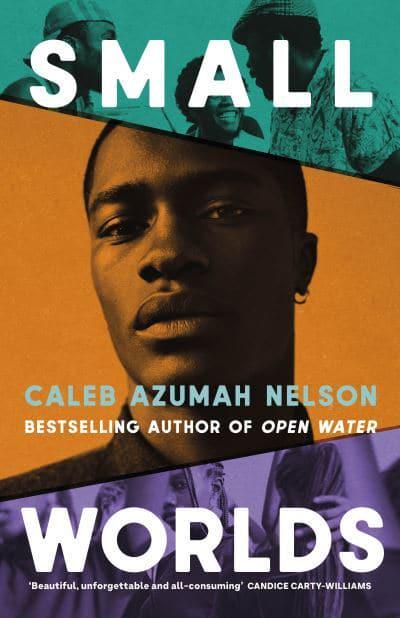
I’ll start then with a book I’m just reading now. It’s Small Worlds, by Caleb Azumah Nelson. At its foundation are two things: the narrator’s strong friendships, deeply rooted in his wider family, and his love – their love- of music, which underpins all their moments of togetherness and happiness.

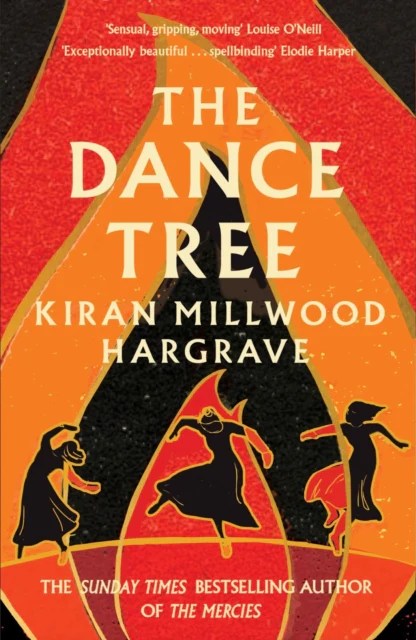
There’s a lot of dancing in Nelson’s book. So let’s go to Strasbourg in 1518, to a story based on a historically documented ‘plague’ of hysterical dancing: The Dance Tree, by Kiran Millwood Hargrave, set in a time of famine, superstition, religious and moral outrage. This is largely the story of Lisbet, pregnant again having already lost nine babies in very early infancy, and beekeeper extraordinaire. Why has her sister-in-law Nethe been required to do penance in a religious community for seven years? Why have hundreds of women been dancing in a frenzy, for hour after hour, day after day? Why do yet more and more people join them? Here are family secrets, forbidden love, frightened and powerless women examined in a story rich in feeling and entirely readable.

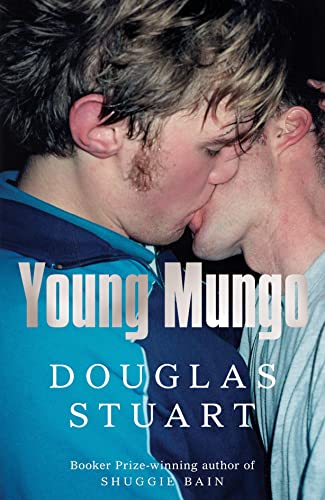
I’ll take you to Glasgow now, to the recent past, to a city which seems to have had parallels with the Strasbourg depicted in the last book. Young Mungo, by Douglas Stuart. Mungo grows up on a down-trodden Glasgow housing estate, immediately post-Thatcher: fatherless, with an increasingly absent and alcoholic mother whom he adores, a clever older sister who looks out for him, and a violent, lawless older brother. Why, at the beginning of the story, does his mother send him away on a fishing weekend with two fellow alcoholics whom she hardly knows? We return throughout the narrative to find out more. Mainly, we are in the poverty-stricken community Mungo calls home. And it’s here he meets James, and discovers his sexuality. That’s bad enough, but in sectarian Glasgow, Mungo is Protestant, James Catholic … This is a story with a deeply rooted sense of place, illuminating and pacy dialogue, with sectarianism, violence, fear and deprivation at its heart, examining what it means to be male in such a society, and the risks attendant on being gay.

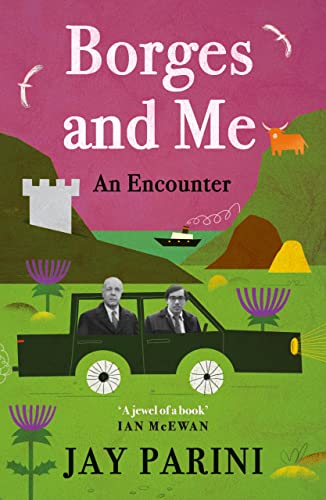
We’ll stay in Scotland, but lighten the mood, by picking up a copy of Borges and me: an encounter by Jay Parini. A romp of a read – a lightly fictionalised account of Parini’s encounter with Borges: a writer whose work I, like Parini, have never (so far) read. Jay Parini, an American, was a post-graduate student at St. Andrew’s University, dodging the draft to the Vietnam War. He’s going through young-man-angst about the subject for his thesis (his supervisor doesn’t seem keen on Parini’s choice of poet Mackay Brown), his draft-dodging and his (lack of) love life. When a friend of his, Alistair, is called out of town on a family emergency, Parini is called in to house-sit Alistair’s guest, the blind and elderly post-modernist writer Borges. Almost immediately, at Borges’ request, they embark on a road trip round Scotland for which Parini is expected to be Borges’ ‘eyes’. Shambolic and unpredictable, Borges is also a fount of dizzying literary talk. This is a trip to savour. A book which is a funny and wry account of an unlikely and thoroughly Quixotic journey: indeed Borges names Parini’s ancient Morris Minor after Quixote’s horse Rocinante. And it’s persuaded me too, that it’s about time I read some of Borges’ writing.

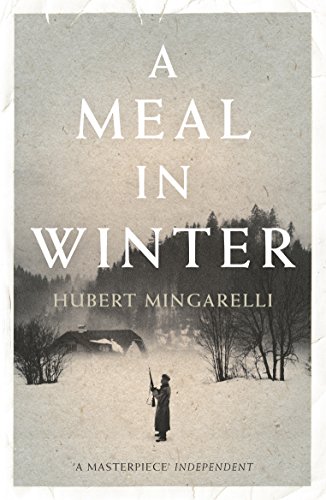
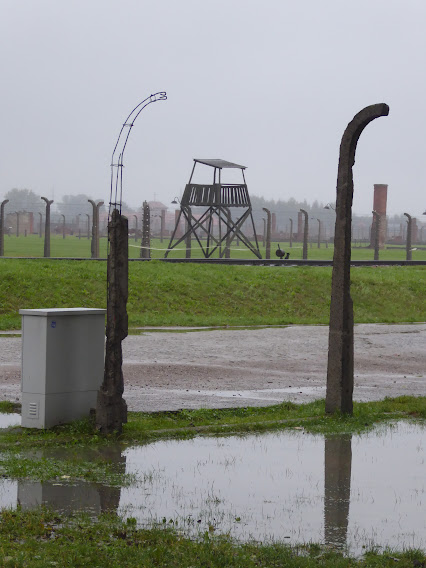
More men thrown together almost by happenstance: this is very much not a romp of a read. A Meal in Winter by Hubert Mingarelli. An account of three German soldiers whose task on a bitterly cold winter day during WWII is to hunt down Jews in hiding and bring them back to the Polish concentration camp where they are based, for an inevitable end. This unenviable task is better than the alternative: staying in camp to shoot those who were found the previous day. They’re friends simply through circumstance, so they talk about family – about the teenage son of one of them – and they find just one Jew. Is he their enemy, deserving his fate, or is he just like them, a young man doing his best to survive? What if they return to camp with nobody to show for their day’s hunting? As the men retreat to an abandoned cottage to prepare a meagre meal, their hatred and fear jostle with their well-submerged more humane feelings to provide the rest of the drama for this short, thought provoking book.
Let’s complete the circle by turning to another book whose protagonists’ family history lies elsewhere, as was the case with Small Worlds (Ghana) but whose home is now London. Kamila Shamsie‘s Best of Friends. This is a book of two halves. The first takes us to 1980s Karachi, and to the lives of two 14 year old schoolgirls. Zahra’s exceptionally bright and will do well. She’s less privileged than Maryam, who expects to inherit her grandfather’s successful leather business. An event takes place which comes in many ways to define their futures. Fast forward 40 years. The girls, now women are living in London, are successful and content. In many ways they are ciphers representing on the one hand liberal and inclusive politics, on the other successful entrepreneurship. Their strong friendship endures. Until the event from their teenage years comes back to haunt them. I didn’t quite believe in this and though the ending is intriguing, I was a little disappointed in this latest book from Shamsie.


So there we have it: a chain that explores friendship in its many guises. Next month? The chain-starter is the winner of the International Booker Prize: Time Shelter by Georgi Gospodinov and translated by Angela Rodel.

 From Pyrenees to Pennines
I should imagine a lot of research goes into completing these chains
LikeLiked by 1 person
It’s lots of fun though, as is reading how differently other chains go.
LikeLiked by 1 person
I bet
LikeLiked by 1 person
Trouble is, too many good ideas about what to read next ..
LikeLiked by 1 person
Indeed
LikeLiked by 1 person
Oh, well collated chain…you are good at these
LikeLiked by 1 person
Thanks Sue. It’s a great opportunity for me to review my reading choices.
LikeLiked by 1 person
Fair enough! But it sounds very involved😊
LikeLiked by 1 person
Fascinating and enjoyable chain, though I only really recognise the last book. Borges and me sounds great,
LikeLike
It was a great light-hearted break at a moment when some of my choices were on the heavier side.
LikeLike
You may not be surprised to hear that I love you chain which has several of my current favourites in it, not least the gorgeously written Small Worlds. I’m quite taken by the sound of the Parini and the Hargreave, too.
LikeLiked by 1 person
I can recommend both – and yes, isn’t Small Worlds beautifully written?
LikeLiked by 1 person
Now on my list. I loved his rhythmic use of language. Without doubt one of my books of this year.
LikeLiked by 1 person
Definitely. Mine too.
LikeLiked by 1 person
Never read Borges either, and I’m not sure how interested I am in reading his work, but that picture with the mountains… O.M.G!
LikeLiked by 1 person
You don’t have to leave the British Isles to get spectacular views! I just picked up a Borges in a charity shop yesterday. I’m curious to get stuck in.
LikeLiked by 1 person
Now, if only I lived somewhere on the British Isles! But, I have a pretty nice view from my balcony, so… I’ll be okay!
LikeLiked by 1 person
A chain with some very interesting titles; the first two in particular I’ve heard very good things about recently and hope to pick up at some point. I haven’t read Borges either (though I do have a short book about him on my TBR), but this book does sound very enjoyable. Incidentally, your chain also reminded me of another option I could have possibly my chain started with but had forgotten all about–The Calculus of Friendship!
LikeLiked by 1 person
I’d not heard of The Calculus of Friendship and had to look it up. It looks an interesting one.
LikeLike
I read it years ago (pre blog) on a friend’s recommendation and really liked it. So far as I recall (though its been a long time) the maths bits weren’t too hard to follow and one could safely skim over ones that were.
LikeLiked by 1 person
This is so exciting. I haven’t heard of any of the books, so more to explore. Yay.
My Six Degrees of Separation took me from Friendaholic to Kafka on the Shore by Haruki Murakami.
LikeLiked by 1 person
It’s alright saying ‘yay’, but it just makes the must-read pike even more untenable, doesn’t it? Just off to read your chain now.
LikeLike
I know, there are always two sides. I saw a post lately that said, we are not book hoarders, we are book collectors and we give these books a home. I liked that. LOL
LikeLike
Ha! I’ve just read your post, and then tried to comment. I jumped through all the hoops, but it wouldn’t accept my comment. Which was … ‘Such a clever way of constructing your chain! I am fairly alone in not getting on with Murukami. But I don’t know your other choices, so I’ll have to do some research.
LikeLike
What a shame. Since I found out that going to Google Chrome for some pages (like yours and Davida’s, for example, I can comment. Otherwise, impossible. I don’t know what’s the problem and whether that is the case with other Blogger/Blogspot accounts. I just checked and it looks like none of the people who commented uses that site. 😦
LikeLiked by 1 person
I think these book chains area great idea!
LikeLiked by 1 person
They’re great fun. But reading too many of them makes the Must Read list way too long.
LikeLiked by 1 person
This is true. I’ve read 90 books so far this year but there are 130 on my ‘to read’ list 😀
LikeLiked by 1 person
90? I thought I was doing well with 50! Do you actually do anything else? Ah yes. Walking ….
LikeLiked by 1 person
I set myself a target to read more this year, i’m afraid I get obsessed with targets!
LikeLiked by 1 person
The Dance Tree is on my list having read The Mercies by the same author. I’ve read Shuggy Bain but didn’t feel inspired enough to pick up Young Mungo though.
LikeLiked by 1 person
I must read The Mercies! And I’m guessing Douglas Stuart’s Glasgow is rather a long way from your own version of the city – which I’d definitely prefer.
LikeLike
Very different, though I know when I go on about how wonderful Glasgow is it’s not the same for everyone. Some still live like Shuggy. There is a Shuggy mural at the Barrrowland, this is from way before we followed each other.
LikeLiked by 1 person
Oh, thanks for showing me that. Sadly, every city has areas where nobody should have to live.
LikeLiked by 1 person
Your six degrees of separation are unique, Margaret. I am inspired by how much your read!!! WOW!
LikeLiked by 1 person
What else is the middle of the night for, if not for reading 😉 ?
LikeLiked by 1 person
Well done for completing the circle! I nearly used Best of Friends for my first link, but decided on something else instead. The only other book in your chain I’ve read is The Dance Tree, which I enjoyed.
LikeLiked by 1 person
My chain this month was completed with pretty readable books -even the Shamsie is of course well-written, even though it didn’t hit the spot for me.
LikeLike
The Dance Tree and Borges and Me look like great reads.
LikeLiked by 1 person
Both are warmly recommended.
LikeLiked by 1 person
Interesting selection of books! I haven’t read any of them, but Small Worlds is on the radar. At some point, I would also like to try one of Kamila Shamsie’s novels, but perhaps Best of Friends isn’t the best place to start.
LikeLiked by 1 person
I was a little disappointed in the Shamsie, but the first half was involving – and all of it’s well-written of course. Small Worlds is a book I’ve now finished, and I thoroughly enjoyed being involved in the life of a community so different from my own.
LikeLike
I don’t know any of these books, and only one of the writers, and one of the characters. Borges and Me sounds interesting, so I could start there.
LikeLiked by 1 person
I’m sure a book about meandering travellers will hit the spot with you!
LikeLiked by 1 person
Ha ha. Thanks, an even stronger recommendation
LikeLiked by 1 person
As always, your photo-and-cover combinations are stunning.
LikeLiked by 1 person
Oh, thanks so much Kate.
LikeLike
Back to friends, well done!
I need to check this book on Borges, thanks
LikeLiked by 1 person
Worth looking out for, I think.
LikeLiked by 1 person
Interesting chain – everything from dancing to truly harrowing! I’m reading Small Worlds too at the moment – lovely writing although I’m not sure where, if anywhere, it’s going…
LikeLiked by 1 person
I found it satisfying in the end, though the last third might have been introduced earlier, perhaps.
LikeLiked by 1 person
I like the amount you write about each book and as a previous commenter said, it takes a lot of research and writing. My own took a full three hours not including the advance thinking! I also like the fact that you have taken us to many different parts of the world – books set in the English-speaking world are not the only choice. I seem to find little time for reading at present as writing takes precedent after work, allotment, shopping, cooking, partner and family – not necessarily in that order. however, if I want to extend my TBR list I could well look to your chain…
LikeLiked by 1 person
Ah, thank you! Yes, real life does get in the way of reading far too often. And writing Six Degrees posts is a bit of a labour of love. In my case, I quite enjoy the memories it provokes of books I might otherwise forget. Off to read your post now …
LikeLiked by 1 person
Ooops! Silly me! I already have – and enjoyed it very much too!
LikeLiked by 1 person