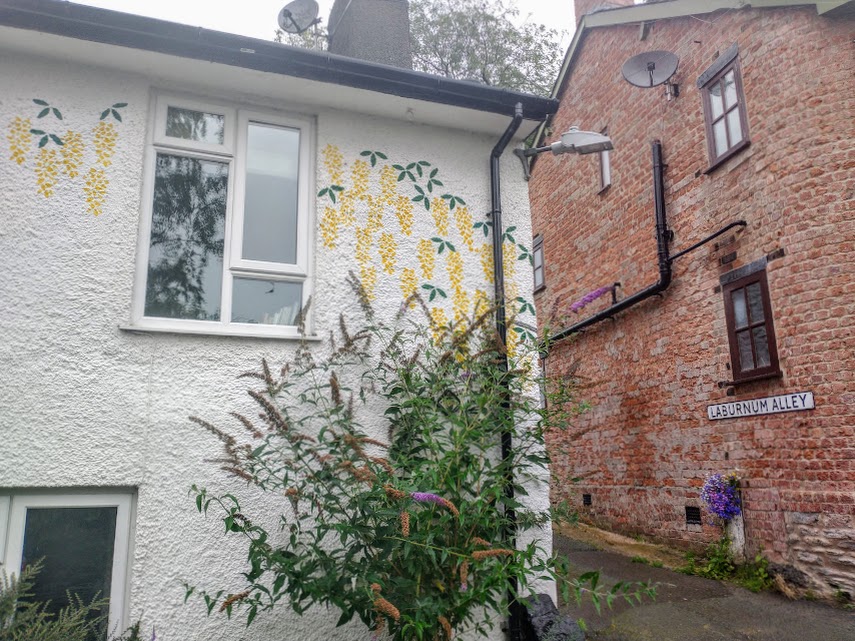
Lots of Postcards from Bishop’s Castle

Not on the main road to anywhere much, Bishop’s Castle (nowadays it no longer has a castle) may be somewhere to settle if you’re something of a creative type: an artist, a musician, a writer or a craftsperson. It’s an interesting town for a day trip – in our case because we were going to meet fellow blogger Tish Farrell, whose blog Writer on the Edge is one I know many of you read (And if not, why not?). We both enjoyed a morning with Tish and her husband before they waved us off to discover the town under our own steam.

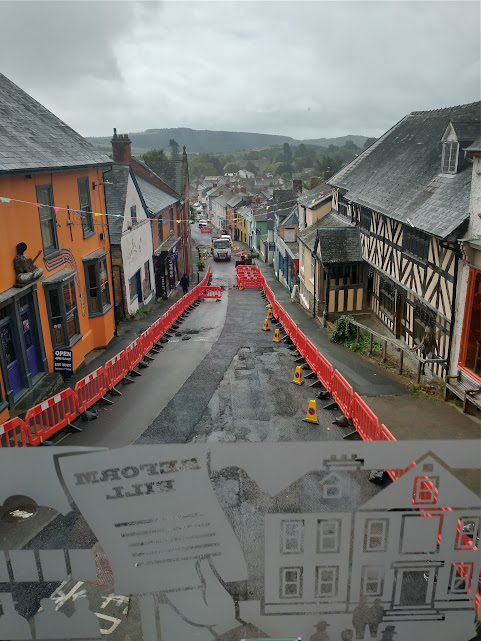
I’m settling for a few postcards. Here’s the view from the Town Hall down the main street. If only they hadn’t been digging the entire length of the High Street up! No fun at all.
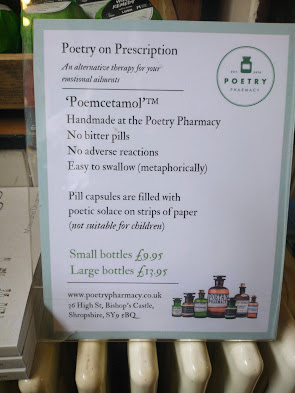
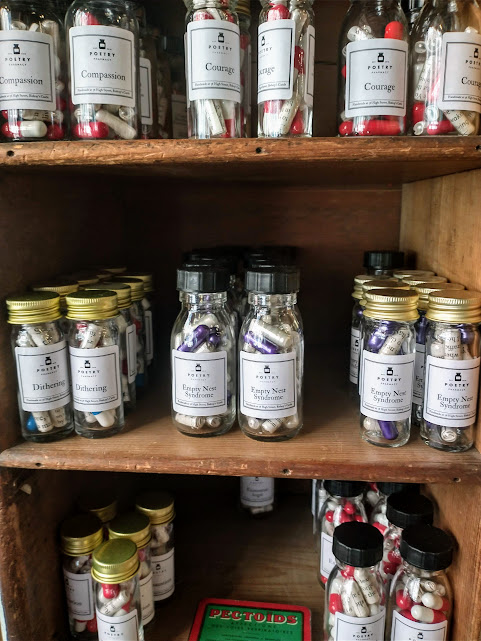
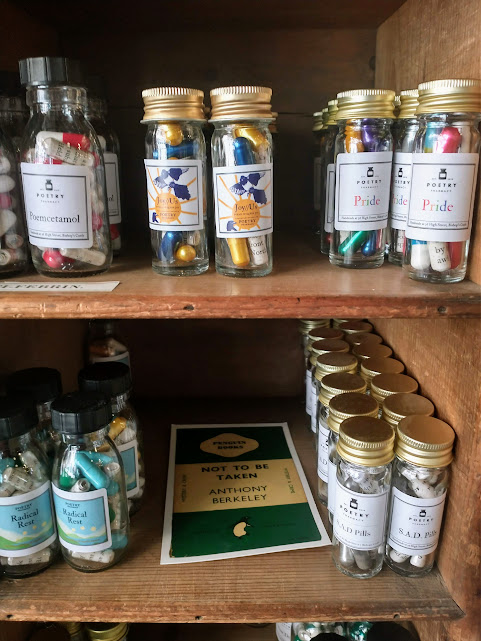
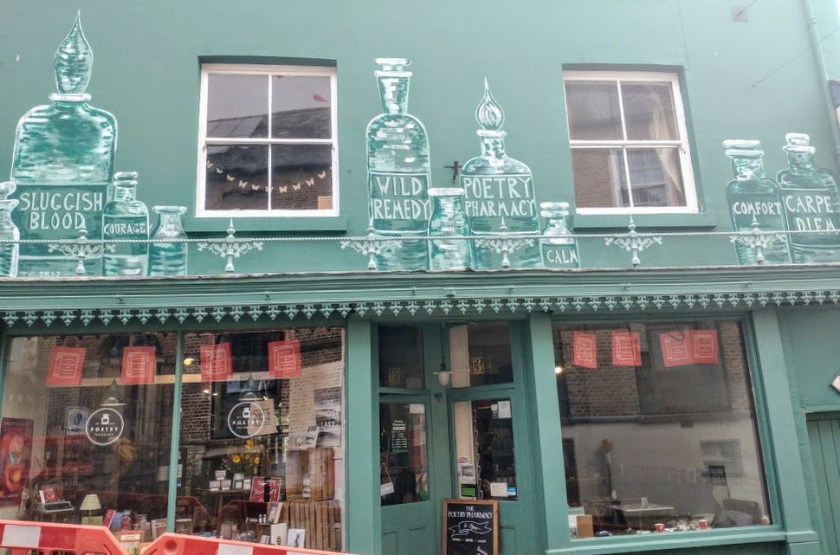
We pottered around quirky independent shops. Here’s our favourite – The Poetry Pharmacy.

The world’s first ever Poetry Pharmacy offering walk-in prescriptions, literary gifts, and books to address your every emotional ailment.  Visit our beautiful Victorian shop in the small town of Bishop’s Castle, Shropshire, to browse the bookshop or pause in the Dispensary Café to be prescribed coffees, tisanes, sodas & sherbets to lift the spirits.
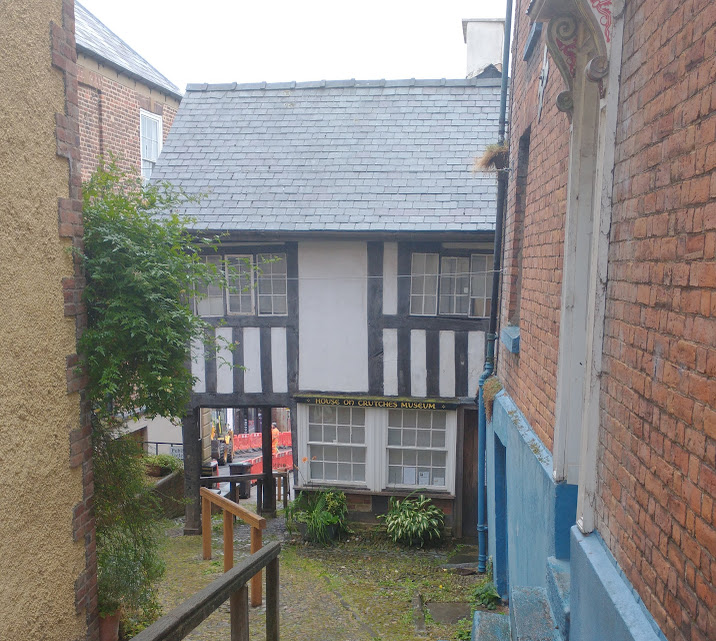
There was the House on Crutches Museum – sadly, closed that day: and so many charming buildings worth a second glance.
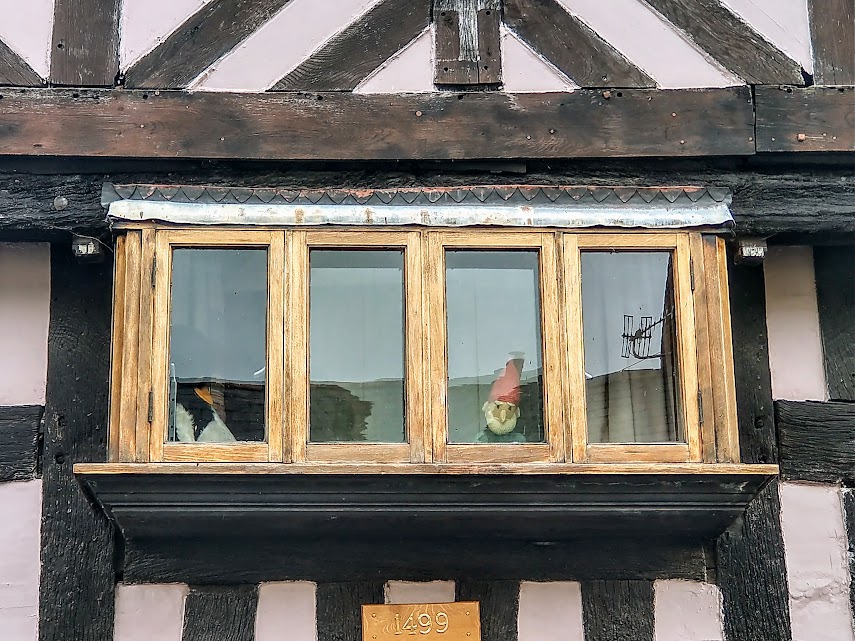
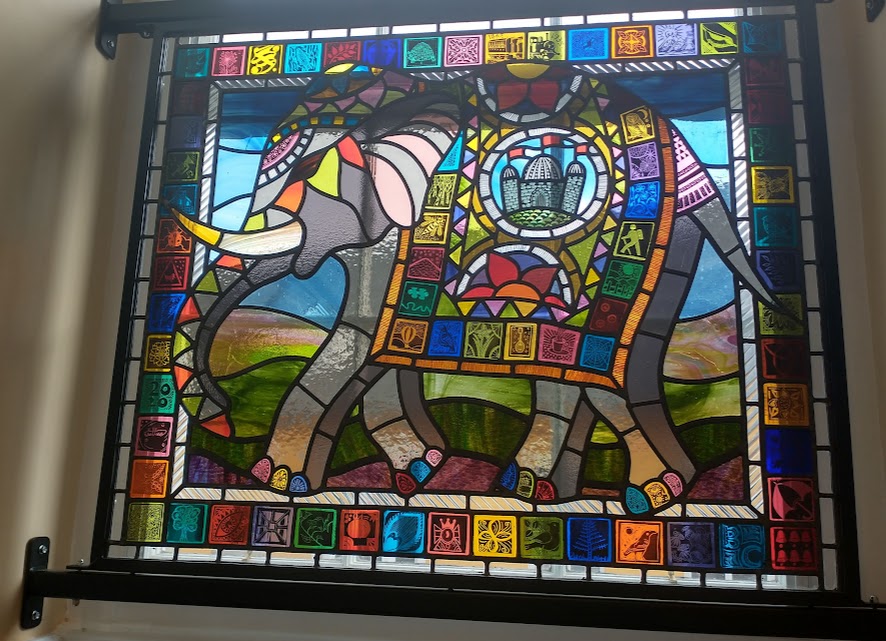
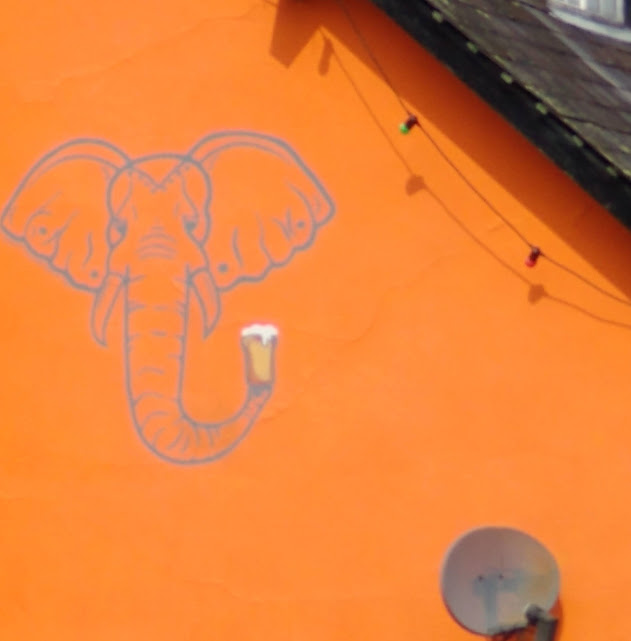
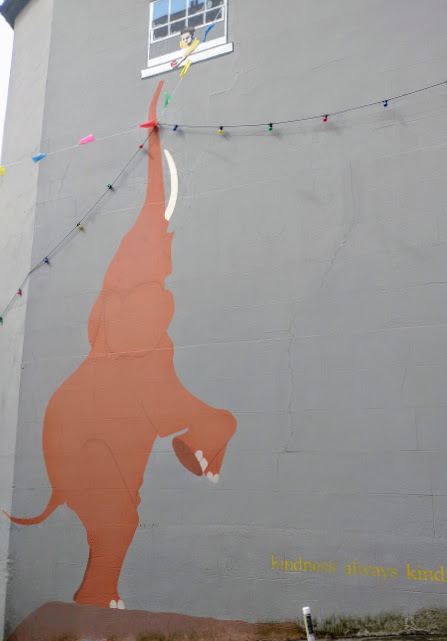
Or you could go looking for images of elephants, a reminder of two things. First, that Clive of India, whose family Coat of Arms included an elephant, once lived here. More memorably, during WWII, several circuses moved their animals out of the cities to Bishop’s Castle to avoid the air raids. A good few elephants were housed in local stables …
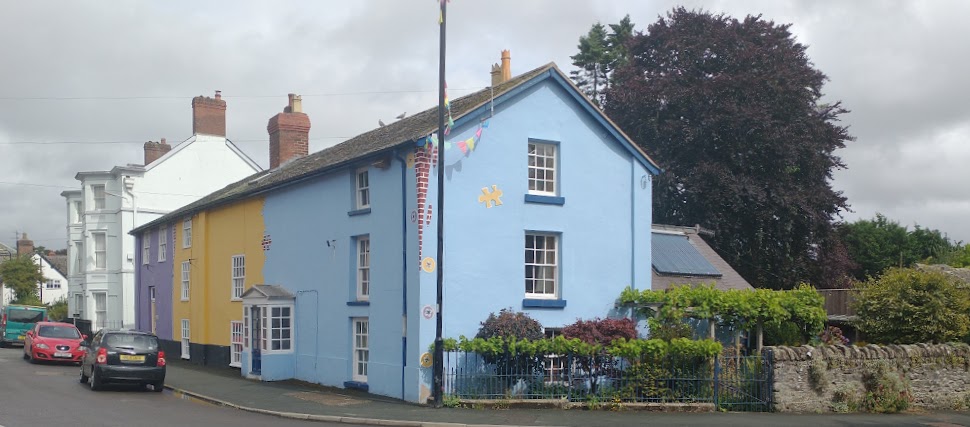
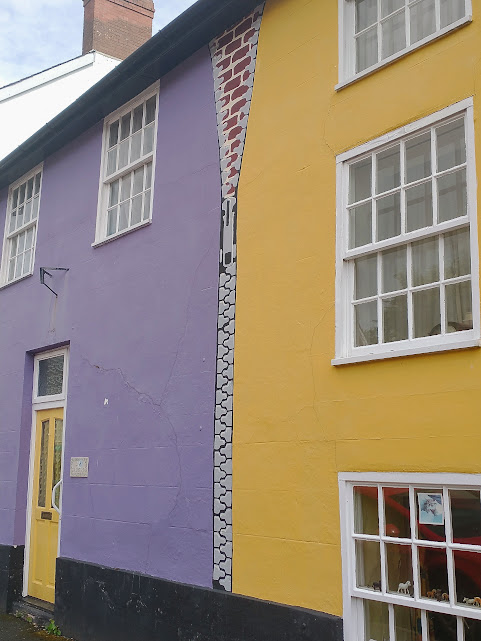
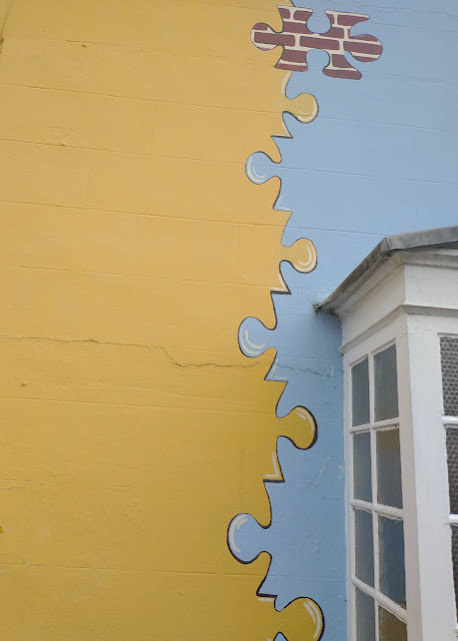
Perhaps my favourites were three houses at the bottom of the street. Terraced, and each painted a vibrant, different colour, the first was ‘zipped’ to the second, which was the ‘jigsawed’ to the third.
And that was pretty much it. A rewarding day that lived up to its promise. The featured photo shows almost the very first house we spotted on our way to find Tish. The first of many cheering sights.

A multi-tasking post.

For Natalie’s Photographing Public Art Challenge

and Jo’s Monday Walk

and Debbie’s Six Word Saturday.
Postcards from Wales – and Shropshire – Combined

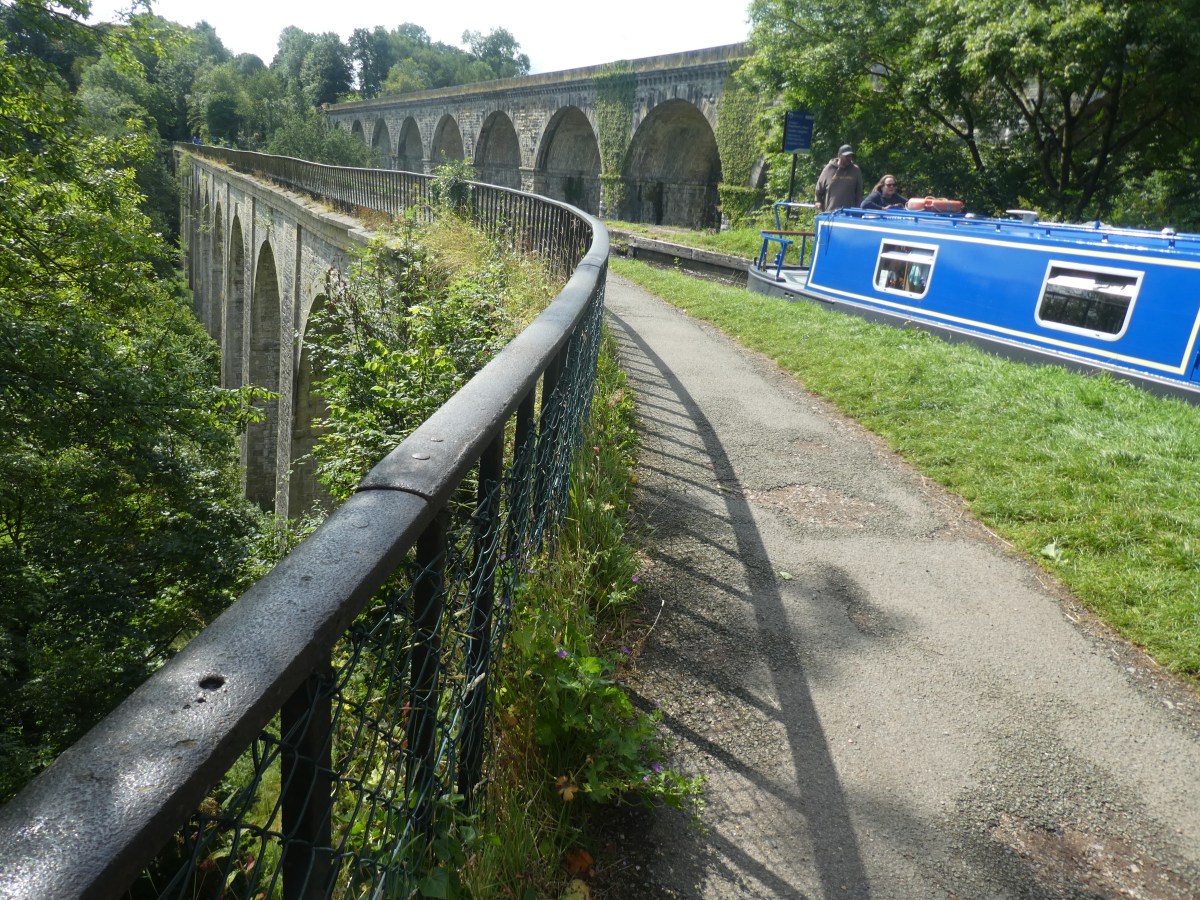
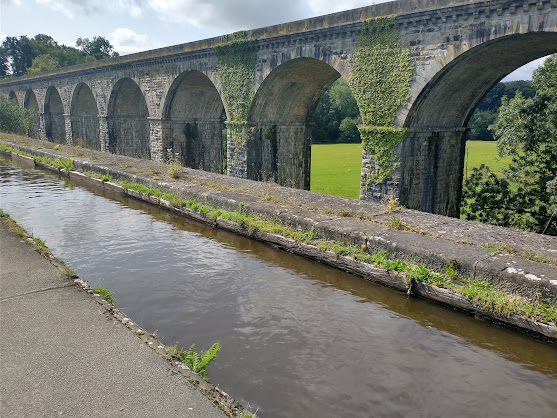
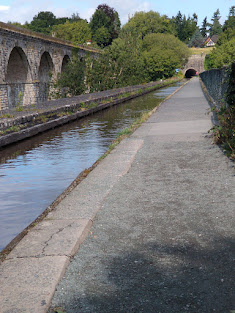
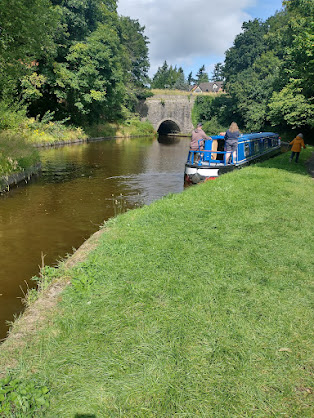
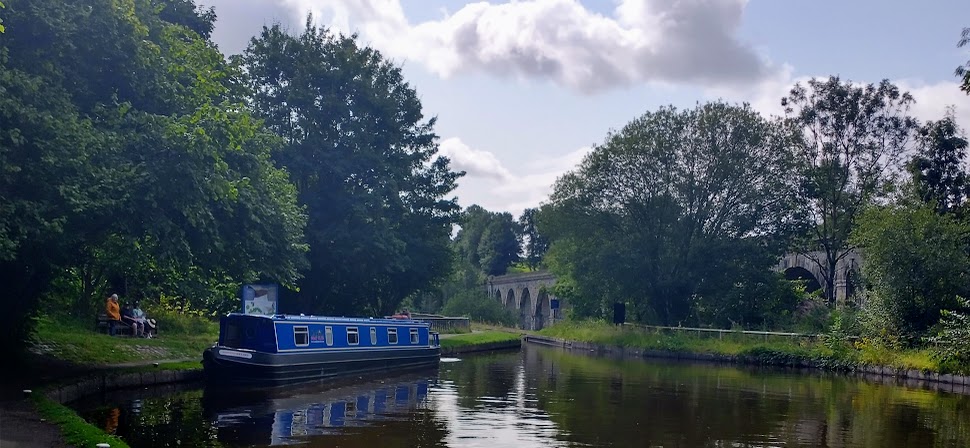
An unexpected treat yesterday. We went to Wales, to Chirk Castle, and on the way, we saw two feats of engineering in one: Chirk Aqueduct and Viaduct. Each of them has one end in England, the other in Wales. And what a sight! Completed in 1801 by William Jessop and Thomas Telford, the aqueduct is 710 foot (220 m) long and carries the canal 70 feet above the beautiful River Ceiriog across 10 circular masonry arches.

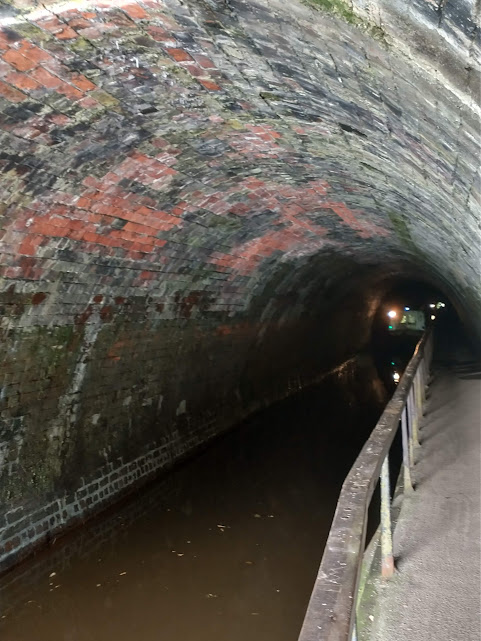
Walking along the towpath, as I did, high above the bucolic valley beneath, you can see next to it the railway viaduct opened in 1848 and designed by Scottish engineer Henry Robertson. It quite made our morning. I ventured too into the aqueduct’s tunnel – one of the first designed to have a towpath. Barges used to be manned by several men, with a horse walking up ahead on the side of the canal, attached to the barge by a rope. When the boat came to a tunnel, the horse would climb the hill and the men would lie on their backs and ‘walk’ their feet along the roof and walls of the tunnel (‘Legging it’). How grateful those men must have been to find a towpath at the disposal of their horse!

Whether you get a postcard from Chirk Castle remains to be seen. So much to do, so little time …

Here’s the Grandfather of the Skyscraper

We’re staying near Shrewsbury just now, vegetable-garden-minding for friends. This mainly involves eating quantities of just-picked produce, to prevent the courgettes becoming marrows, the lettuces bolting, and the beans giving up bothering.

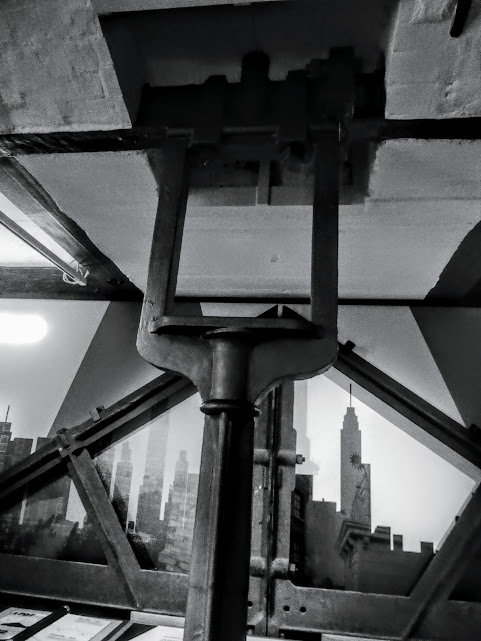
This is not however a full-time job, so I’ll be sending you postcards from time to time. The first is from Shrewsbury Flaxmill Maltings. This was built in 1797, the very first building in the world to use an entirely iron frame. And that made it fireproof. Mill buildings – full of dust, fluff, combustible fibres and fabrics – largely built round a wooden carcass, had a nasty habit of burning down. BUT an iron frame was fireproof. And then it offered another advantage. Buildings made this way turned out to be strong enough to support mulltiple storeys. The way was paved for the skyscaper to be developed.

And the long and varied story of this mill deserves to be told – another day.

Here’s one of those cast iron pillars holding the building up, with photos of more modern steel-framed buildings in the background.

Postcards from Shropshire (1)

Six Word Saturday.