
British readers! Did you take part in The Big Plastic Count last week? We did. It involved tallying together every single bit of single-use plastic that we bought that week. The yoghourt pot. And the plastic film that covered it beneath the lid if it was a a big pot. The plastic net bag that the satsumas were in. The cellophaney-plastic that the package of pasta/rice/dried fruit/coffee/tea/you name it was packaged in. The plastic disc wedged into the lid of the (plastic) pot of kimchi. The cling film parcelling up the cheese, bought loose from the cheese counter. And so on.
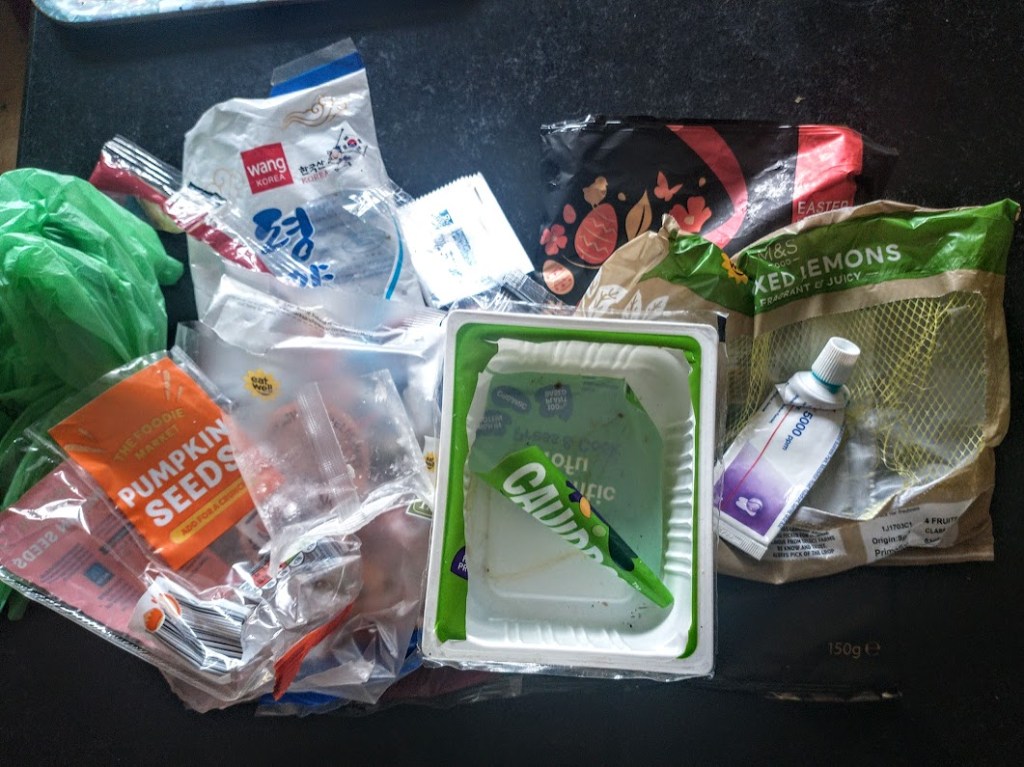
So why did we do it? Well. The Big Plastic Count is a Citizen Science project aimed at collecting evidence on household plastic waste to pressure government and supermarkets to take action. It challenges the idea that solving the crisis is purely a personal responsibility, arguing for systemic change to reduce plastic production.
So we and hundreds of like-minded individuals, school students, cubs, brownies, scouts, guides, U3A groups and so on tracked our plastic waste for one week to build a realistic picture of how much plastic is thrown away and what happens to it, highlighting that much less is recycled than widely believed.
Past results showed that only 12% of UK plastic waste is recycled, while 45% is incinerated, 25% is landfilled, and 17% is exported.
Honestly, we try to be plastic free. We buy unpackaged goods where we can, use our local refill shop, never use products like clingfilm. But still we assembled 18 pieces of plastic last week.
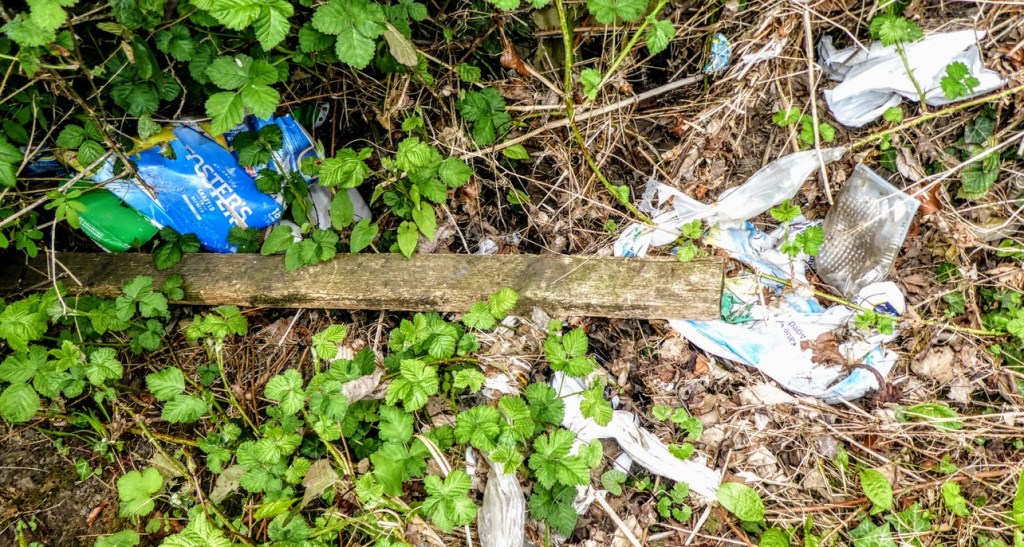
Litter is a whole other issue. Living in the country, as we do, albeit along a main road, the quantity of plastic bottles, crisp packets and other packaging that we see on any roadside stroll is truly shocking. The same applies to a beachside walk.
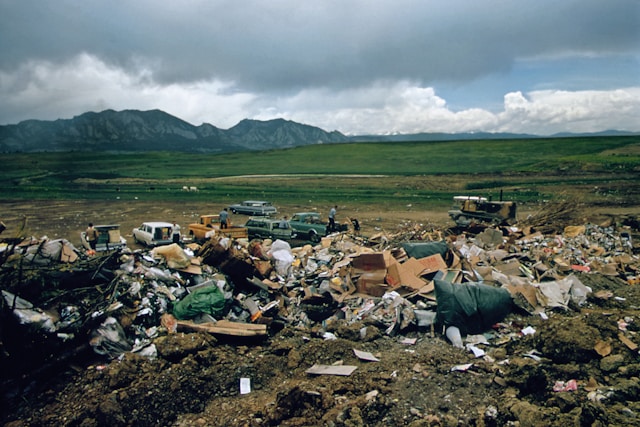
On a personal level, this audit encouraged me to redouble our efforts to cut out single-use plastic. Whether our results, gathered countrywide, have any effect on either government or supermarkets remains to be seen. And whether the world will eventually be knee-deep in plastic waste, as we ingest a daily diet of micro-plastics also remains to be seen.
 From Pyrenees to Pennines
You must be logged in to post a comment.