Six Degrees of Separation: from Orbital to Walking the Bones of Britain

On the first Saturday of every month, a book is chosen as a starting point and linked to six other books to form a chain. Readers and bloggers are invited to join in by creating their own ‘chain’ leading from the selected book.

Kate: Books are my Favourite and Best
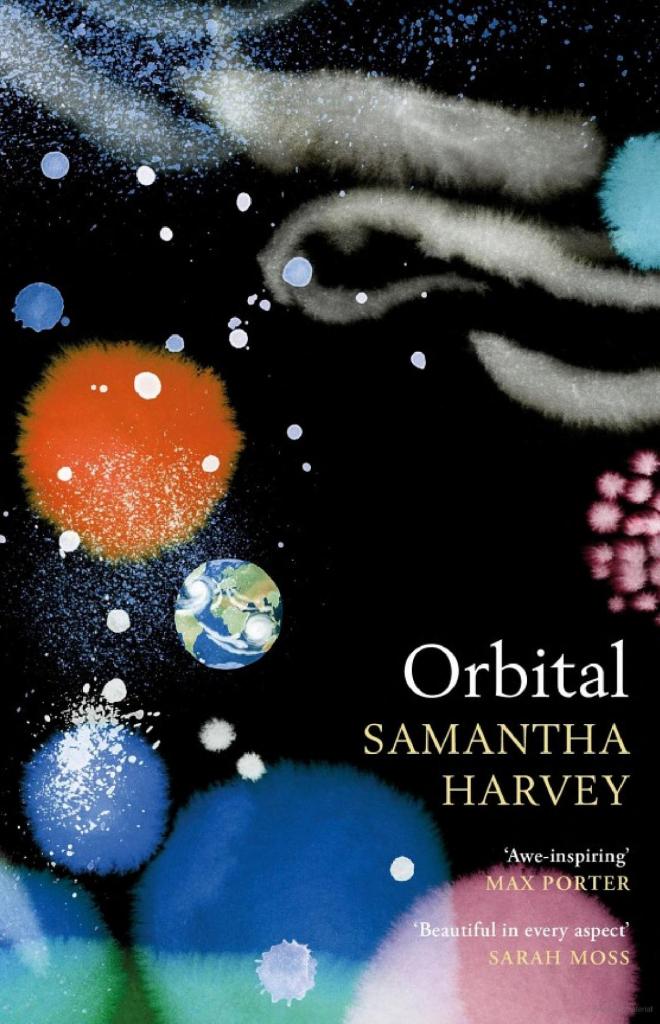
This month’s starter book is the 2024 Booker Prize winner: Samantha Harvey‘s Orbital. I loved it. This book moves through space with six astronauts, viewing the spectacular and the ordinary, distance and intimacy and invites us, the readers, to wonder too.
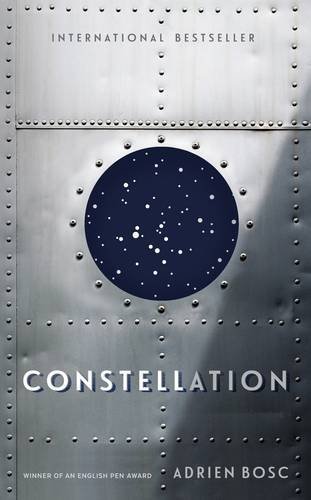

My first link is by book title as much as subject matter. Constellation by Adrien Bosc has pilots rather than astronauts at the heart of his story. Based on an actual plane crash that took place in 1947 in the Azores, on a flight from Paris to New York. Bosc was fascinated by the mysterious history of this tragedy, for which there was little explanation. The flight was carrying a number of well-known people, as well as a group of Basque shepherds. The book tells the story of many of these people, and gives them a voice, as well as piecing together what he can about the story of the crash itself. An interesting blend of actual facts and a degree of surmise. Here’s a story about the inter-connectedness of collective tragedy, engagingly told.
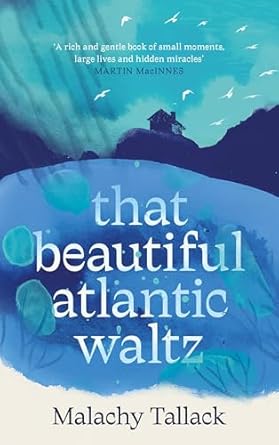
My next book begins with dealing with the elemental natural world in a different way: the sea this time. Mallachy Tallack‘s That Beautiful Atlantic Waltz is a quiet book, telling a story with its roots in the 1950s, when the main protagonists’s father Sonny was working in brutal conditions on a whaling ship before returning to the Shetlands to ask Kathleen to marry him. Jack is their son, and grows up unable to find his place in life, except through the medium of the country and western music he loves. The story of Sonny, Kathleen and especially Jack interweave to tell a story with no great dramas, but which lyrically evoke their simple Shetland lives.
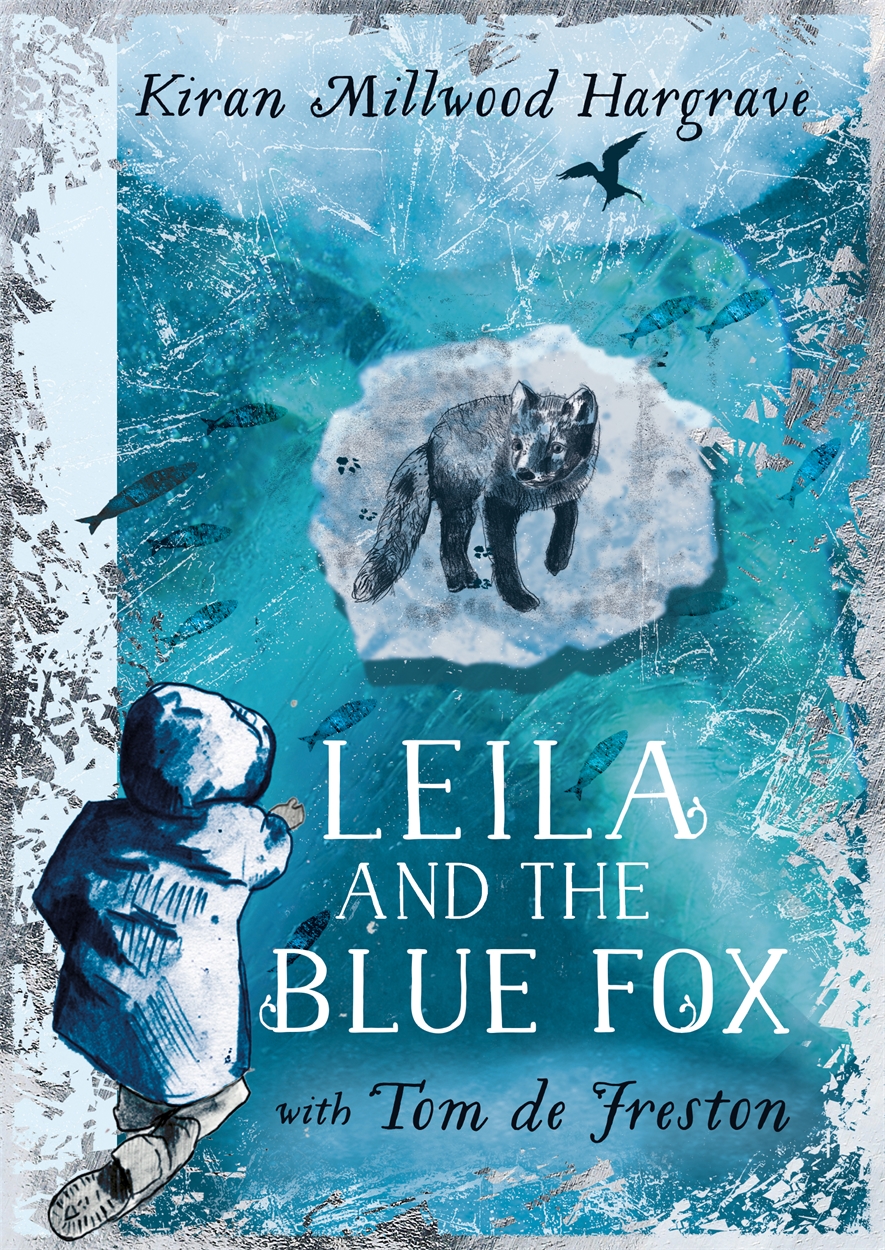

The elements and the natural world come to the fore in my next book, written for children: Leila and the Blue Fox by Kiran Millwood Hargrave. A lovely book for older children, this story is told as much by the glorious blue and black illustrations that illuminate the action described. This is a story of migration. Of Leila, a Syrian asylum seeker who lives in London with her aunt and cousin. Of her mother, who is now an academic in northern Norway, studying climate change as it affects the animal population of the Arctic. And of Miso, the Arctic fox whom she and her fellow research scientists are tracking as she completes her 2000 mile migration from the eastern Arctic to Canada. Leila comes to spend her summer with her mother as the research project evolves by going to follow the little fox ‘in person’. It’s an opportunity to discover the raw beauty of the Arctic, the courage and steadfastness of one little fox, and most importantly, a chance or Leila and her mother to discover and rediscover their bond. A story that invites thought and reflection on the whole issue of migration, and the issues which face those obliged to migrate, whether human or animal.
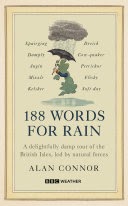
From Elements to Weather, British style. 188 Words for Rain, by Alan Connor. When I noticed this title at the library, I knew immediately I wanted to read it. A tour of the British Isles looking at all the different words that have evolved over the years to describe this most British of weather phenomena in all its manifestations? I was in! And it WAS interesting, reminding me of many terms I know, and many more that I don’t. Together with engaging weather-related factoids. But it was held together by pointess little anecdotes of imaginary people and their experience of these phenomena, intended to drive the narrative along, but which only succeeded in irritating me. A good idea spoilt.
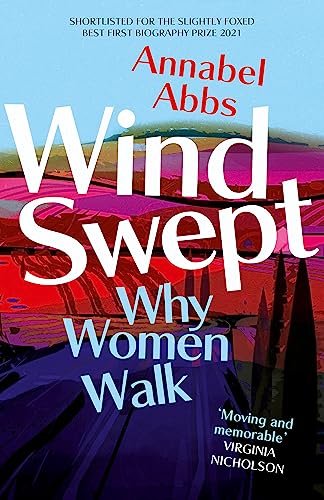
Now why should a book about rain lead me to a book about walking, eh? Must be because I’m English, and a woman who walks. Annabel AbbsWindswept: Why Women Walk is, according to the publisher ‘The story of extraordinary women who lost their way – their sense of self, their identity, their freedom – and found it again through walking in the wild.‘ And this applies to Abbs herself, who interweaves episodes from her own walking life with the stories of famous women, not noted as walkers, such as Simone de Beauvoir and Gwen John, to whom walking was a fundamental need and source of renewal and refreshment.
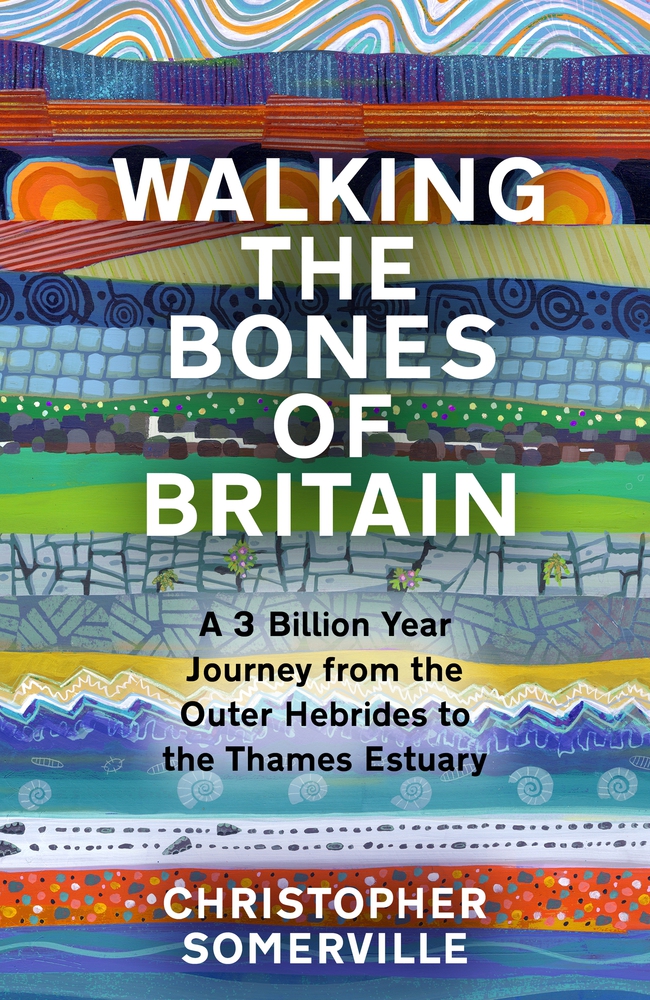
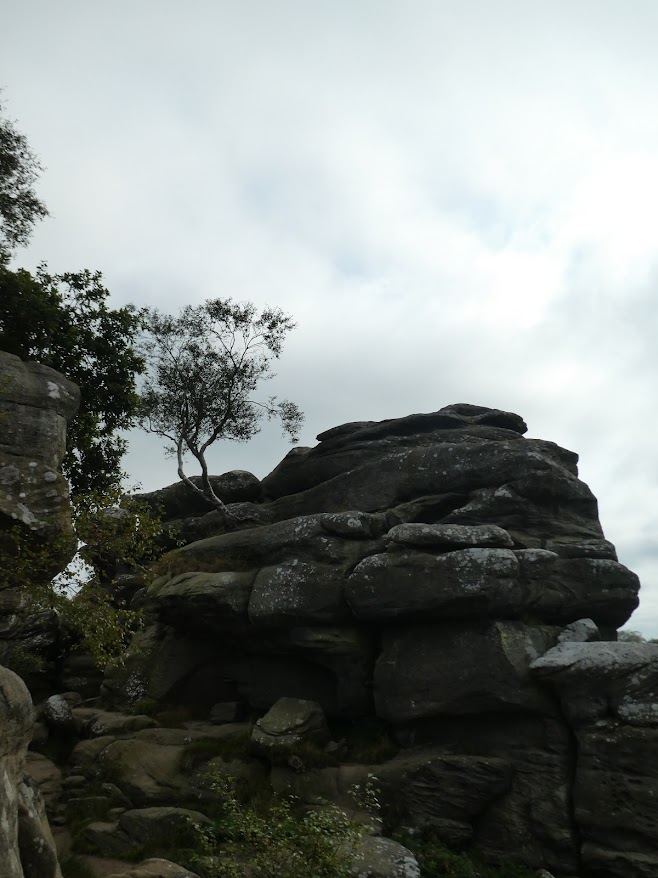
Which brings me to my last book:  Walking the Bones of Britain by Christopher Somerville.  What a rich and immersive book this is. For a small island, our geological story is particularly rich. Somerville undertakes to walk it, from the north of Scotland down as far, slightly oddly I thought, only to the River Thames. And this is what he does. He’s curious to examine the geology of every path he takes, and to understand what effect the geological story has had on the development of the landscape and how it has been exploited by the people who live in it. He’s investigative, humorous, personable in his enquiries, which makes what could be a difficult book approachable. This book has opened my eyes to the landscape, both locally and more widely throughout Britain.Which brings us full circle. In Orbital, our astronauts see the whole earth spread beneath them as they orbit the planet, whereas Somerville examines just a small portion of the planet in forensic detail.

Next month’s starter book is one I don’t know, by an author I don’t know either. Dangerous Liaisons by Pierre Choderlos de Laclos.

Six Degrees of Separation: From Friendaholic to Best of Friends

On the first Saturday of every month, a book is chosen as a starting point and linked to six other books to form a chain. Readers and bloggers are invited to join in by creating their own ‘chain’ leading from the selected book.

Kate W: Books are my Favourite and Best

This month’s starter book is Elizabeth Day‘s Friendaholic. I haven’t read it, but apparently the clue is in the title: it’s an exploration of friendship.

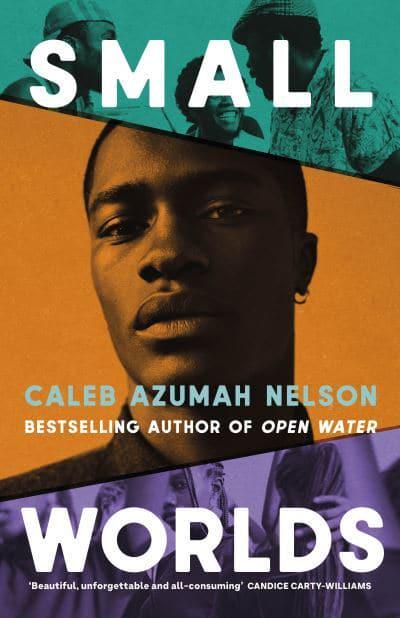
I’ll start then with a book I’m just reading now. It’s Small Worlds, by Caleb Azumah Nelson. At its foundation are two things: the narrator’s strong friendships, deeply rooted in his wider family, and his love – their love- of music, which underpins all their moments of togetherness and happiness.

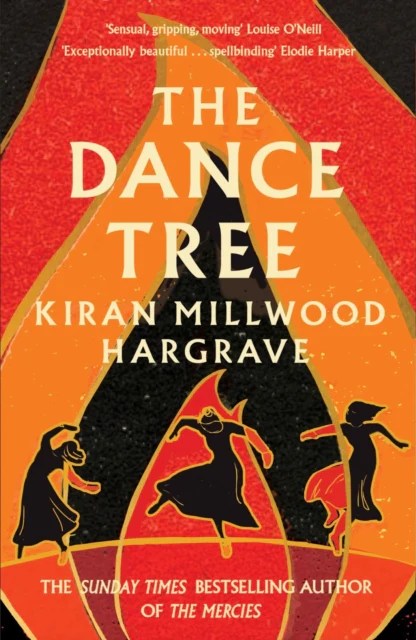
There’s a lot of dancing in Nelson’s book. So let’s go to Strasbourg in 1518, to a story based on a historically documented ‘plague’ of hysterical dancing: The Dance Tree, by Kiran Millwood Hargrave, set in a time of famine, superstition, religious and moral outrage. This is largely the story of Lisbet, pregnant again having already lost nine babies in very early infancy, and beekeeper extraordinaire. Why has her sister-in-law Nethe been required to do penance in a religious community for seven years? Why have hundreds of women been dancing in a frenzy, for hour after hour, day after day? Why do yet more and more people join them? Here are family secrets, forbidden love, frightened and powerless women examined in a story rich in feeling and entirely readable.

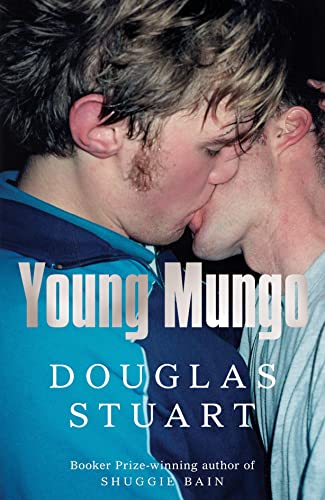
I’ll take you to Glasgow now, to the recent past, to a city which seems to have had parallels with the Strasbourg depicted in the last book. Young Mungo, by Douglas Stuart. Mungo grows up on a down-trodden Glasgow housing estate, immediately post-Thatcher: fatherless, with an increasingly absent and alcoholic mother whom he adores, a clever older sister who looks out for him, and a violent, lawless older brother. Why, at the beginning of the story, does his mother send him away on a fishing weekend with two fellow alcoholics whom she hardly knows? We return throughout the narrative to find out more. Mainly, we are in the poverty-stricken community Mungo calls home. And it’s here he meets James, and discovers his sexuality. That’s bad enough, but in sectarian Glasgow, Mungo is Protestant, James Catholic … This is a story with a deeply rooted sense of place, illuminating and pacy dialogue, with sectarianism, violence, fear and deprivation at its heart, examining what it means to be male in such a society, and the risks attendant on being gay.

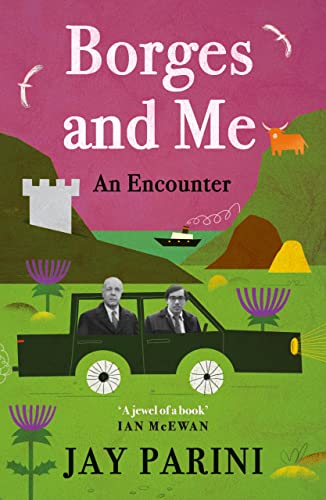
We’ll stay in Scotland, but lighten the mood, by picking up a copy of Borges and me: an encounter by Jay Parini. A romp of a read – a lightly fictionalised account of Parini’s encounter with Borges: a writer whose work I, like Parini, have never (so far) read. Jay Parini, an American, was a post-graduate student at St. Andrew’s University, dodging the draft to the Vietnam War. He’s going through young-man-angst about the subject for his thesis (his supervisor doesn’t seem keen on Parini’s choice of poet Mackay Brown), his draft-dodging and his (lack of) love life. When a friend of his, Alistair, is called out of town on a family emergency, Parini is called in to house-sit Alistair’s guest, the blind and elderly post-modernist writer Borges. Almost immediately, at Borges’ request, they embark on a road trip round Scotland for which Parini is expected to be Borges’ ‘eyes’. Shambolic and unpredictable, Borges is also a fount of dizzying literary talk. This is a trip to savour. A book which is a funny and wry account of an unlikely and thoroughly Quixotic journey: indeed Borges names Parini’s ancient Morris Minor after Quixote’s horse Rocinante. And it’s persuaded me too, that it’s about time I read some of Borges’ writing.

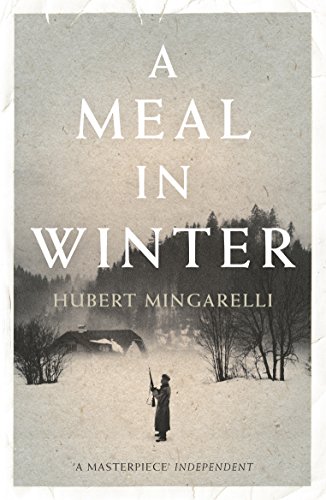
More men thrown together almost by happenstance: this is very much not a romp of a read. A Meal in Winter by Hubert Mingarelli. An account of three German soldiers whose task on a bitterly cold winter day during WWII is to hunt down Jews in hiding and bring them back to the Polish concentration camp where they are based, for an inevitable end. This unenviable task is better than the alternative: staying in camp to shoot those who were found the previous day. They’re friends simply through circumstance, so they talk about family – about the teenage son of one of them – and they find just one Jew. Is he their enemy, deserving his fate, or is he just like them, a young man doing his best to survive? What if they return to camp with nobody to show for their day’s hunting? As the men retreat to an abandoned cottage to prepare a meagre meal, their hatred and fear jostle with their well-submerged more humane feelings to provide the rest of the drama for this short, thought provoking book.

Let’s complete the circle by turning to another book whose protagonists’ family history lies elsewhere, as was the case with Small Worlds (Ghana) but whose home is now London. Kamila Shamsie‘s Best of Friends. This is a book of two halves. The first takes us to 1980s Karachi, and to the lives of two 14 year old schoolgirls. Zahra’s exceptionally bright and will do well. She’s less privileged than Maryam, who expects to inherit her grandfather’s successful leather business. An event takes place which comes in many ways to define their futures. Fast forward 40 years. The girls, now women are living in London, are successful and content. In many ways they are ciphers representing on the one hand liberal and inclusive politics, on the other successful entrepreneurship. Their strong friendship endures. Until the event from their teenage years comes back to haunt them. I didn’t quite believe in this and though the ending is intriguing, I was a little disappointed in this latest book from Shamsie.

So there we have it: a chain that explores friendship in its many guises. Next month? The chain-starter is the winner of the International Booker Prize: Time Shelter by Georgi Gospodinov and translated by Angela Rodel.