Six Degrees of Separation: from a Pink Rabbit to a Twenty Two Ton Whale

On the first Saturday of every month, a book is chosen as a starting point and linked to six other books to form a chain. Readers and bloggers are invited to join in by creating their own ‘chain’ leading from the selected book.

Six Degrees of Separation: Kate W

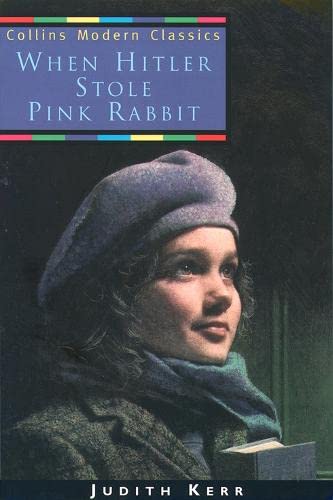
My last book from last month becomes my first this month.  It’s Judith Kerr’s When Hitler Stole Pink Rabbit, and it was a story everyone in the family at some point read as it could appeal to anyone over the age of nine. It is a largely autobiographical account of the author’s journey during the Second World War, as a nine year old child, from Germany via Switzerland and Paris to London, where the family finally settles in pursuit of safety.

All my books this month link together.  They are books which my children, now in their 40s and 30s enjoyed, which have been saved through the years and been passed down.to be read to their own children.  Some books have reached their 8th custodian.  They’ve done so well because back in the day, I strengthened the covers of those Puffin Paperbacks – the only publisher then dipping its toe into this particular market – with cardboard from cereal packets, and covered them with tacky back.  Despite this care, a few books have disintegrated, and it’s a special pleasure when my now-adult-children scour the shops to come up with a new copy of their childhood favourite.

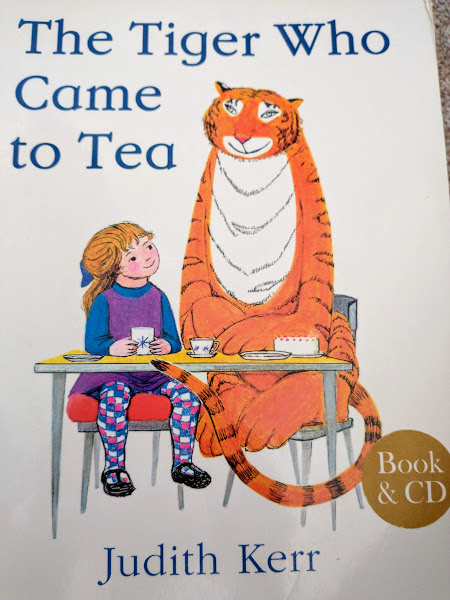
We’ll have to continue with Judith Kerr.  Is there a child in England who hasn’t enjoyed The Tiger who came to Tea?  A passing tiger drops in on a mother and daughter,  cheerfully eats them out of house and home before thanking them politely and wandering off. And they all – probably – live pretty much happily ever after.  The family’s on Copy Number Three of this book.
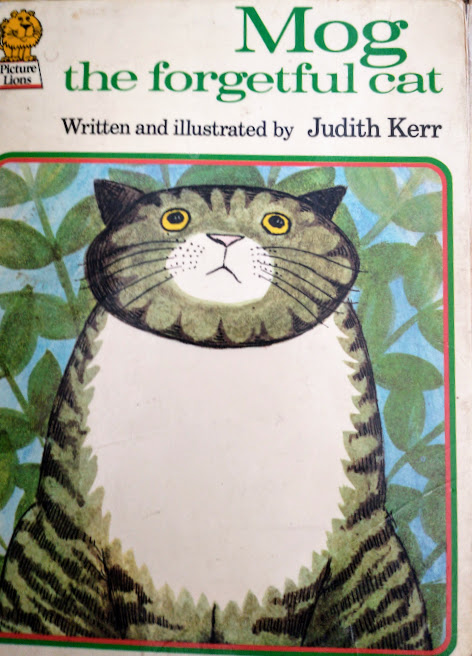
My children also enjoyed reading about Kerr’s Mog the Forgetful Cat series.  This daffy but much loved cat gets herself into all kinds of domestic scrapes, but of course it always turns out comfortingly well in the end.
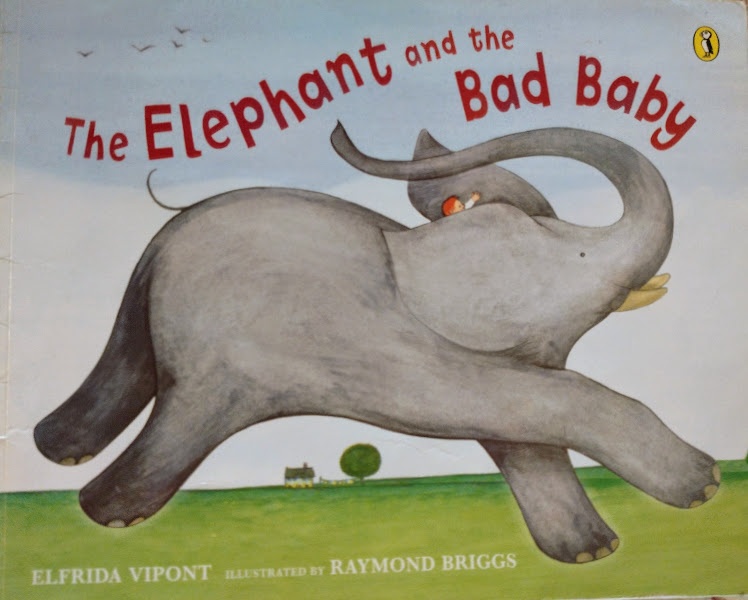
Another animal adventure came with The Elephant and the Bad Baby, by Elfrida Vipont – and wittily illustrated by the just-deceased Raymond Briggs. An elephant meets a bad baby and offers him a ride.  They go ‘rumpeta, rumpeta, rumpeta down the road’ meeting one helpful person after another.  But do you know what?  The baby ‘never once said please.’ And that has consequences.  Lesson eventually learned, everyone in the story has tea together on the very last page.
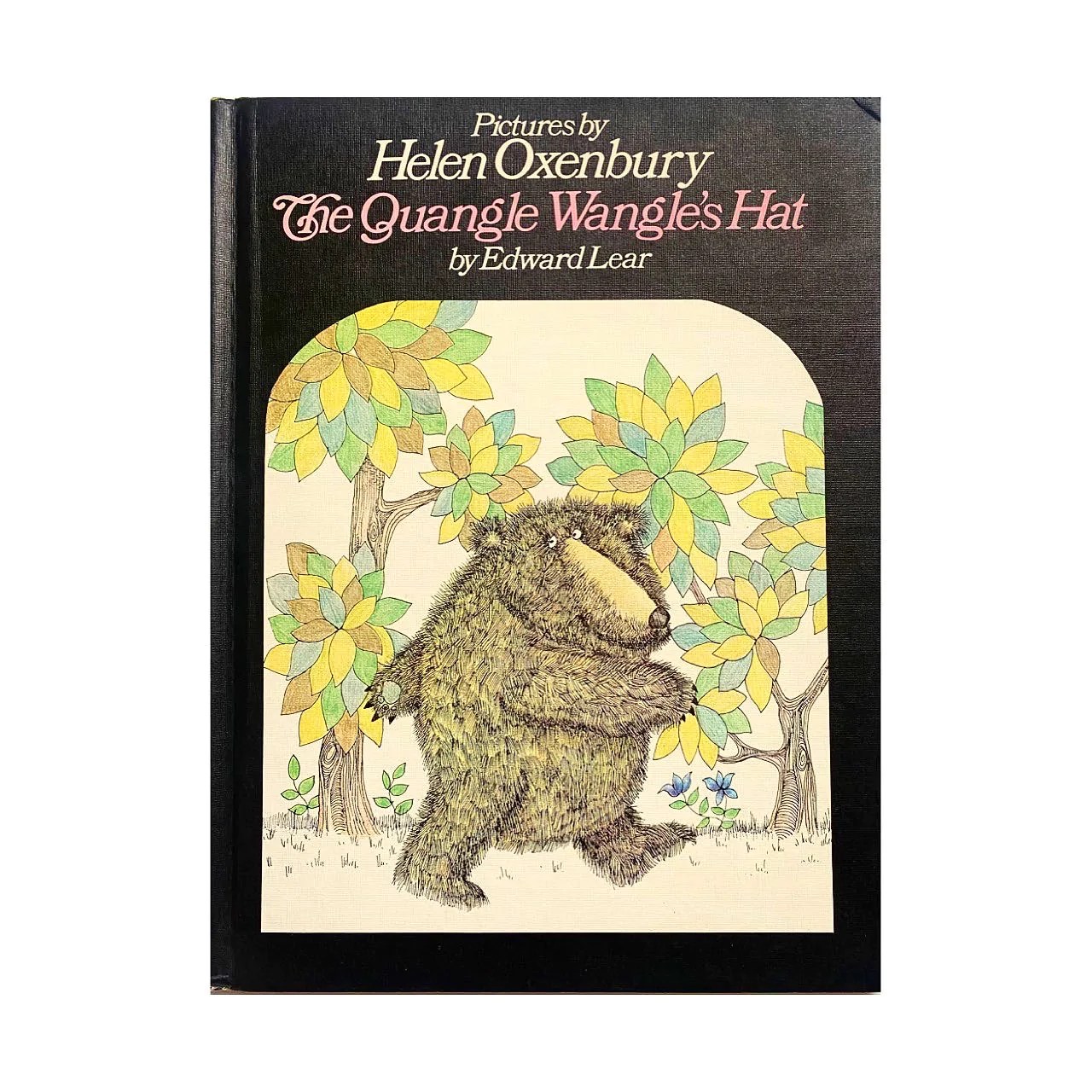
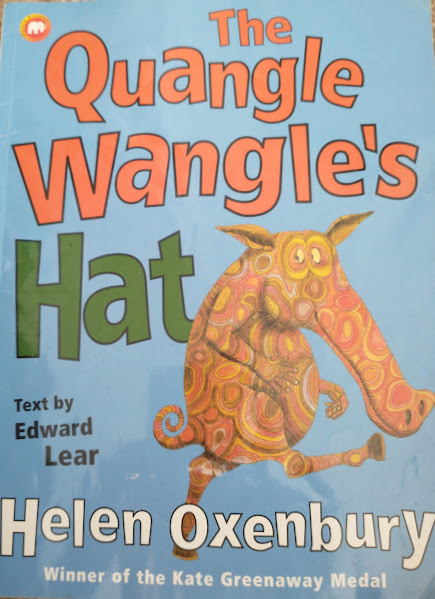
My children of course joined in the chorus of the previous book.  And they joined in reciting The Quangle Wangle’s Hat, by Edward Lear, and illustrated by Helen Oxenbury, even before they could talk fluently.  This book has been loved to death, and has eventually been replaced.

On the top of the Crumpetty Tree

The Quangle Wangle sat,

But his face you could not see,

On account of his Beaver Hat.

For his Hat was a hundred and two feet wide,

With ribbons and bibbons on every side

And bells, and buttons, and loops, and lace,

So that nobody ever could see the face

Of the Quangle Wangle Quee.

Who couldn’t love nonsense such as this?
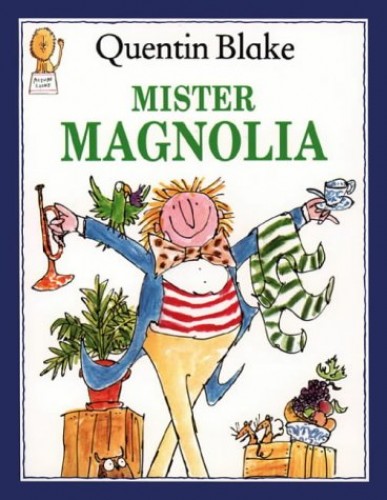
Everyone in the family knows every word of Quentin Blake’s Mr. Magnolia, and will recite it still, at the least provocation.

Mr. Magnolia has only one boot

He has an old trumpet that goes rooty toot

And two lovely sisters who play on the flute.

But ..

Mr. Magnolia has only one boot…

It’s not the same though if we can’t at the same time enjoy the joyous abandon of the illustrations.
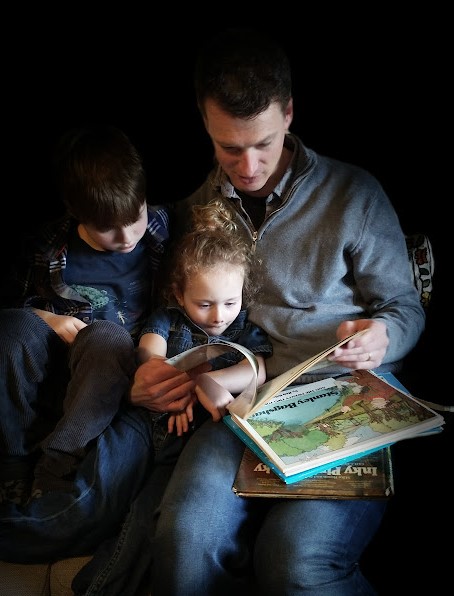
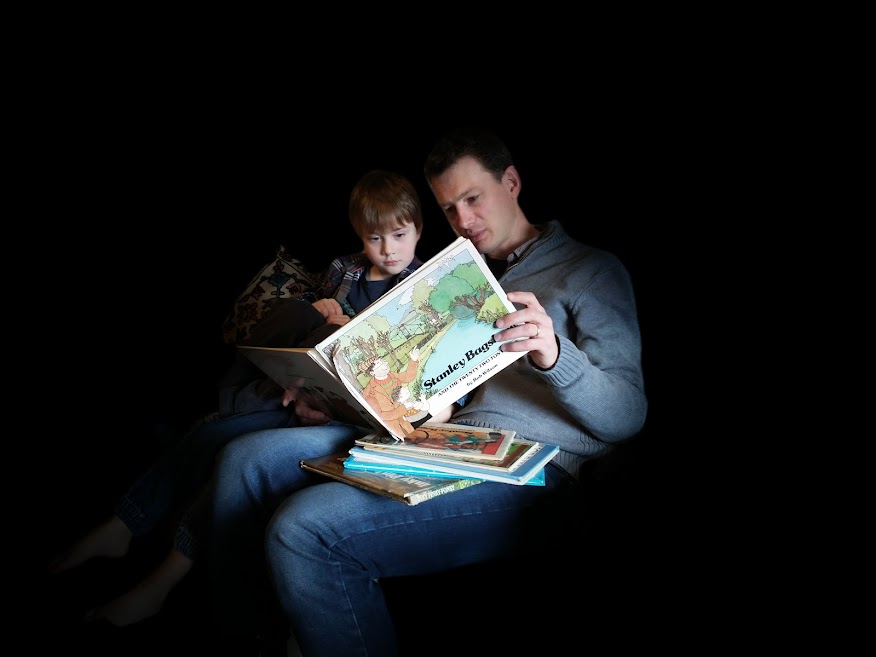
And as a right proper northern family, we all enjoy reading about Stanley Bagshaw, by Bob Wilson.

In Huddersgate, famed for its tramlines,

Up north, where it’s boring and slow,

Stanley Bagshaw resides with his Grandma,

At Number Four, Prince Albert Row.

Lovable-but-dim Stanley’s adventures are recorded in rhyme in strip cartoon fashion.  Any title tells you how improbable his adventures are:  Stanley and the Twenty Two Ton Whale, anybody?

Two generations enjoy Stanley Bagshaw’s adventures

Most of these titles are still in print, a tribute to their long-standing charm and ability to engage small children – and indeed their parents.

Next month’s starting book is Zoë Heller‘s Notes on a Scandal.

Six Degrees of Separation: from Form and Emptiness to a Pink Rabbit

On the first Saturday of every month, a book is chosen as a starting point and linked to six other books to form a chain. Readers and bloggers are invited to join in by creating their own ‘chain’ leading from the selected book.

Six Degrees of Separation: Kate W

The starting point this month is Ruth Ozeki‘s The Book of Form and Emptiness. I’ve reserved it in the library, but unsurprisingly, my turn hasn’t come yet. I understand that it’s a tale of a boy coming to terms with loss.

My first link then in Carys Bray‘s The Museum of You. I don’t know why I didn’t connect more with this book. It’s a cleverly written account of twelve year old Clover Quinn and her dad Darren, and their attempts, their very different attempts, to come to terms with the death of Clover’s mother Becky when Clover was only about six weeks old. Clover is a sweet child, but a bit isolated from her peers. She likes her dad’s allotment, and museums. In fact she decides to make a museum to her mum, in secret. Gradually her story unfolds. Darren’s story unfolds. Becky’s story unfolds. This book is very skilfully done. It’s well written. Why didn’t I engage with it more? I don’t have an answer. I’d recommend anyone to read it. Just …. not me.

To make my next link, let’s stay with Carys Bray. When the lights go out. Though very readable, for me it suffered the same problem as her previous book. The subjects: eco-aware Emma versus eco-warrior husband Chris feel rather overdone now. Chris learnt to be a warrior during his now-rejected fundamentalist Christian childhood, and his warriorship consists in being a prophet of doom, rather than in action. We’re meant to find him tedious, and we do. We’re meant to like busy, community-minded Emma, and we do. We’re meant to feel wry sympathy with the Emma and Chris as they parent their teenage children, and deal with Chris’s interfering-in-a-humble-way mother. So it’s an engaging enough read, but one in which I didn’t fully involve myself. 

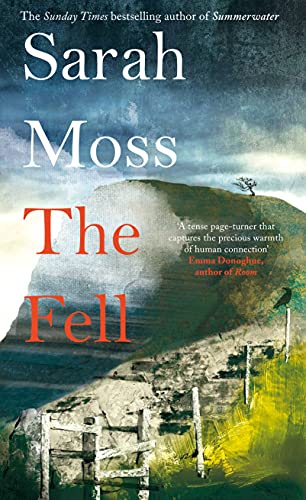
Ecological matters are a bit of a theme these days, and so is The Pandemic, which is what allows me to make the link to the next book, The Fell, by Sarah Moss. A reminder of a time – a recent time – when our home was our universe. A time when Kate and her teenage son were confined to their house on a two week quarantine because a contact has Covid. I was isolating with Covid when I read this, so I could identify well with Kate’s frustration and longing to be out – to get up there on the moors, at a moment when there won’t be a soul about, and be back in time for tea. Except she isn’t. She gets disorientated, and falls … This story is told in stream of consciousness through the voices of Kate herself, her son Matt, her neighbour Alice, and mountain rescuer Rob. And frankly it got as tedious as Lockdown itself. The ending was suitably shocking, inconclusive and cliff-hanging, which redeemed it somewhat, but I was glad to finish this story. The wrong book at the wrong time for me probably, but I doubt if this book will wear well.

And so to another lockdown book, The Rome Plague Diaries by Matthew Kneale. I loved this. Having many years ago lived in Italy, though not in Rome, this put me back in touch with many aspects of Italian daily life and culture. It also revived memories of Lockdown. Kneale, who with his family has lived in Rome for 20 years, puts us back to that odd period of genuine fear, when cities were empty of life, shops were closed, as was everything else that makes a city a city. But he dwells on so much more as he looks at Rome’s history and culture. If you’ve enjoyed Kneale’s other writing; if you love Italy, I recommend your reading this vivid account of a resilient city going through yet another test of its mettle.

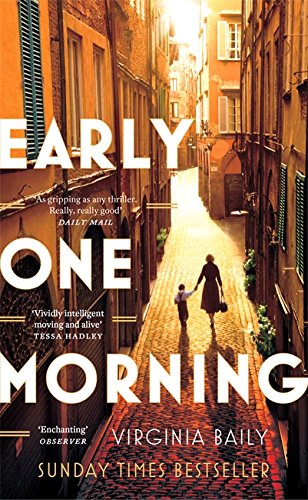
Let’s stay in Rome. Early One Morning by Virginia Baily. An involving story initially set in Rome in WWII, of a woman, Carla, who finds herself, in one life-changing moment, with not one word spoken, taking charge of a Jewish boy whose family has realised how bad things have become for the Roman Jewish population. The narrative goes back and forth from war time Rome to the same city in the 1970s. It shows us that boy Daniele growing up sullen and resentful of his step-mother, an eventual addict. It introduces a Welsh teenager, Maria, who discovers in an unfortunate way that the man she thought to be her father isn’t. Instead it’s Daniele. She comes to Rome, to Carla, to recover her equilibrium and find out more. An absorbing well-told story, painting a picture of Rome, its sights and foods and characters in a way to relish. A good read indeed.

My last book of all focuses on the dislocation caused, particularly to Jews, by the Second World War. When Hitler Stole Pink Rabbit is a largely autobiographical account of the author’s journey as a nine year old child from Germany via Switzerland and Paris to London, where the family finally settles in pursuit of safety. And it’s written by Judith Kerr of The tiger who came to tea fame, and who is also the mother of Matthew Kneale. I read this book many years ago, so greater detail not forthcoming!

It appears that this last book will appear at the head of my chain next month, as we’re invited to use our last book this time as our starting point in September. I wonder if I can make a sturdier, more consistent chain from that?