The Garden of Earthy Delights

At this time of year, with spring nudging the crocuses, violets and celandine into flower, and encouraging buds on trees to fatten and swell  before bursting into flower, it’s time to be busy outside.

My single patch of white violets among all the purple

Our garden’s a minute or two’s walk from the house, and out of sight can mean out of mind.  So once there (‘I’ll only be 10 minutes’….), I’ll find all kind of things to do.  The grass needs strimming already.  The vegetable patch is a disgrace.  The fruit trees need attention: they suffered horribly in last May’s heavy snow, and they should really have had careful pruning much earlier this month. The compost heap needs a bit of TLC.  Time passes while I prune our ‘vineyard’ – 6 vines. (‘Oh, sorry, have I really been two hours?’)
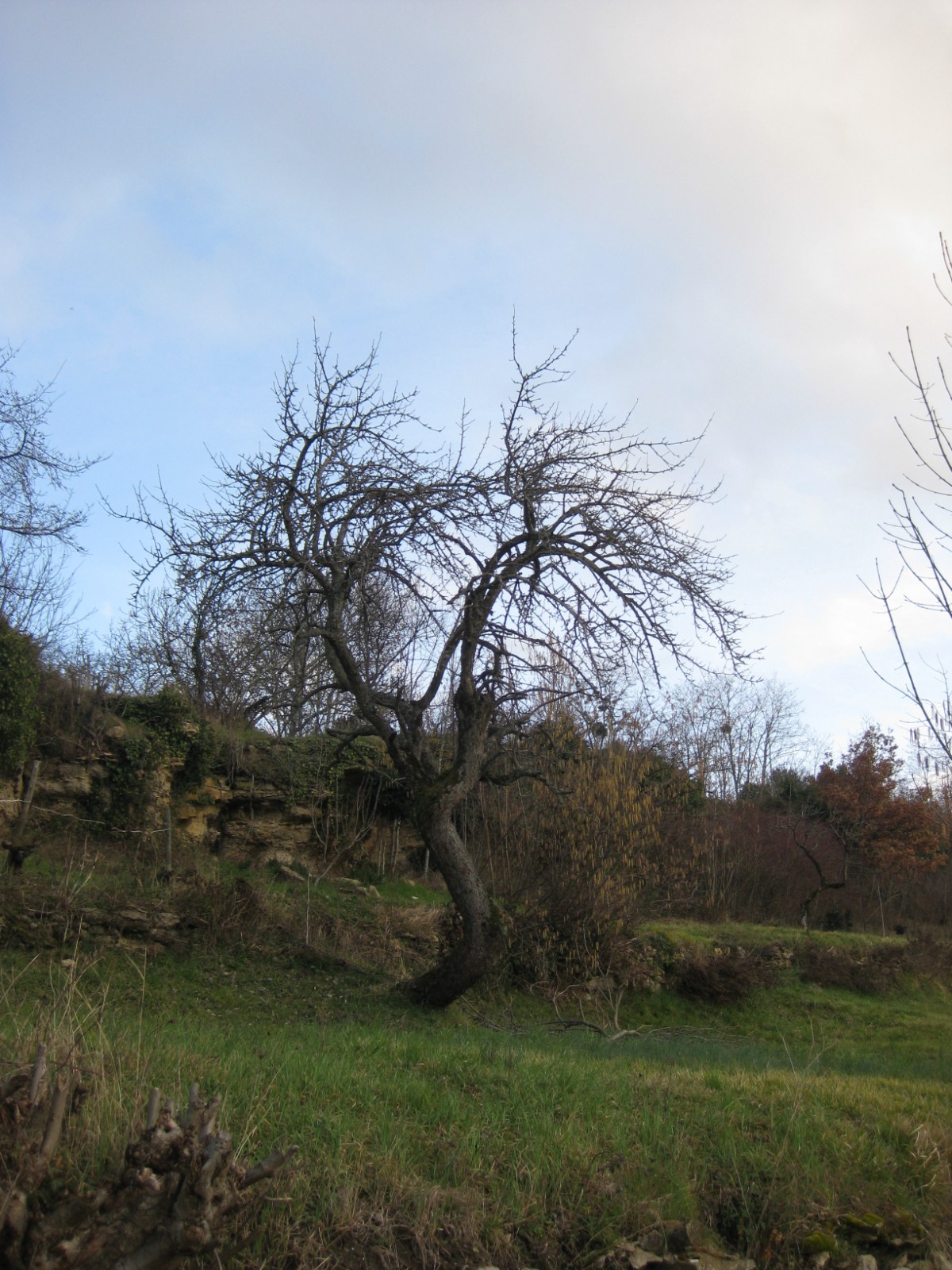
The pear tree: lots of character, not many pears

So I’ve taken a big decision.  No vegetable patch this year.  That way, the trees may get the extra attention they need:  the ivy and brambles may not get the upper hand quite so readily, though I wouldn’t bet on it.

I’m not going to do it on my own though.  From Easter, we’re planning new recruits to the garden: a gang of hens, whose job it will be to peck away at all the grubs, and keep the grass trimmed, whilst offering the occasional egg for breakfast.
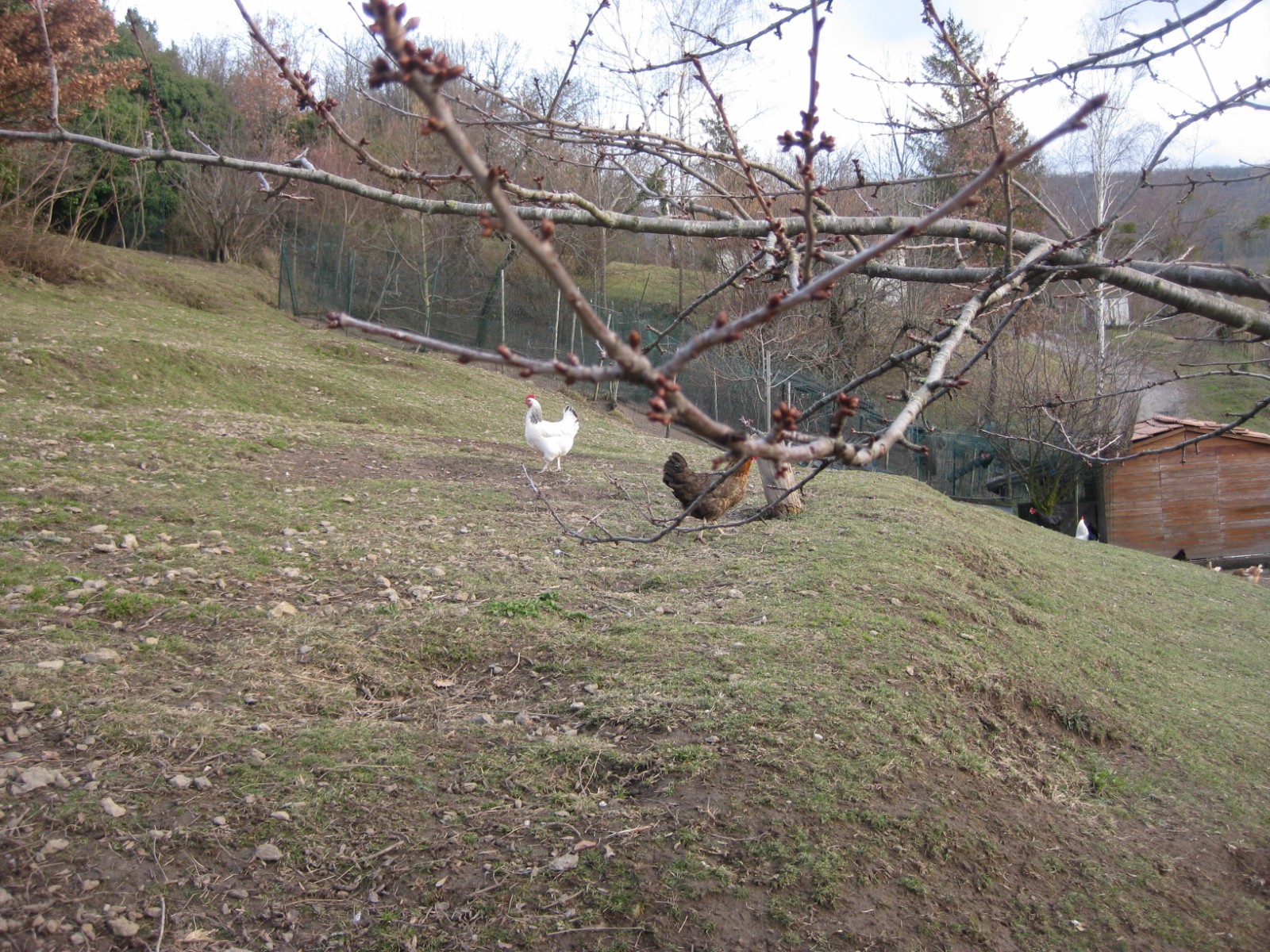
The hens next door running free

Quite a few friends in England have re-homed ex-battery hens, and I’d love to do this too.  I’ve written emails, joined internet discussions, asked around, but it doesn’t look as if I’m going to be able to find any here in France.  But the search goes on as we plan the next project: build a hen house.

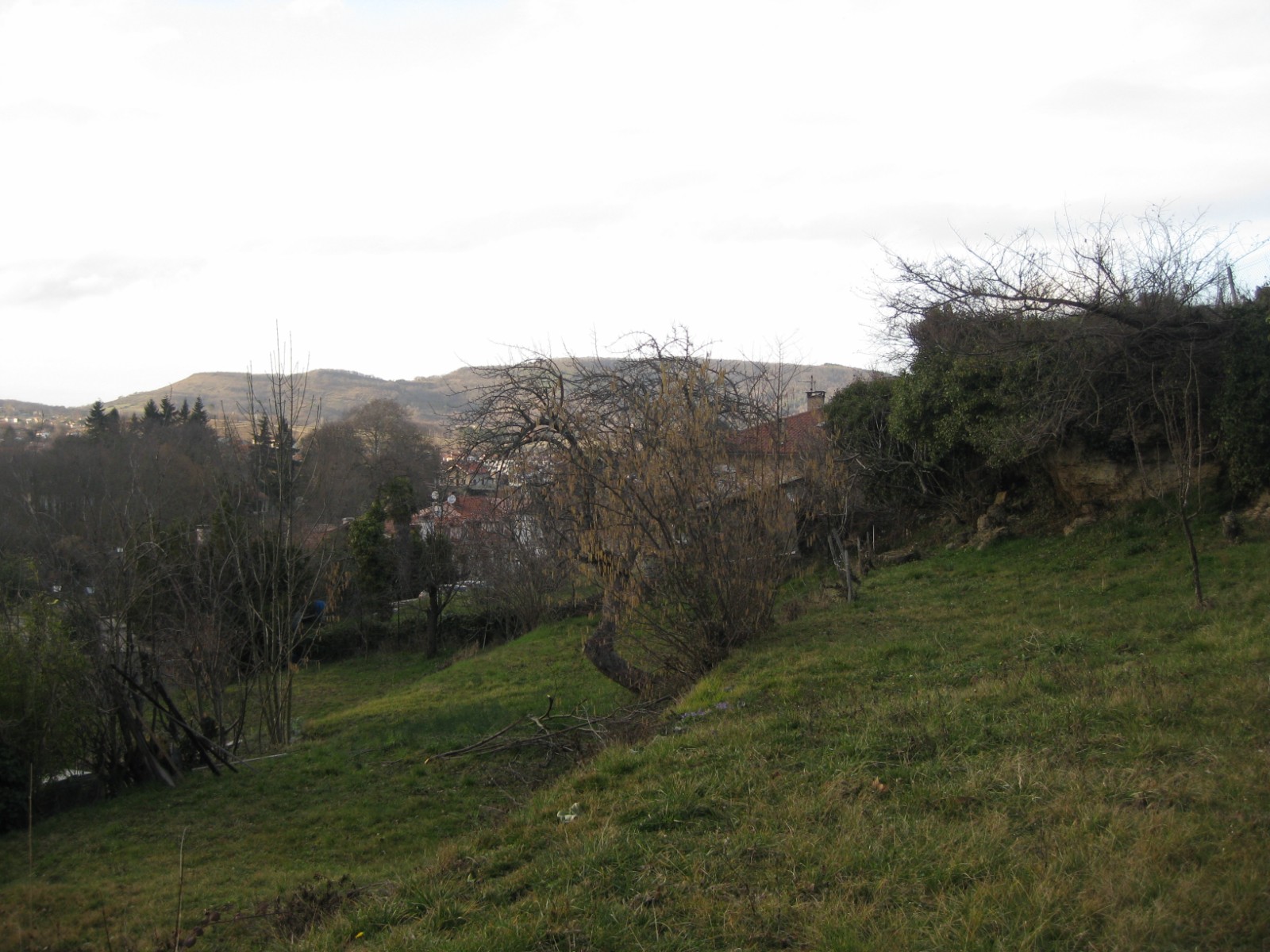
Although it’s often a lot of hard work, this garden’s a really special place for me  (and I do mean me.  Malcolm’s excused gardening duties so long as I’m excused DIY duties).  From it, I can see Montségur, the thickly wooded long chain of hills called the Plantaurel, and the snowy peaks of the Pyrénées behind .  So near to town, and away from the house, it’s where I come to get away from it all, and have a healthy workout as I dig, hack, uproot and generally try to keep Nature at bay.By the way:  greenfinch update.  Enough already!  They’ve shown themselves to be belligerent, selfish dogs-in-the-manger, who dive-bomb, use their wings to beat off the opposition, peck, bamboozle – anything to keep any other bird away, even ones who are eating their least favourite thing on the feeding station.

Greenfinch fighting

They’re also extremely messy.  I’ve told them.  I’m not replenishing the feeder till they’ve eaten every scrap of the food mountain they’ve dumped on the ground beneath.

Oh, and as our lunch guests pointed out,  it was a goldfinch, not greenfinch onslaught we had two years ago.  We’ve seen none since.  They’re all 4 miles up the road at my friend’s house in le Peyrat.
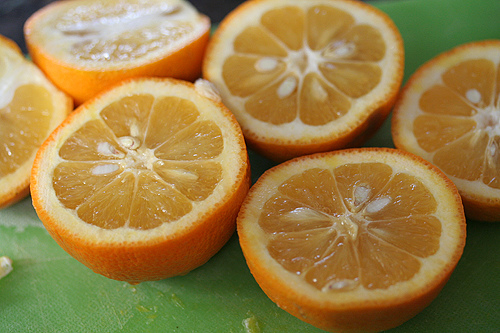
Marmalade: the bitter facts

Forget politics.  Here in the UK, the news story that really means something to any right-thinking English man and woman is that marmalade sales are falling.  The reason though, according to most commentators, is that many of us prefer to make our own.  I do.

Over the last few years, I’ve been so glad to have come across Jane Grigson’s recipe, which gets me out of the whole business of hacking mounds of tough raw orange peel into marmalade sized chunks.  It delivers a tasty sweet and bitter marmalade which beats anything you’ll meet on the grocer’s shelf

Our house, now a temple to magnolia paint and packing cases, is currently innocent of recipe books.  Somehow I contrived to find my preserving pan the other day, and make her marmalade, or something  jolly like it, from memory.  Impressive, huh?

I kg. seville oranges (about 10 fruits)

1 lemon

3.4 litres water

2 kg. granulated sugar, or half granulated, half light muscovado.

Scrub the seville oranges and the lemon, and place in a large pan with the water.  Bring to the boil and simmer till the fruit is soft – maybe an hour or so.  Allow to cool.  Cut the oranges in half, scoop out the flesh and pips and reserve in a large muslin square.  Chop the skin as thick or as thin as you chose – it’s so easy now the skin is soft.

Tie the muslin with its contents into a bag, and put it, with the orange peel, remaining water (about a third will have evaporated) and sugar, into a preserving pan.  Bring the mixture slowly to the boil, so that the sugar dissolves, then cook rapidly till setting point is reached (I can’t manage without my jam thermometer, but that’s pathetic.  Most people seem happy enough to test for the setting point by putting a spoonful of marmalade onto a cold saucer, and seeing if it crinkles as you push your finger through the cooled mixture).

Allow the mixture to sit for about 15 minutes before pouring into sterilised jam jars.  Makes 6-7 jars

Cook’s Corner

Back in England last week, I picked up the latest Waitrose magazine, always good for a few recipes.  And here’s something I found….

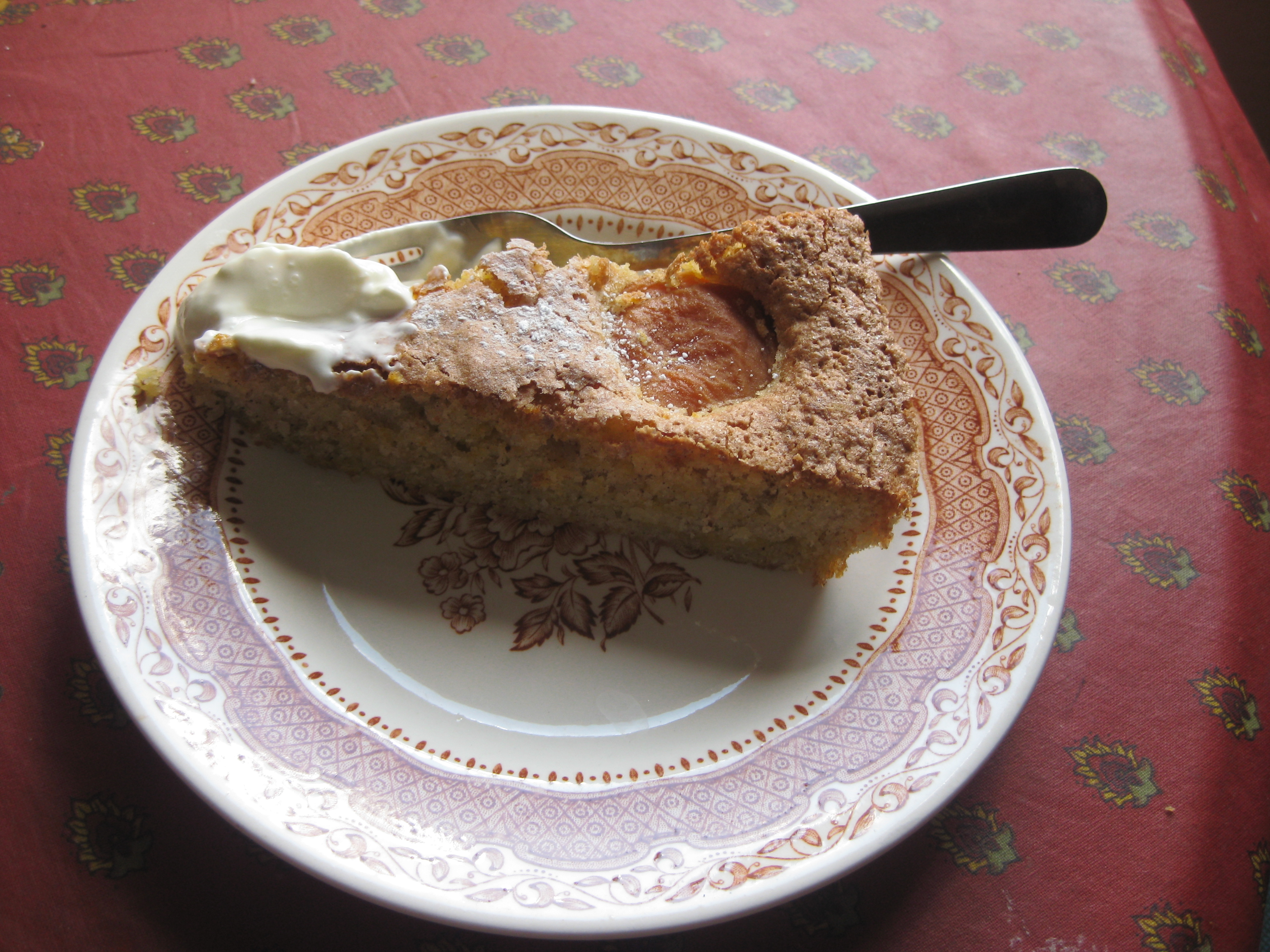
Sunken Apricot and Almond Cake

3 medium free-range eggs

180 g. caster sugar

200g. butternut squash, peeled and finely grated.

1 tsp. almond essence (I used a slonk of amaretto instead)

60g.white rice flour

200 g. ground almonds

2 tsp. mixed spice

2 tsp. baking powder

¼ tsp. salt

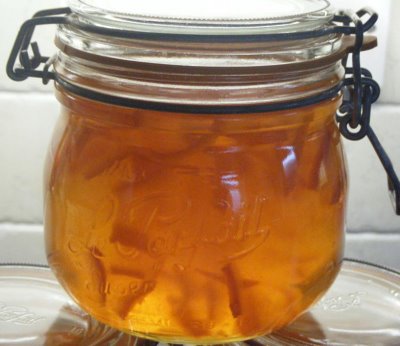
240g. canned apricot halves, drained, or if you’re lucky enough to have home bottled apricots, as I have, use those.

Icing sugar for dusting.

1. Preheat the oven to 180degrees C/gas mark 4

2. Lightly grease ten 8cm. x 5cm. deep loose-bottomed tart tins with oil.  I didn’t have enough, so I made just one 28cm. tart.

3. Whisk the eggs and sugar for 4 minutes till pale and fluffy.  Add the butternut squash and almond essence, and whisk briefly to combine.

4. Add the ground almonds, spice, baking powder and salt, mixing until well combined.

5. Pour the mixture into the tin(s) and either place 2 apricot halves in each, or arrange the apricots onto the top of the large tart.  Bake in the centre of the oven for 35 minutes, or till cooked.

6. Remove from the oven and gently ease the cake(s) away from the sides of the tin.  Allow to stand a few minutes before dusting with icing sugar.

Eat warm, cold, with or without cream, crème fraîche……

Do try it.  It might not be the cheapest cake in the world, but it’s certainly good, whether you choose to serve it as a pudding or a tea-time treat.

Well, we DID have it as a tea time treat, so by the time it came to the evening meal, we needed simpler fare.

I don’t know where I first heard this recipe, but I remembered it yesterday because we’d spent an hour or so sorting and shelling our haul of walnuts from all the trees nearby that are shedding nuts faster than anyone can gather them.

A Very Un-Italian Pesto

A handful of walnuts, crushed

A handful of parsley, finely chopped

A cob of parmesan, grated

A clove or so of garlic, crushed

A big glug of olive oil.

Combine the ingredients to a coarse paste, and add to a dish of pasta

Summer Fruit

With a house to sell in England, we’re still here in the UK.  So let’s make the most of  it, particularly at mealtimes.  Here’s how.

Apples:

With any luck, Discovery, the very first apples of the season will appear any day now.  I love their bright red skin, their crisp white crunchy flesh.  They’re hopeless keepers, but for just a very few weeks, their bright fresh flavour presents a real contrast to the departing soft summer fruits.

And when they’re over?  Well, there are James Grieves, Laxton Supreme, Laxton Superb, Worcester Pearmain, Lord Lambourne, Cox’s Orange Pippin and so many others to look forward to…if you can find them.  And of course Bramley Seedlings too, so wonderful to cook with.

I was brought up to anticipate and celebrate the heady variety of taste, texture and appearance of all our English apples.  These days I mourn the uniformity of the standard few varieties that stock the supermarket shelves, year in, year out.  Often as not, they’re imported from New Zealand, South Africa, the USA, and France, while our own traditional varieties have become heritage items whose very existence is protected by Reading University’s National Fruit Collection at Brogdale

Blackcurrants:

I KNOW they’re available in France, but when we got back this time, we discovered a small blackcurrant bush had been secretly prospering in a forgotten corner of the garden.  And there it was, laden with big dark purple berries, over a kilo of them, just asking to picked and enjoyed

Gooseberries:

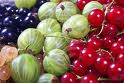
Gooseberries, white, red and blackcurrants

Hardly seen in France, I love their crisp sour flesh, and eat them any way I can. Gooseberry fool is best of all: gently stewed fruit folded in with equal portions of good custard and double cream.

Raspberries:

They DO exist in France, but can’t compete with the big, juicy, tasty berries we have here: the best ones come from the garden of our friends Richard and Jonet here in Harrogate (and the best jam too).  The rest come from Scotland.

Repeated pleasures:

Back in southern France, broad beans are long over.  Here they’re at their best, so I’ve had two goes this year at my almost-favourite vegetable.  OK, not a fruit. But very good anyway.

Summer pudding:

Surely the quintessential English pud?  Gently cooked quantities of soft summer fruits, spooned into a basin that’s been lined with pappy English sliced bread, left for the flavours to mingle before turning out and serving with cream doesn’t sound too exciting maybe.  But it is.  Summer in England really isn’t summer until you’ve had your first helping. And as many helpings as you can manage before the season’s over

Summer Pudding

Ingredients

  • 1kg (2lb) mixed berries (use a combination
  • of raspberries, blackberries, blueberries, redcurrants or blackcurrants)
  • 160g (5½oz) caster sugar
  • 10 thin slices stale white bread, crusts removed

Method

  • Place the berries, sugar and 60ml (2fl oz) of water in a saucepan. Bring to a gentle simmer on a low heat and cook, stirring to dissolve the sugar, for 3-4 minutes, or until the fruit has softened and produced lots of juice. Set aside to cool.
  • Pour the juice into a flat dish, reserving the fruit.
  • Cut one slice of bread into a circle small enough to fit the base of a 1.5l (48 fl oz) pudding basin, and another large enough to fit the top. Cut the remaining slices into triangles. Dip both sides of the smaller circle of bread quickly into the juice and place it in the bottom of the pudding basin. Dip both sides of each triangle of bread into the juice, then line the inside of the basin with the juice-soaked bread, overlapping them slightly to make sure there are no gaps.
  • Fill the bread-lined basin with berries, drizzle with any remaining juice and top with the larger circle of bread, trimming it to fit if necessary.
  • Cover the top of the pudding with clingfilm, then place a saucer or small plate that just fits inside the rim of the basin on top. Press the plate in, then weigh it down with a heavy can or two. Place the basin in a shallow dish to catch any juice that might overflow, and refrigerate for at least 12 hours.
  • To serve, run a thin knife around the inside of the basin and invert the pudding on to a serving plate. Cut into wedges and serve accompanied with plenty of thick cream.

Atout Fruit

I love Atout Fruit. It’s a relatively small, but very effective local organisation that exists to protect and promote our heritage of local and ancient varieties of fruit trees.  By being a member, I’ve learned such a lot at some of their monthly workshops.  I’ve for instance practised grafting (as in:

a. To unite (a shoot or bud) with a growing plant by insertion or by placing in close contact.

b. To join (a plant or plants) by such union.’,

rather than ‘hard work’ as described so effectively by Kalba in her blog Slow Living in the French Pyrénées

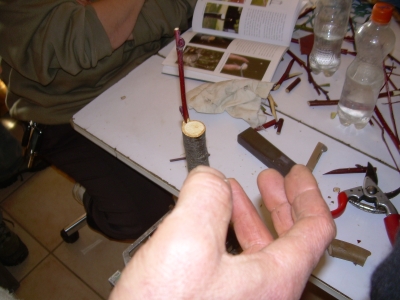
The intricacies of grafting

Actually, what I learned about grafting, when I did it last year, was that it wasn’t my thing.  It’s very steady meticulous work, demanding razor sharp knives and attention to detail, deeply unsuited to a slap-dash like me.  My painstakingly grafted specimen died within weeks.

But there have been sessions on pruning, on traditional methods of gathering and preserving fruits, using those fruits in cooking….and so on.  Later this month, the session on growing biodynamically will be held in our garden, and I just can’t wait.

I’m different from most other members.  I don’t just mean that I’m English, though there’s that too.  Most ‘adherents’ were born with more know-how than I will ever have about trees and crops, and practice their skills every day.  Nearly all the rest have this background to their lives, even if they have themselves moved away from their ‘paysan’ origins.  I hesitate to use the word ‘peasant’ in English, because of the somewhat negative picture it paints.  Not here.  Even University graduates who have returned to the land are proud to describe themselves as ‘paysan’.  It’s been great for me that everyone is keen to help me and seems pleased that I want to learn: nobody patronises my amateurishness.

Sorting those saplings

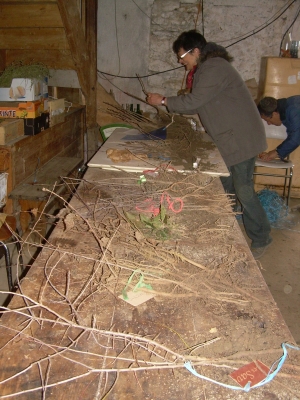
Once a year, Atout Fruit is given a range of tree seedlings to hand out free to members – mainly fruiting trees, but other indigenous and introduced species too.  Members pore over the spread sheets of offerings and make their choices, and wait for the day when we can all go and collect.  I felt greedy: I’d chosen 10, but later found that others, with larger pieces of land, had chosen 20, 40, even 100 saplings.  This year I volunteered to help sort and distribute the trees, and drove to Claude’s place (which includes a wonderfully eco-efficient house of straw), high above lake Montbel, where it was all happening.  My job was to help replace the battered identification labels with rather more legible ones, and make up orders with members as they arrived. Have you ever tried to distinguish an 18-inch high mulberry whip from a crabapple or a wild cherry?  Best leave it to the experts…..  Later, warmed by glasses of hot coffee, 4 of us made up the bundles of trees for the people who hadn’t been able to come to collect.  Here’s a picture of some hard work in a chilly barn: merci, Claude!

Later that day, I planted my seedlings in pots, or direct in the garden.  I had quite a time of it.  But that’s another story….