
It’s not been a great week, has it? The American election has come and gone, and anxious nail-biting has been replaced by the new reality. I’m going to distract myself by looking through an old blog post, first posted in November 2009 – gosh – 15 years ago, when I was a fairly new blogger, recording our day-to-day life in the French Pyrenees.
Down on the Farm
Well, I mentioned Patrimoine in my last post. Yesterday we had Our Farming Heritage, an event organised by Pays d’art et d’histoire des Pyrénées Cathares. 20 or so of us turned up at a nearby village, Troye d’Ariège, to have a look round a traditionally run sheep farm.
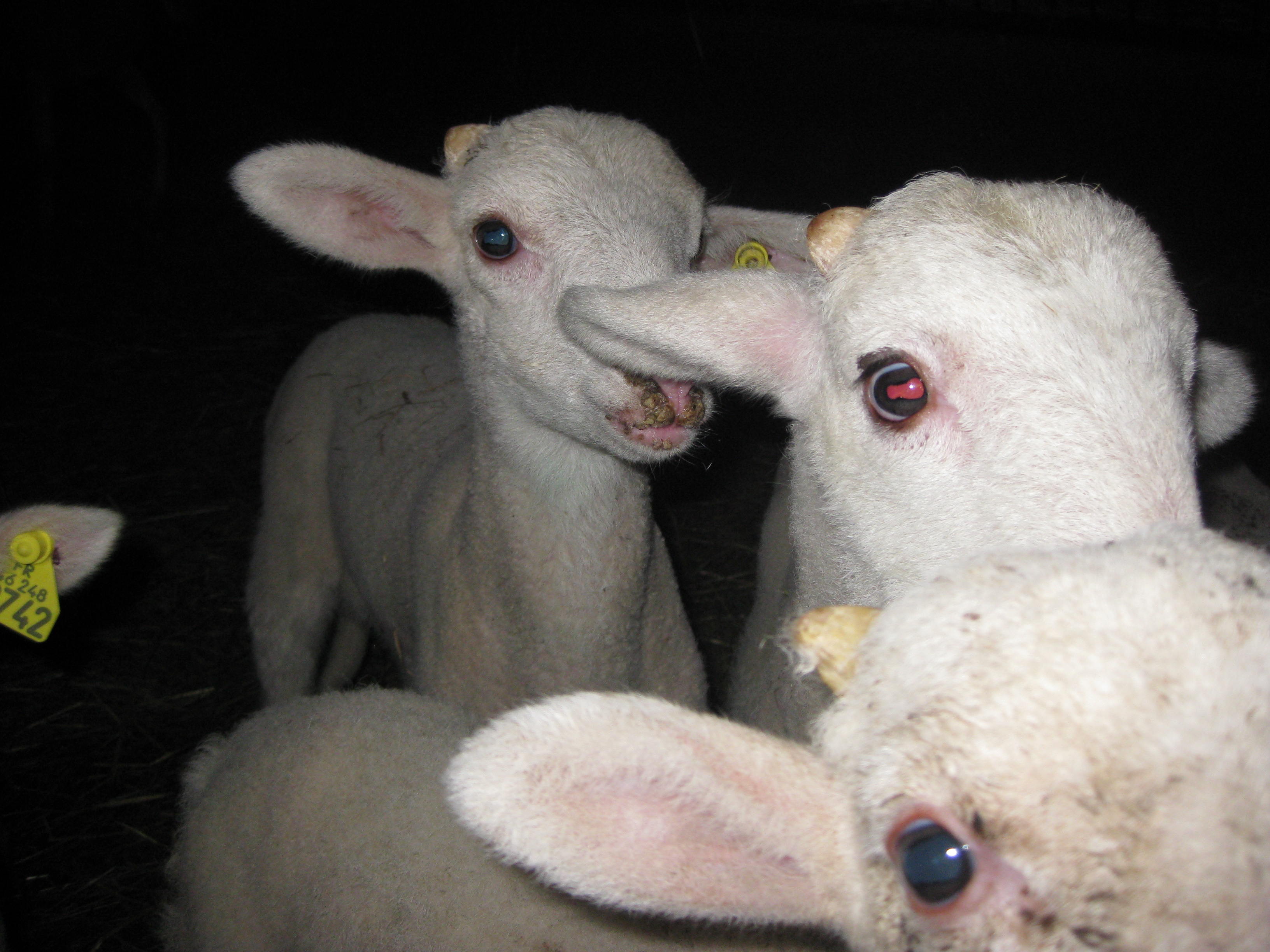
The event was immediately hi-jacked by an unscheduled event – the birth of a lamb. Out in a field, a mother sheep heaved herself up, plonked herself down, then up again, baahing loudly, until suddenly, quite suddenly, there was the front half of a lamb hanging out of her. A bit more wriggling and fussing, and there was the lamb, out on the grass, while the mother flopped beside it. A few minutes later, both were standing again. No shelter, no farmer in attendance – no need to worry apparently. These sheep are Tarasconnais, ‘The 2 CV of the sheep world’ said the farmer: rough and ready sheep who can turn their hooves to anything – wool production, milk and meat production, surviving on their own: molly-coddling is not required. They even get on with delivering their lambs regularly all the year round, somehow producing between them a steady crop of young, without human intervention.
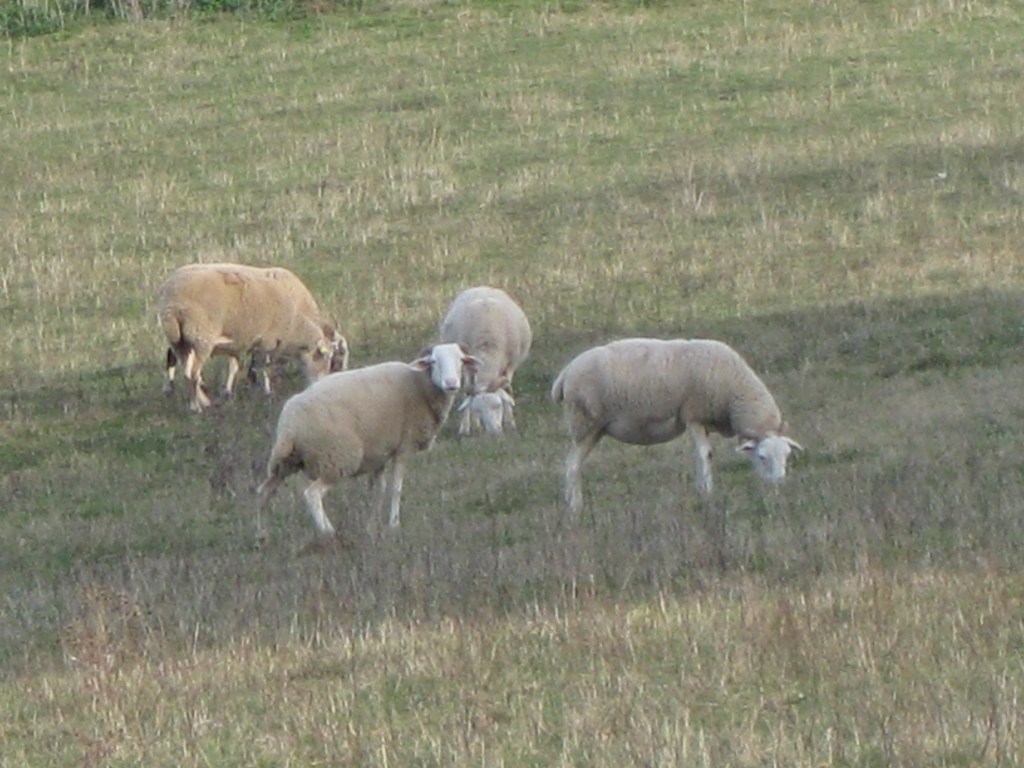
Over to the lambing sheds then, where the mothers, having delivered, come inside for a while with their lambs. The noise! Dozens of lambs constantly baahing in their high-pitched tones, while the mothers hit more melodious lower notes. Hopeless to try to follow all that the farmer, Marcel, was telling us.

Marcel runs his farm of 800 sheep by himself, helped only by an apprentice (who has to go to College in among, of course) and occasional visits from a retired farm hand. He grows their feed – hay, beets & maize, keeps the animals fed and watered, dips them against insects monthly, de-parasites them every 3 months, regularly cuts 800 sets of hooves (he’s devised various metal narrow bus-shelter-style contraptions to make it easier to queue the animals up take their turns for these various procedures). He’s not organic, but many of his practices are, and he certainly usually chooses, for example, organic treatments if his beasts fall ill, believing them to be better.
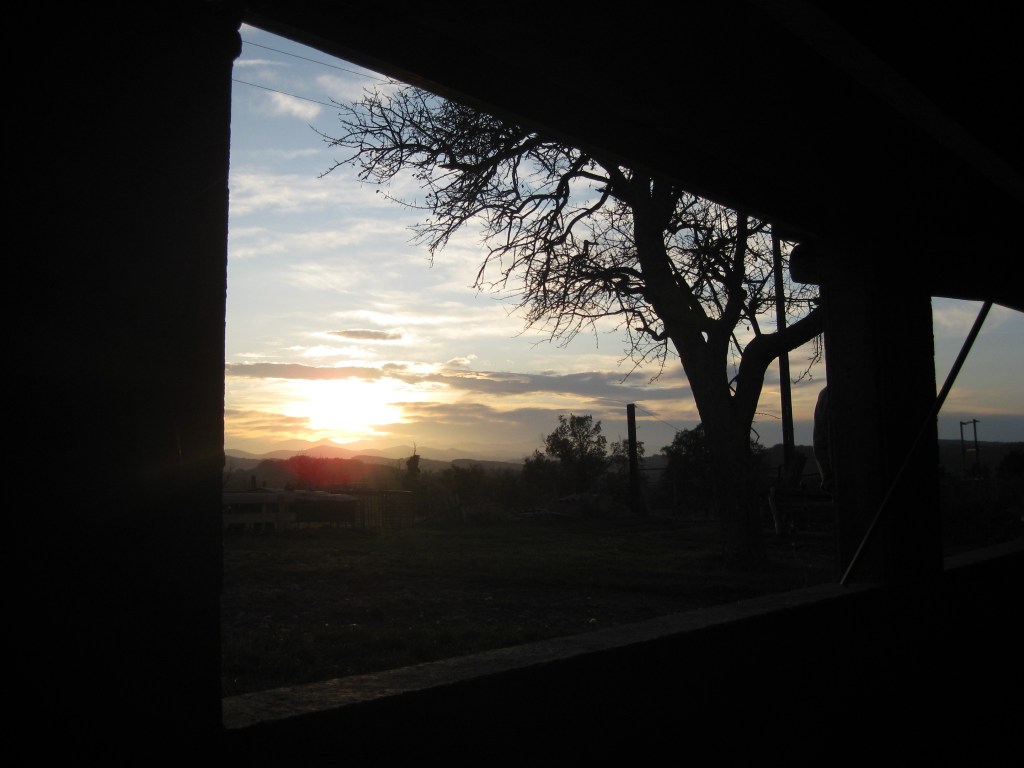
Every summer, about 400 of his sheep go off to the mountains with a shepherd, following the ancient tradition of transhumance. The old, the young and the weak remain behind.
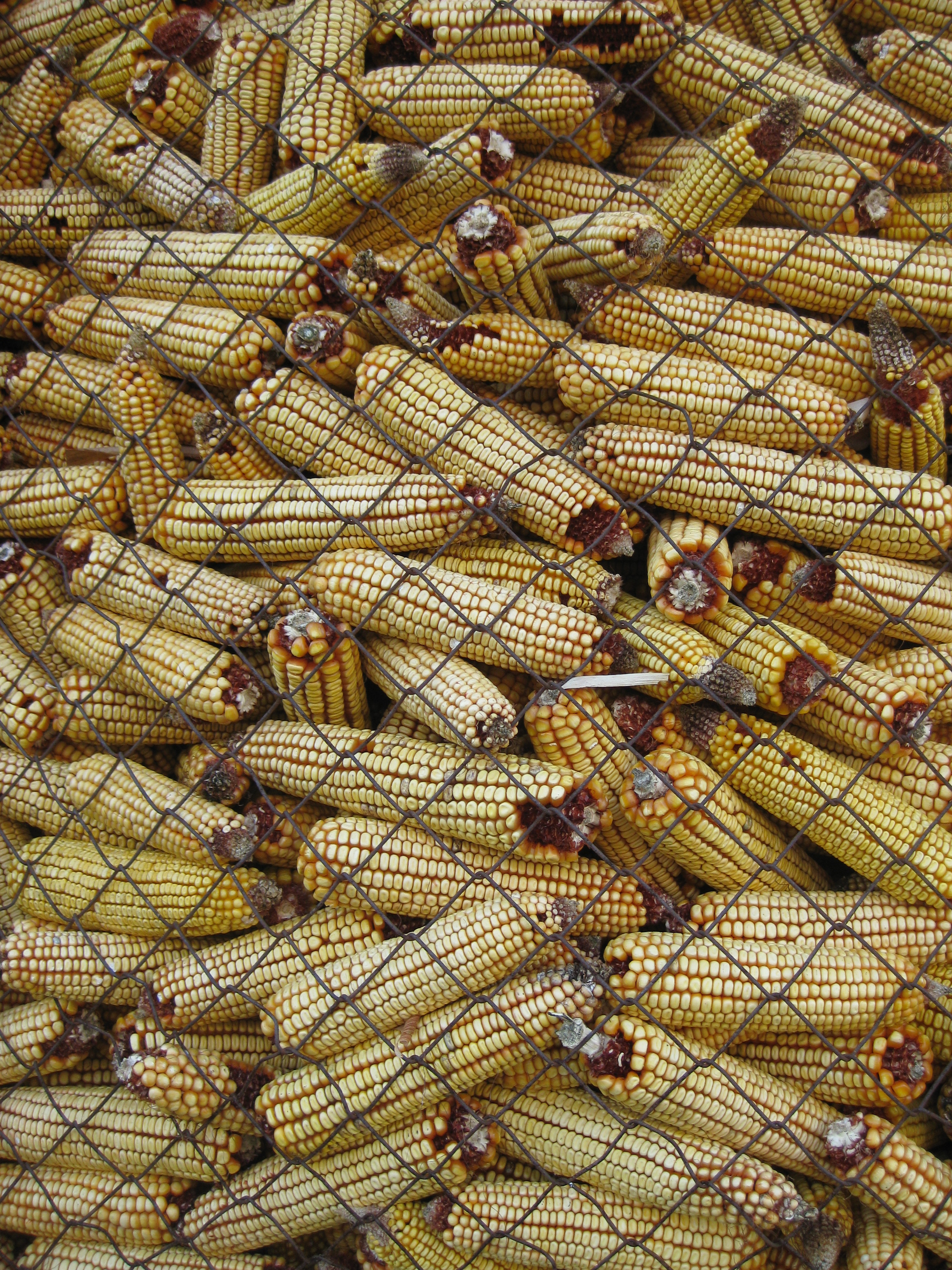
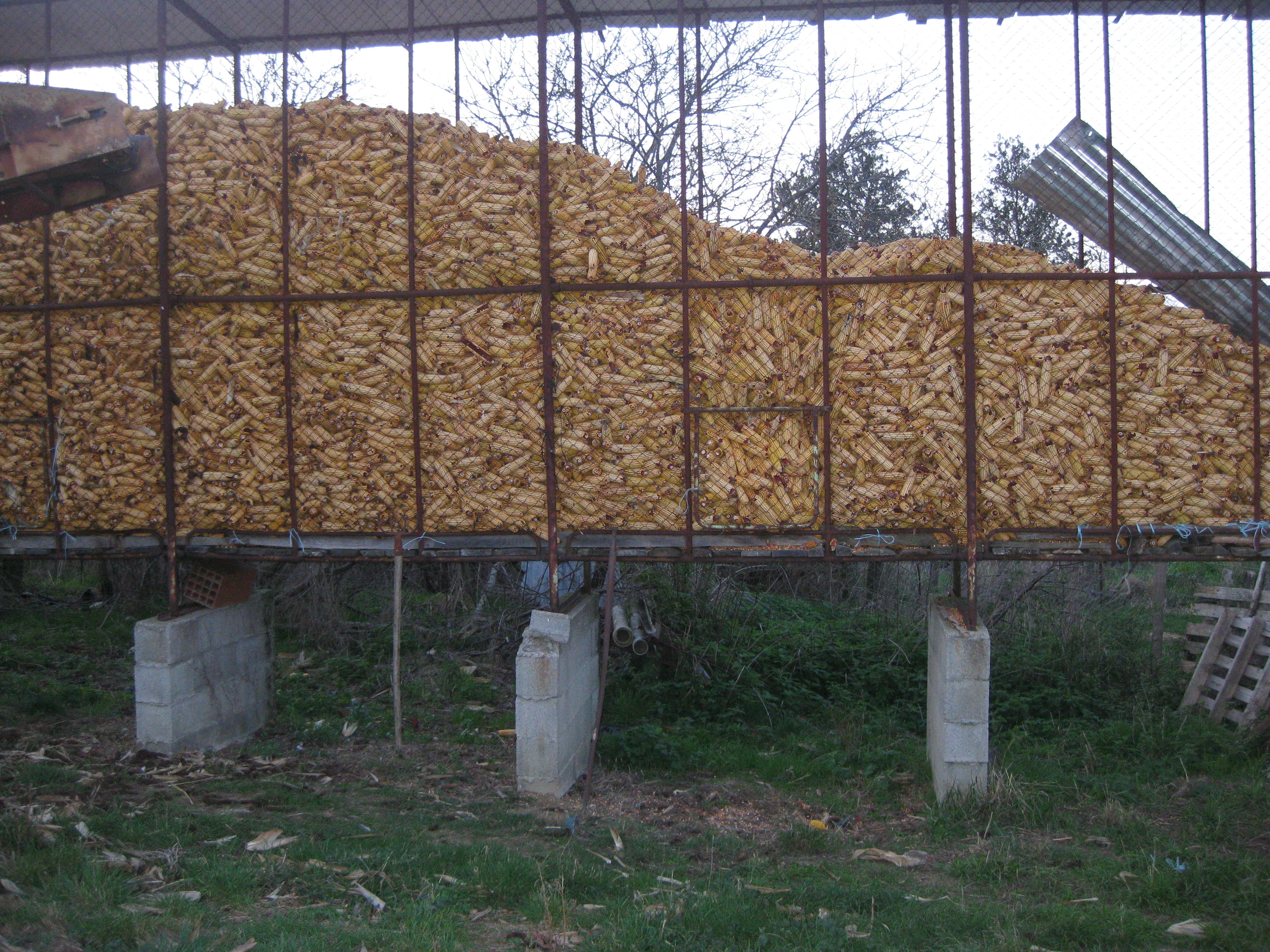
This maize is a winter treat. And here’s the cage where it is dried and stored.
As the sun went down, it got colder and colder. Time for the next part of the evening, an Apéritif dinatoire. What this meant was that everyone from the farm walk and most of the village inhabitants got together to choose and share plates of local sausage, hams, pâtés, cheeses, bread, wine, apple croustades and fruit, mainly sourced from no more than 10 miles away.
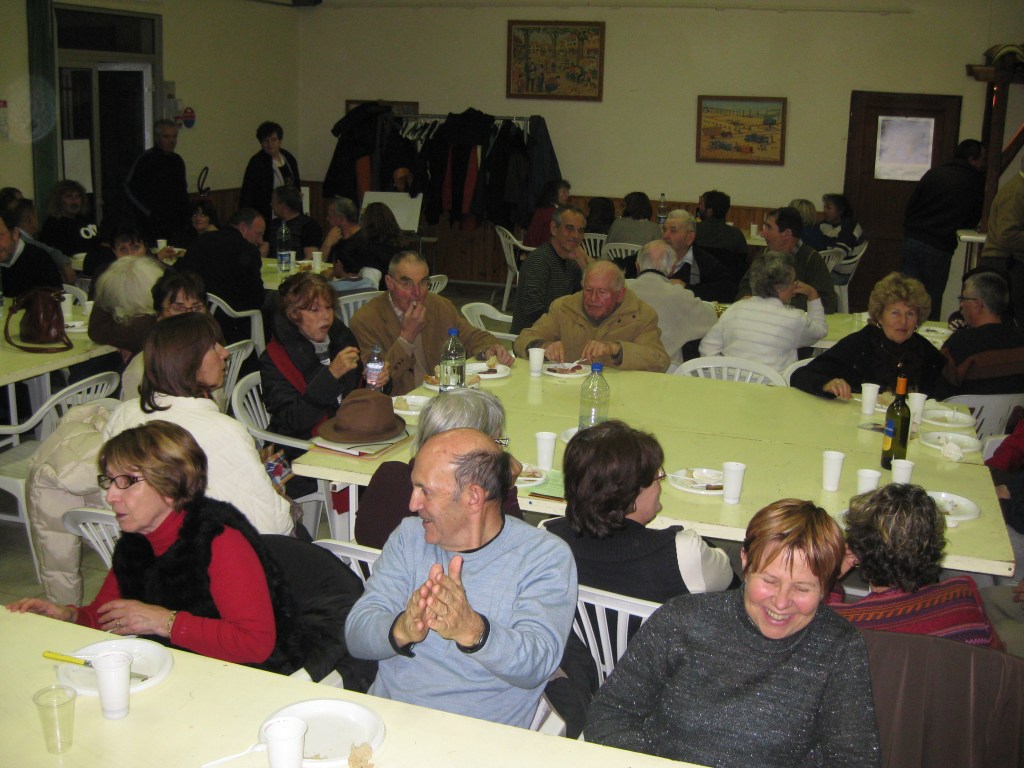
The atmosphere got merrier and merrier, and yet, come half past eight, the tables were cleared, and we all sat down for a lecture (this is Saturday evening we’re talking about…..). Eric Fabre, a university lecturer specialising in the farming history of our area painted a picture of 19th century life in which most people farmed tiny patches of land: only the Church and a very few landowners had substantial holdings. People grew what they and their few animals needed, and the sheep they had were valued for the manure they produced, and secondly for their wool. The meat got eaten, of course, but it only became a marketable product following urbanisation, when town based workers no longer had land of their own. The farmers listening to all this were even more interested then we were, and question time was lively. But it was late and we were tired, and in the end, we were glad to go. 11 o’clock seems well past bedtime when you’ve had a day down on the farm.


It almost sounds like your old times, back in the Pyrenees, Margaret! Happy weekend, darlin!
LikeLiked by 1 person
I’m in London with the family. Hooray! The Pyrenees would also be good …
LikeLiked by 2 people
That’s a solid length of time to be blogging
LikeLike
It was originally my diary for me. So glad to have done this.
LikeLiked by 1 person
Escape to the past. Seems like an option.
Nice sheep.
LikeLiked by 1 person
Perhaps a necessity …
LikeLiked by 1 person
Lovely day to remember. I’m steering clear of the news for a while and feeling much better. Won’t last but I’m enjoying it while I can.
LikeLiked by 1 person
Oh me too. I need to hang on to my sanity.
LikeLiked by 1 person
What a wonderful outing. Getting out away from the hustle and bustle of a city can do wonders for the soul and the belly. Going back in time can do that, too. Be hopeful. Peace.
LikeLiked by 1 person
It was a memorable day. And written about, sadly, in different times.
LikeLike
Great post Margaret, how wonderful to have such memories to look back on. Fifteen years ago seems like another lifetime.
LikeLiked by 1 person
It does. But not at that farm, I suspect.
LikeLiked by 1 person
I can’t marvel at the amount of work that must be going in with just ne person primarily managing things. The farm reference in your title read with the election results had me thinking of a whole other farm but I was glad this was a pleasant one instead. Thank you for sharing 🙂
LikeLiked by 1 person
We’re all in need of more pleasant references at the moment I think …
LikeLiked by 1 person
Very much so 🙂
LikeLiked by 1 person
It always bemuses me, as a vegetarian, when people say “I’m practically a vegetarian but …”, then usually name chicken or fish. If I were going to eat one meat I think it would be lamb because generally speaking they live a natural life beforehand.
LikeLiked by 1 person
They certainly do in the Ariège. They probably don’t have a very different life from the one they would have had centuries ago.
LikeLiked by 1 person
A fascinating insight into French rural life and farming. Caring for 800 sheep almost single-handed sounds daunting, he must be glad to have the number halved during the summer. It’s good to know these more traditional approaches survive 🙂
LikeLiked by 1 person
Although this is 15 years ago, I doubt if much has changed. The Ariège tends to be the home of small scale family enterprises,and also attracts those down-trading in favour of a simpler life.
LikeLiked by 1 person
Well, this certainly trumps any comment on life today Margaret. Pun definitely intended, I’m trying to laugh and smile as much as possible!
LikeLiked by 1 person
At the moment, hanging on to our sanity, however we can, seems to be all we can do. It trumps defeatism.
LikeLiked by 1 person
Thanks for these interesting stories of sheep on the farm. A welcome distraction from our national herd mentality.
LikeLiked by 1 person
Some herds are definitely better than others …
LikeLiked by 1 person
Yes, you’ve heard about our herds.
LikeLiked by 1 person
Every country has them …
LikeLiked by 1 person
Great repost, Margaret…..steering clear of the news a good option
LikeLiked by 1 person
Definitely.
LikeLike
What a wonderful insight into your time in France. Good idea to go back and forth in time!
LikeLiked by 1 person
Especially back. At the moment.
LikeLiked by 1 person
The things that matter …
LikeLiked by 1 person
Indeed!
LikeLiked by 1 person
It must have been a labour of love to care for so many animals in that way. An interesting insight into back in the day.
LikeLiked by 1 person
And I’m sure it hasn’t changed.
LikeLike
Thank you for sharing with us, Margaret! Love it! 💖
LikeLiked by 1 person
It was a fun day.
LikeLike
Thanks for the interesting diversion from current circumstances.
LikeLiked by 1 person
If only diversion were enough!
LikeLiked by 1 person
Not enough by a long way, but nice to have moments of respite.
LikeLiked by 1 person